The Bruges issue
How to Spend Two Unhurried Days in Bruges
A two-day route through Bruges, planned around timed tickets, opening hours and ten-minute walks, so the belfry, the boat and the beer all fit without rushing.
By Marit HendriksSlow days through the canals
Bruges station sits a fifteen-minute walk south-west of the Markt, and that walk, up past the Minnewater and through the beguinage wall, is the argument for two days rather than one. The historic centre is barely two kilometres across, which fools people into booking a single day and then spending most of it standing in lines that only exist between 11:00 and 15:00. Two days gets you the same list, spread either side of the crowd, with time left over to sit down.
What follows is a route rather than a checklist. Day one runs the tight-ticket things early and drifts south into the museum quarter. Day two starts in silence, goes out to the ramparts, and ends with the view nobody queues for. Nothing in it is more than a twenty-minute walk from anything else in it.
Book the belfry climb before you book the train
At the Belfort (Markt), arriving early is the whole strategy. Only 15 to 25 people are released onto the staircase every twenty minutes, and there are 366 steps with passing places you will get to know well. Tickets are timed: €16 for adults, €15 on winter weekdays, €14 for ages 7 to 17, free under 7. Book a slot for the first climb of the day at the same moment you book your travel. That first climb is the one without a queue, and by mid-morning the wait on the Markt is longer than the climb itself.
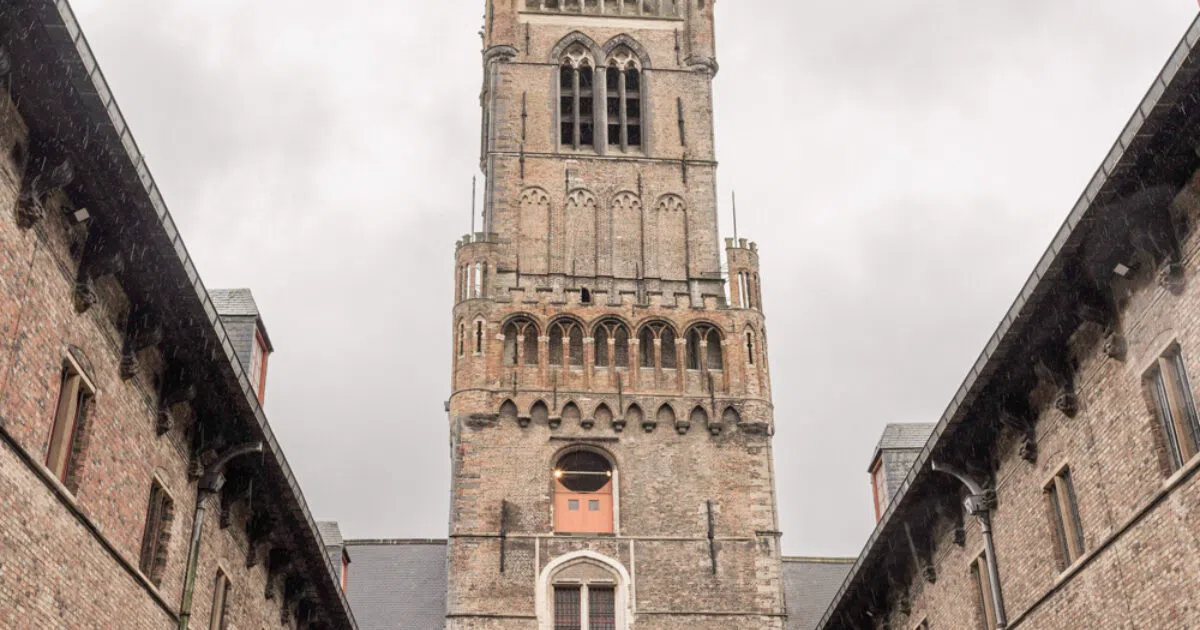
Groups cannot climb the belfry at all. The staircase is too tight, so it is individual timed tickets only, no exceptions; a party of twelve goes up in ones and twos with different entry times. Worth knowing before someone promises the whole family a sunrise photograph. The other Musea Brugge sites cap group bookings at 20 people, which makes the belfry the strictest door in the city.
Come down, cross the Markt, and you have the rest of the morning free while everyone else is still waiting to go up.
Plan your Bruges trip
Live prices from our booking partners.
Free cancellation on many rooms. We may earn a commission when you book.
Thirty minutes on the water, then the Burg
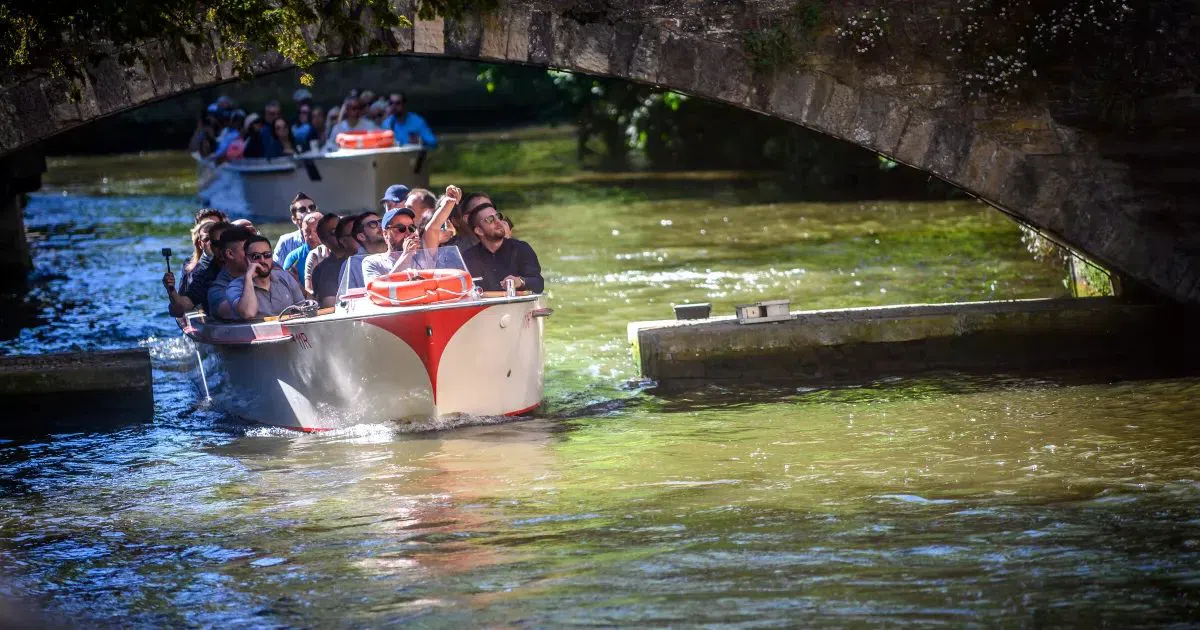
Canal fares in Bruges are fixed by the city across all five licensed jetties: €15 for adults, €9 for ages 4 to 11, about thirty minutes on the water. The price and the route are effectively identical everywhere, so the only sensible way to choose is by queue length. Rederij Stael (Katelijnestraat, south of the museum quarter) is the one to walk to. It runs a long season from mid-February to the end of December and is reliably quieter than the jetty at Rozenhoedkaai, where the photographs happen and the crowd stands four deep.
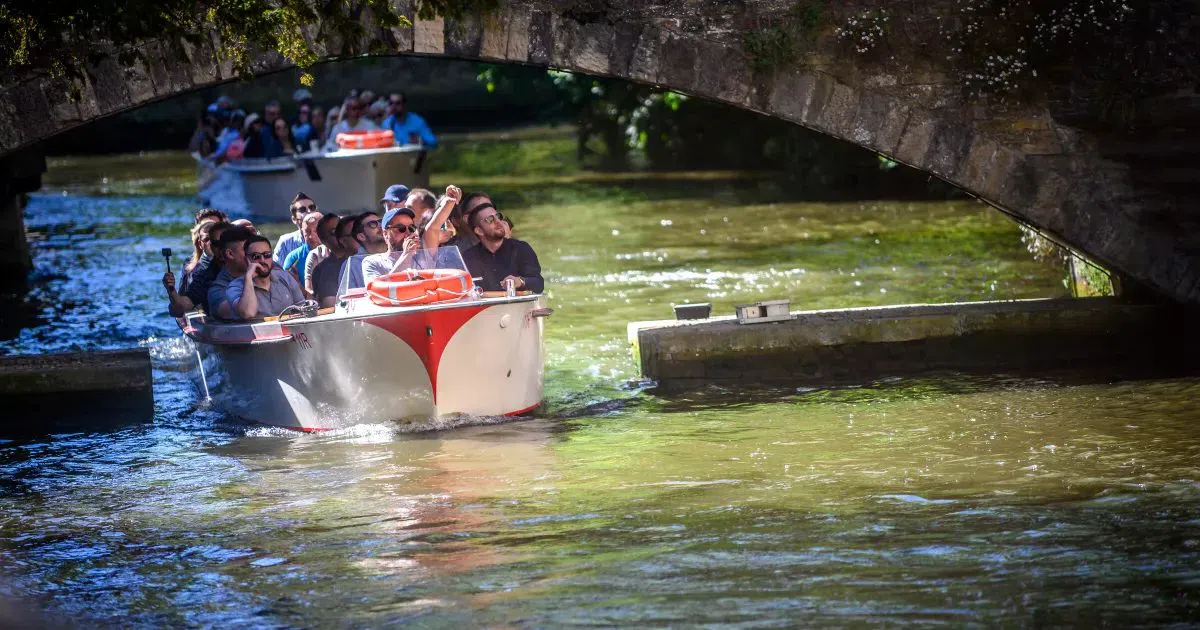
Groups of 20 or more must book ahead and pay the reduced group fare of €12 per person, with the group leader sailing free. Below that number you simply turn up. Boats are open-topped, the bridges are low, and thirty minutes is the right length; nobody has ever wished the canal tour were longer.
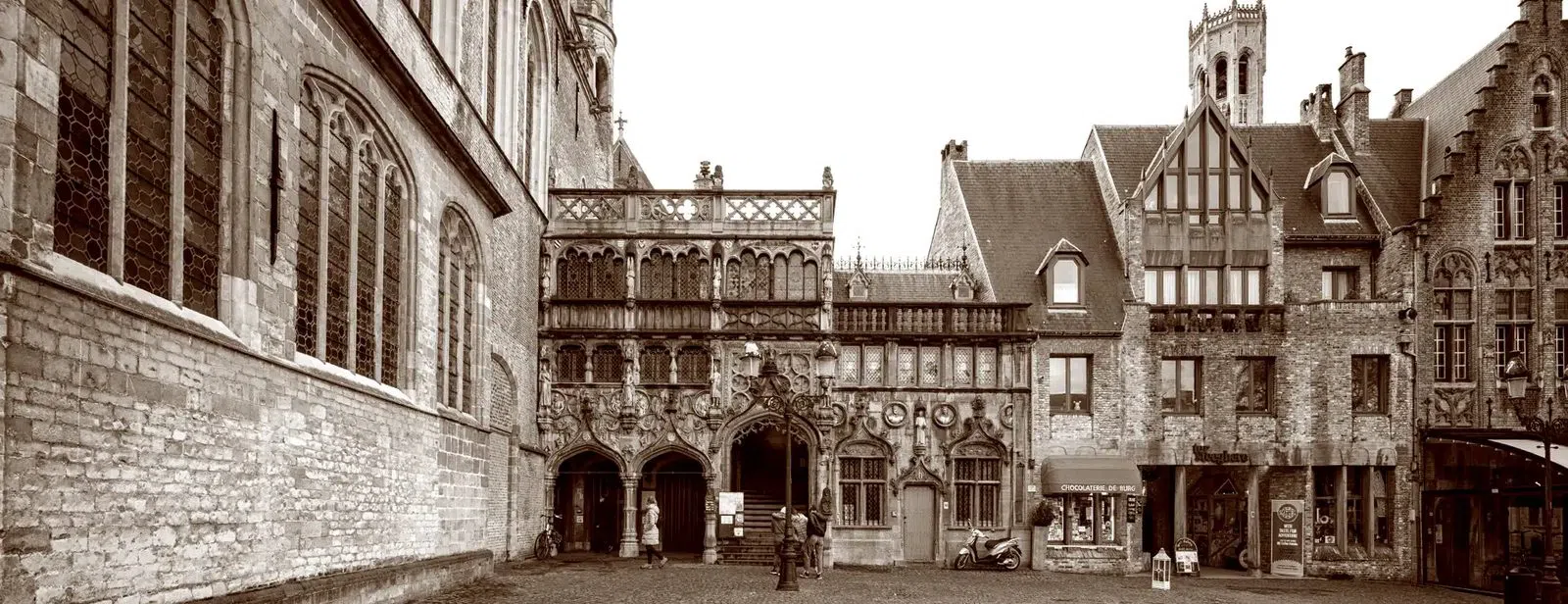
From the jetty it is ten minutes back north to the Burg and the Basilica of the Holy Blood (Burg square, behind the town hall). It is open 10:00 to 17:15 daily; the basilica itself is free, and the museum and treasury cost €5, free for under 12s. The relic is presented for veneration between 14:00 and 16:00, which is both the most interesting time to be there and the busiest, so decide which of those matters more to you. There is no group booking system at all; if you want a guided visit, arrange it directly with the basilica. If you are travelling in deep winter, note that it closes from 12 to 17 January 2026.
One hour in the Groeningemuseum, not three
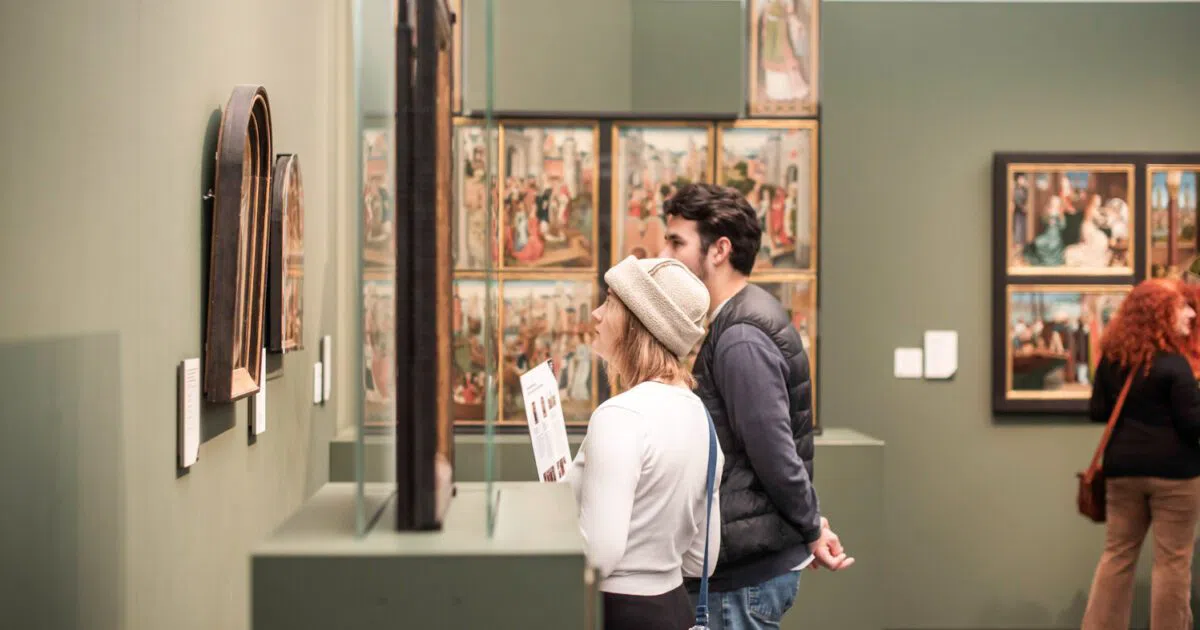
The Groeningemuseum (Dijver, on the canal) is the best hour indoors in Bruges, and it works because it is small. Six rooms of Van Eyck, Memling and Bosch, a collection you can see properly rather than a building you have to route-march. Go in the early afternoon of day one, when the boat queues peak and the streets outside are at their worst.
This is also the moment to do the ticket arithmetic. The Musea Brugge Card costs €49 and covers every Musea Brugge site for 72 hours. Across two days a normal route takes in the Groeningemuseum, the hospital museum, the Church of Our Lady and BRUSK, and at that point the card is comfortably ahead of paying four standard adult admissions. If you are only going to look at one museum, buy the single ticket and spend the difference on dinner.
Group rules are consistent across the Musea Brugge sites: a maximum of 20 people including the guide, the reduced group rate from 15 paying visitors, and (the detail that catches people out) group visits must start by 15:00. A coach party arriving at four o'clock is not getting in as a group.
An afternoon between two doors on Mariastraat
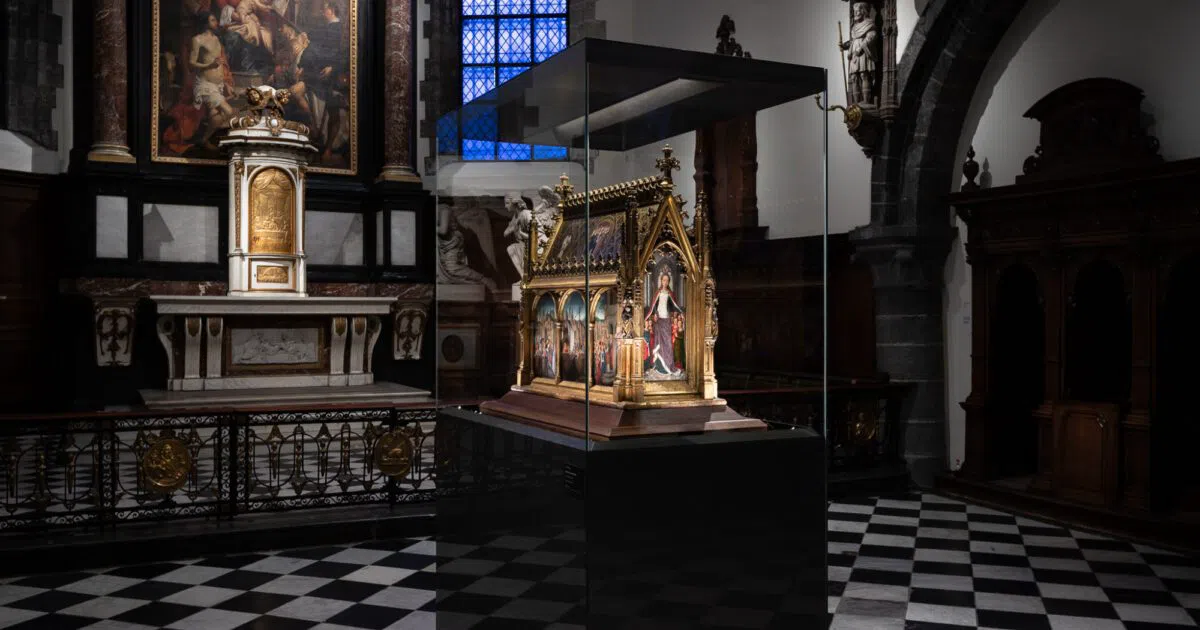
Museum Sint-Janshospitaal (Mariastraat, museum quarter) sits directly opposite the brewery, and that geography is the whole plan for the rest of day one. A medieval hospital ward, the Memling panels painted for the building they still hang in, and a working pharmacy, all under one roof. Same group rules as the Groeningemuseum: 20 maximum, group rate from 15 paying, start by 15:00.
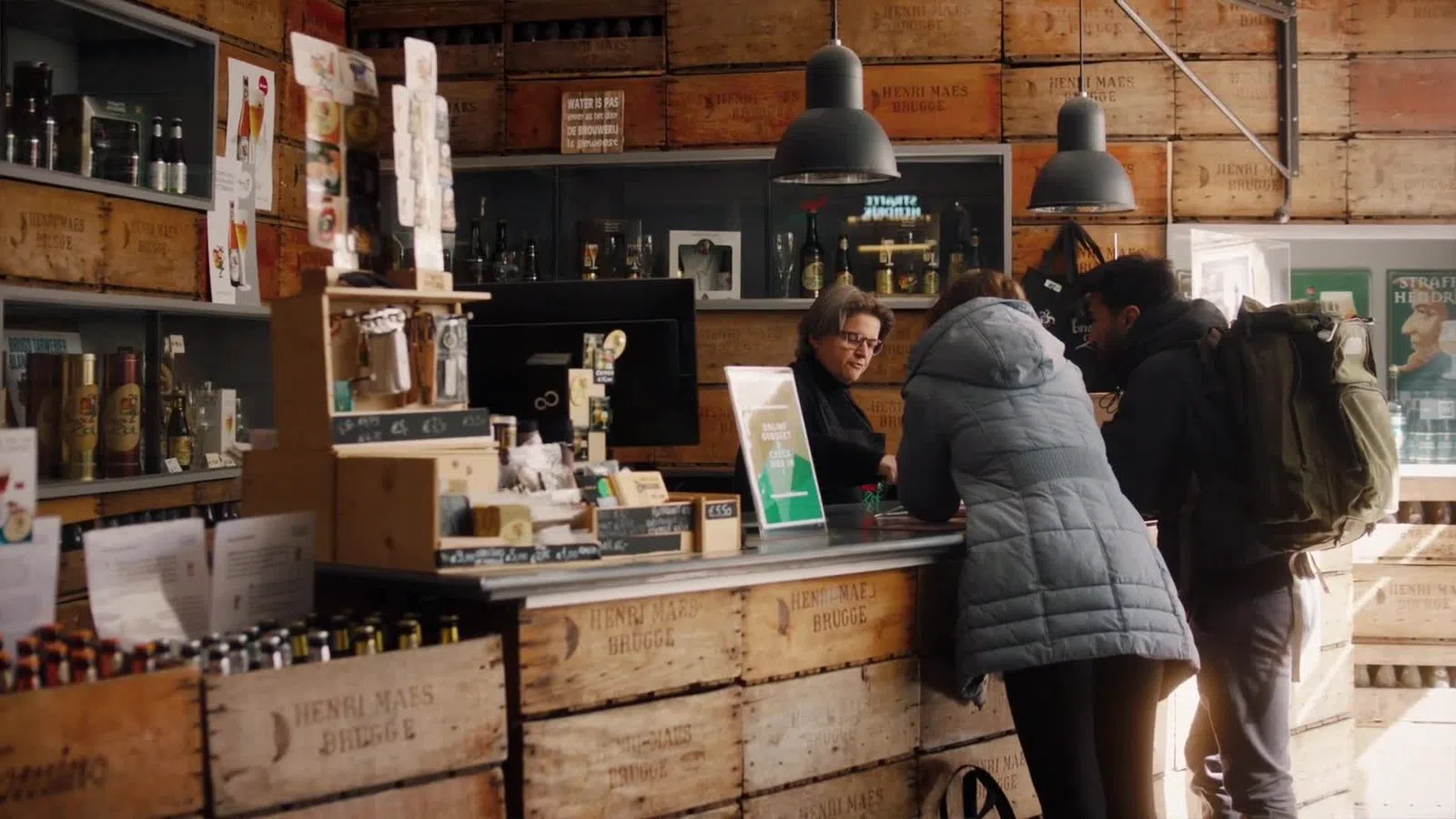
Cross the road and walk two minutes to Walplein for Brouwerij De Halve Maan (Walplein, museum quarter). Six generations have brewed on this site since 1856, and the tour's party trick is a three-kilometre underground pipeline that carries the beer from here to the bottling plant outside the centre. It costs €11 booked online, €12 at the door, and runs about 45 minutes including a beer at the end; the XL version takes roughly 90 minutes. Be honest with yourselves first: there are 220 steep steps on the standard tour, and a knee or a pram rules it out. Dedicated group and private tours run in Dutch, French, English and German, priced by band, from €220 for one to six people down to €14 per person once you are 21 or more.
Two adjacent doors, one afternoon, no walking between them in the rain: that pairing is what keeps a slow day slow.
Where to drink and how many of you will fit
Bruges beer bars are small rooms, and the honest answer to "can we all get in" is usually no. 't Brugs Beertje (Kemelstraat, off Steenstraat) has around 300 Belgian beers with five on tap and staff who steer you through the list rather than hand it over. Beers run €4 to €8. It has been open since 1983 and is routinely ranked among the world's best beer cafés, which means it fills; there is no reservations culture, so a few of you at opening time is fine and a party of ten is awkward for everyone including you.
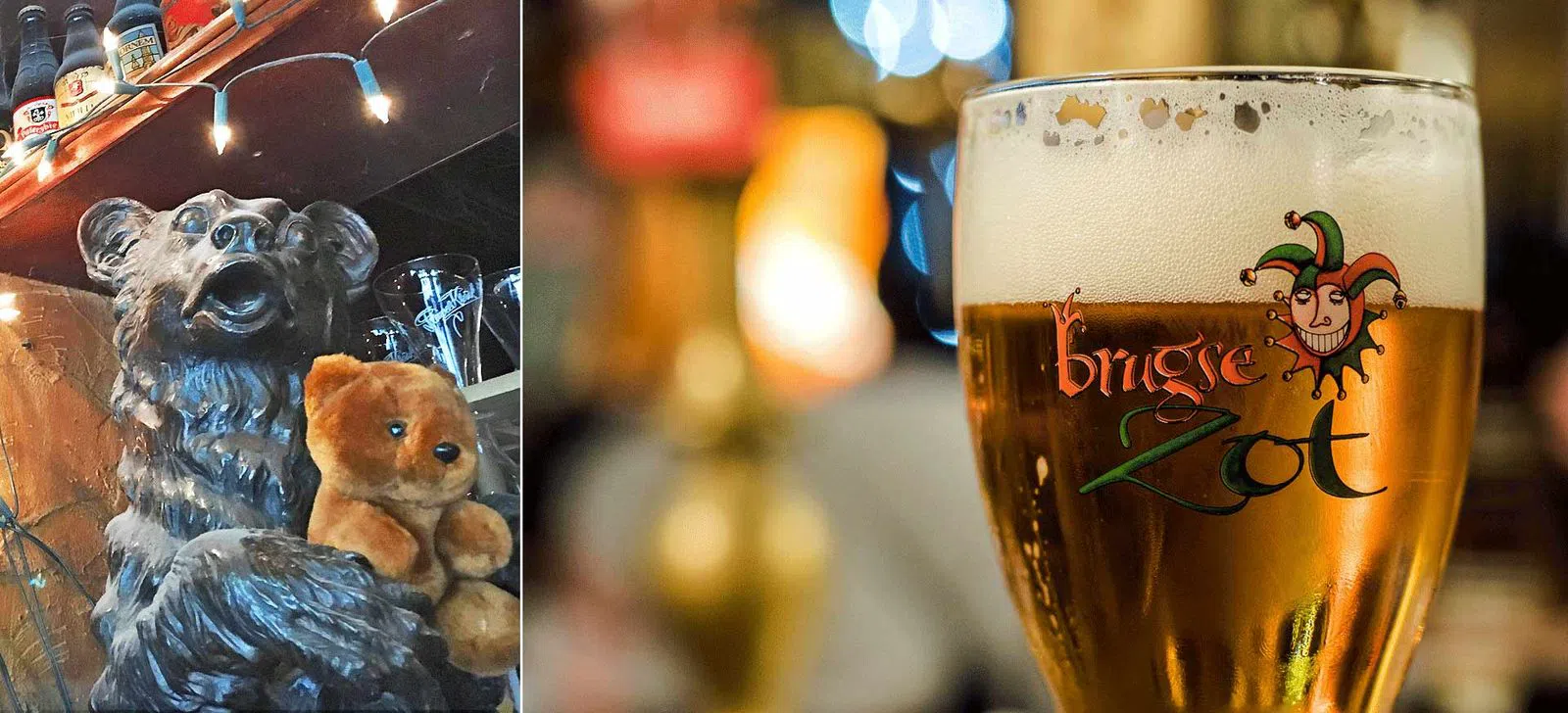
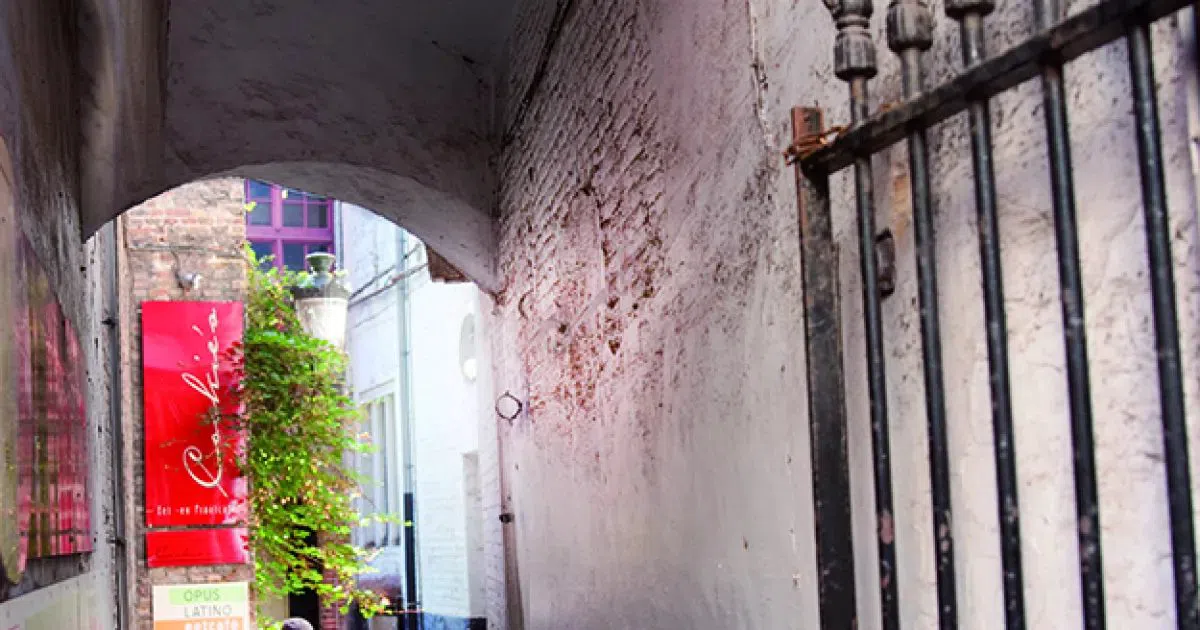
De Garre (down the alley off Breidelstraat, between the Markt and the Burg) is smaller still, and in practice walk-in only. Hours are 12:00 to 19:00 Monday and Tuesday, 12:00 to 23:00 Wednesday to Sunday, and beers cost €6 to €9. The house Tripel van de Garre is 11% and limited to three per person, a rule that exists for good reasons you can watch playing out at the next table. Arrive at opening or accept that you will be waiting on the stairs.
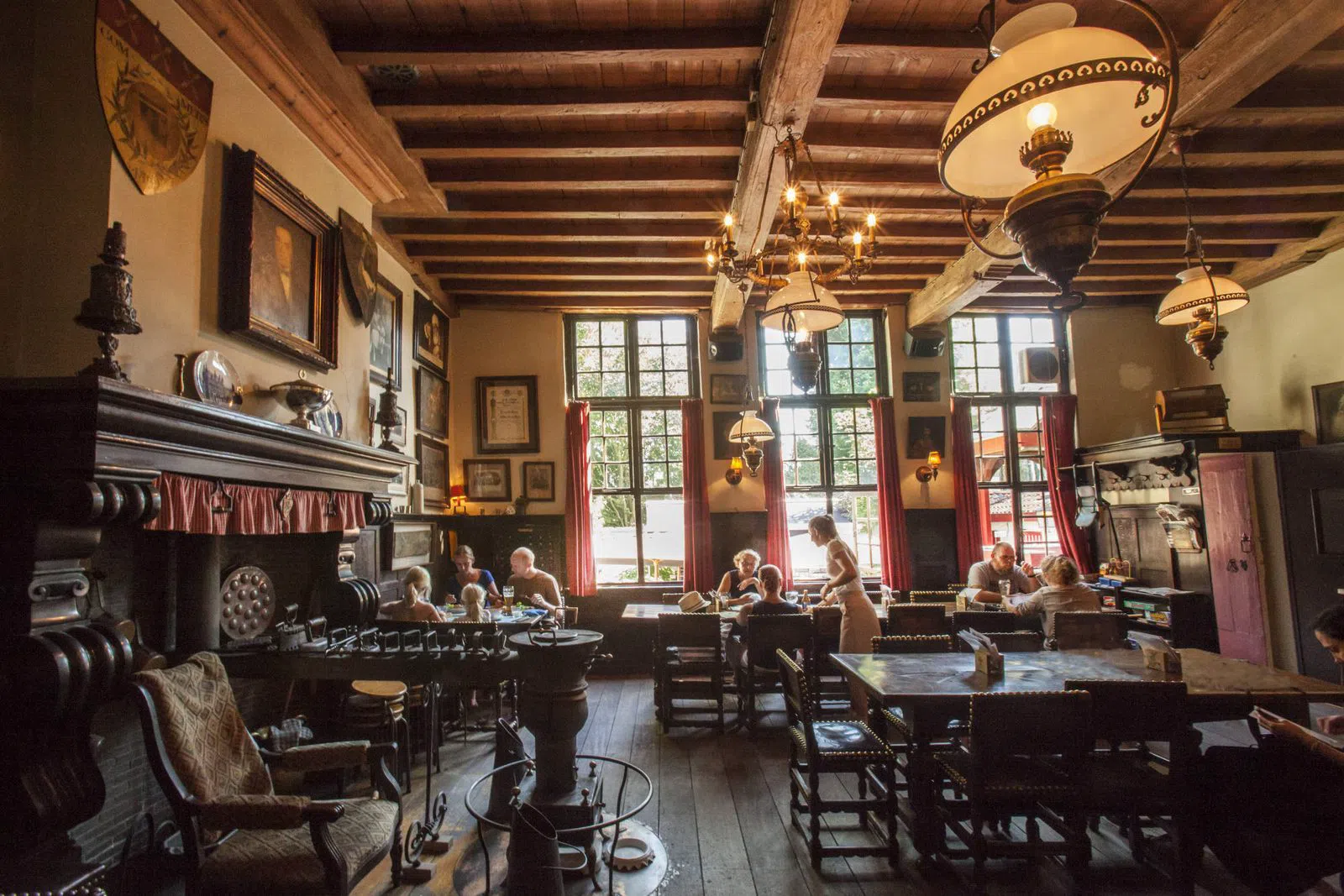
For an afternoon that needs elbow room, walk east to Café Vlissinghe (Blekersstraat, Sint-Anna). It is the oldest pub in Bruges, open daily 11:00 to 21:00, with beers at €4 to €7 and light plates, and it is far enough from the Markt that the day-tripper churn does not reach it. It is also the rare Bruges café that takes reservations, though only for parties of 10 or more, which makes it the one place on this list built for a group.
Dinner as the fixed point of the evening
Book Bistro Bruut (Meestraat, on the canal near the Burg) well ahead and build the evening around it, not the other way round. The room is very small, the menu is set, and there are no substitutions. Lunch runs 12:00 to 14:00 and dinner 19:00 to 21:00, Monday to Friday only. It is a €€€ set menu at dinner with a shorter, cheaper menu at lunch. Two things follow from that. If your two days fall on a weekend, this restaurant is not happening and you should stop planning around it. And if you are more than a pair or a foursome, look elsewhere; this is a couples-and-pairs room, and a large table will not fit.
Start day two behind the beguinage wall
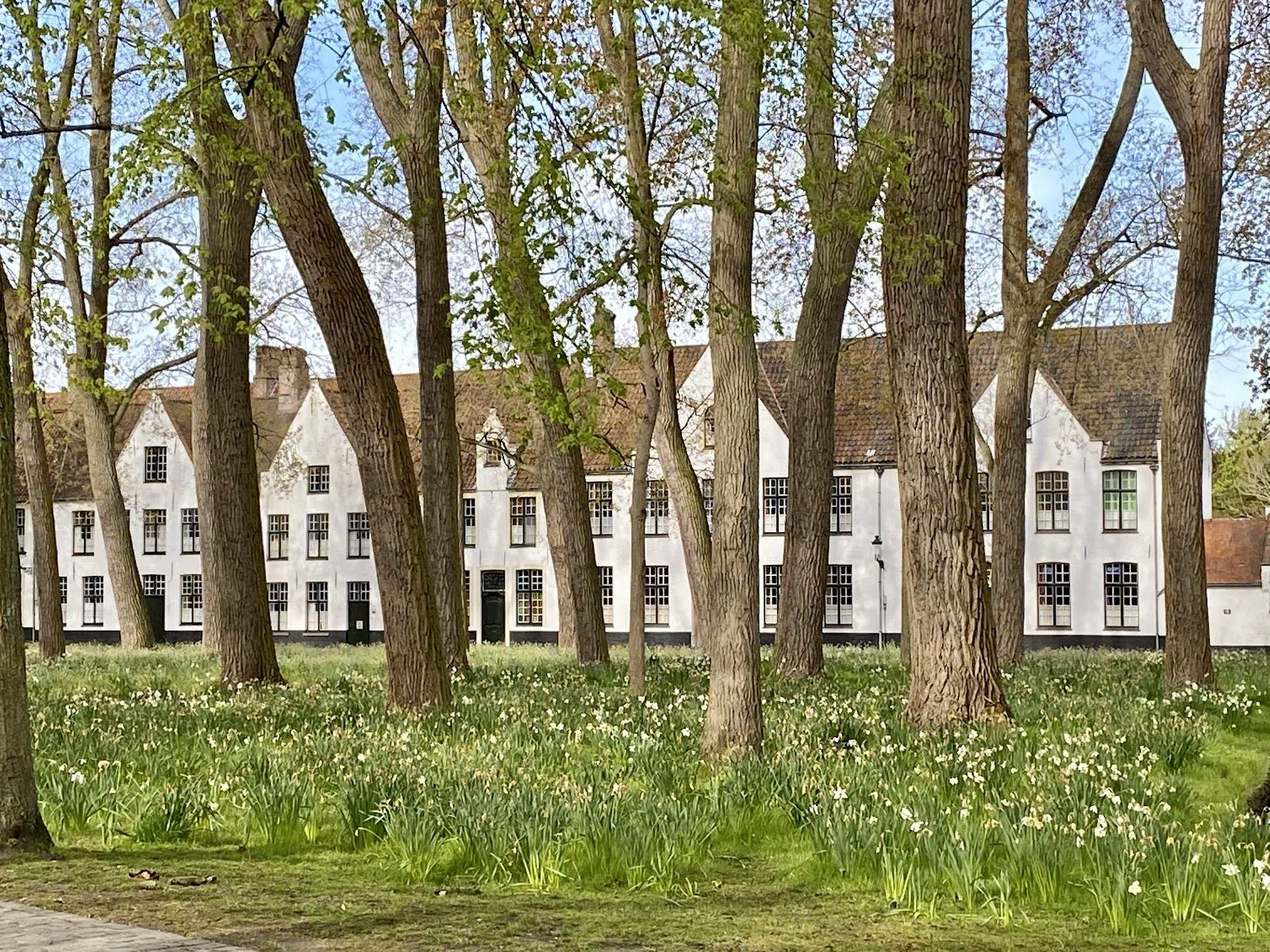
The Princely Beguinage Ten Wijngaerde (Wijngaardstraat, by the Minnewater) is free, founded in 1245, and open roughly 06:30 to 18:30. There is no ticket and no booking; the small beguine's house museum costs €2. The courtyard is signed as a place of silence and the request is taken seriously, so go in early, go in small, and keep your group quiet and spread out rather than clustered. An unhurried half hour here is the reason to come to Bruges for two days instead of one.
Michelangelo, and the tombs most visitors walk past
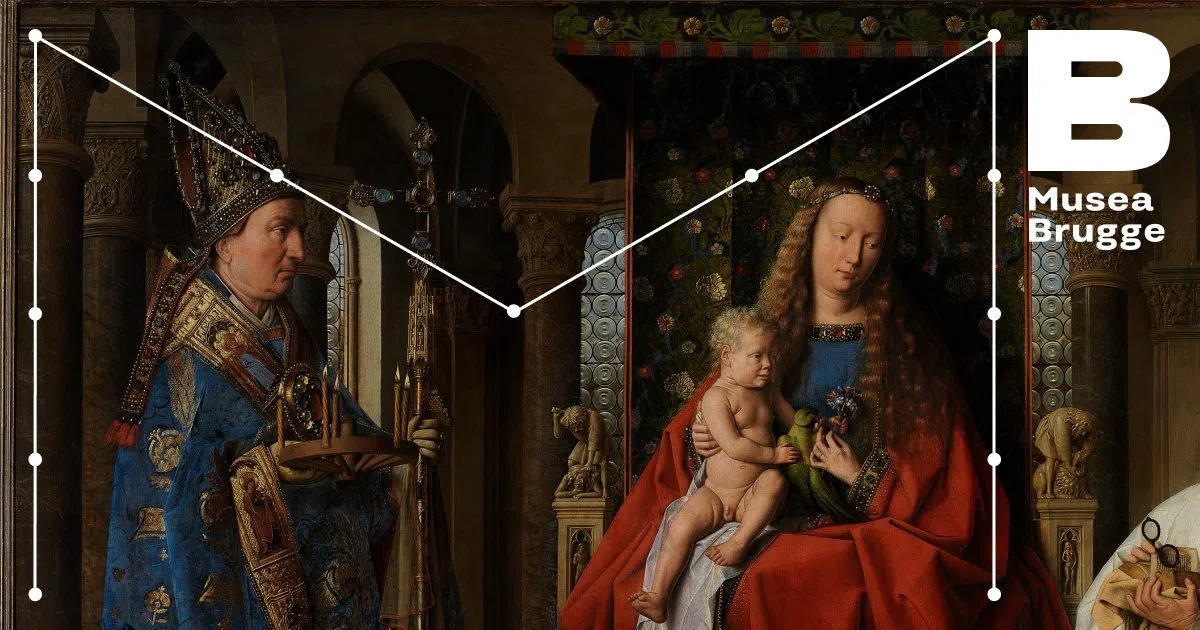
Ten minutes north brings you to the Church of Our Lady Museum (Mariastraat, museum quarter), which holds the only Michelangelo sculpture that left Italy in the artist's lifetime. Most people photograph the Madonna and leave. The choir tombs behind it are the part worth the ticket. Standard adult admission applies, with a €5 discount on the combined ticket with the Gruuthusemuseum next door, and it is included on the 72-hour card. Group rules again: 20 maximum, reduced rate from 15 paying, visits starting by 15:00.
Walk out to the working windmill
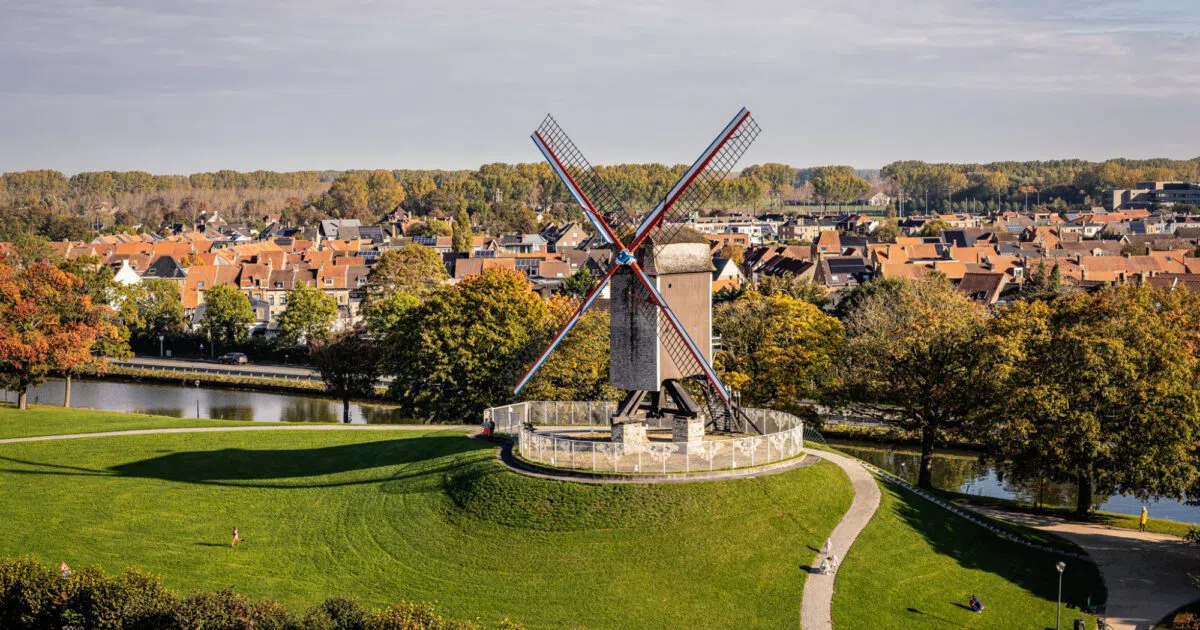
From the church, head north-east across the centre to the ramparts and Sint-Janshuismolen (Kruisvest, Sint-Anna), the only one of the four rampart mills still milling. Entry is €5 for adults, €4 under 26, €2 under 18 and free under 13, and capacity is 25 visitors per half hour, so a large party will be split across slots. Check the calendar before you commit to the walk: it opens daily except Monday, 1 April to 2 November, and outside that window you are walking out for the view of the grass bank and nothing else. Café Vlissinghe is a few minutes away in the same quarter, which makes this the natural loop for a slow second afternoon.
One big room that isn't about the fifteenth century
BRUSK (Dijver, museum quarter) opened on 8 May 2026 with a Refik Anadol solo show and the Bigger Picture exhibition on the medieval metropolis. After two days of Flemish primitives, a contemporary gallery works as a counterweight, and it is the one large exhibition space in the centre not organised around the fifteenth century. Standard adult admission, included on the €49 card, and the usual Musea Brugge group cap of 20 with the reduced rate from 15 paying.
The second view, and chocolate on the way back
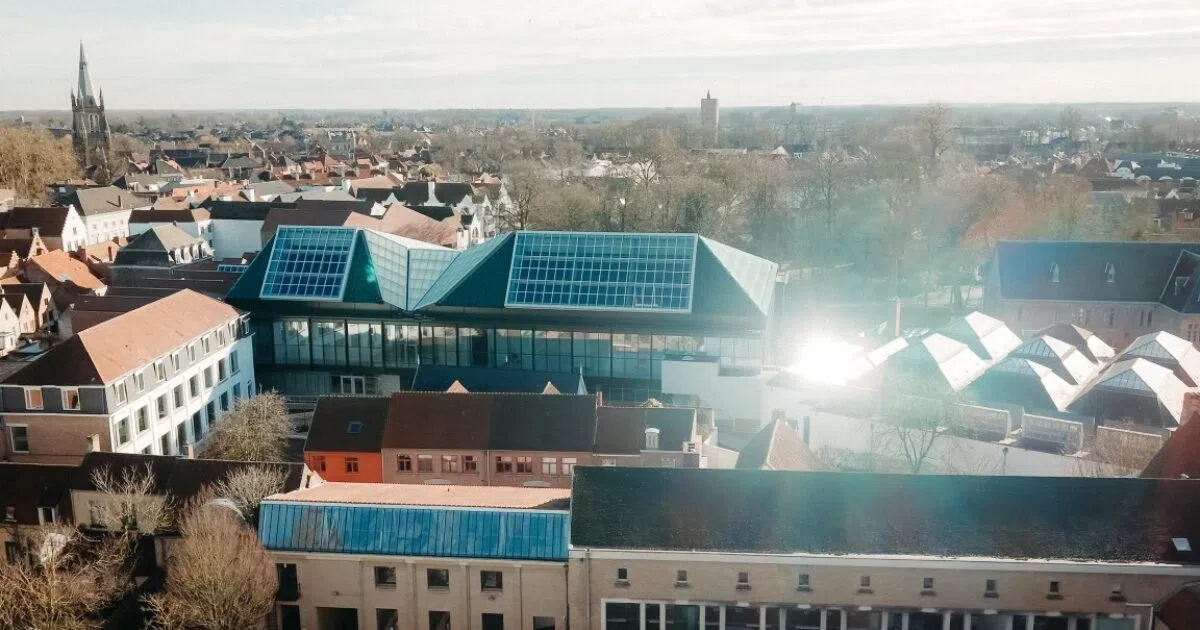
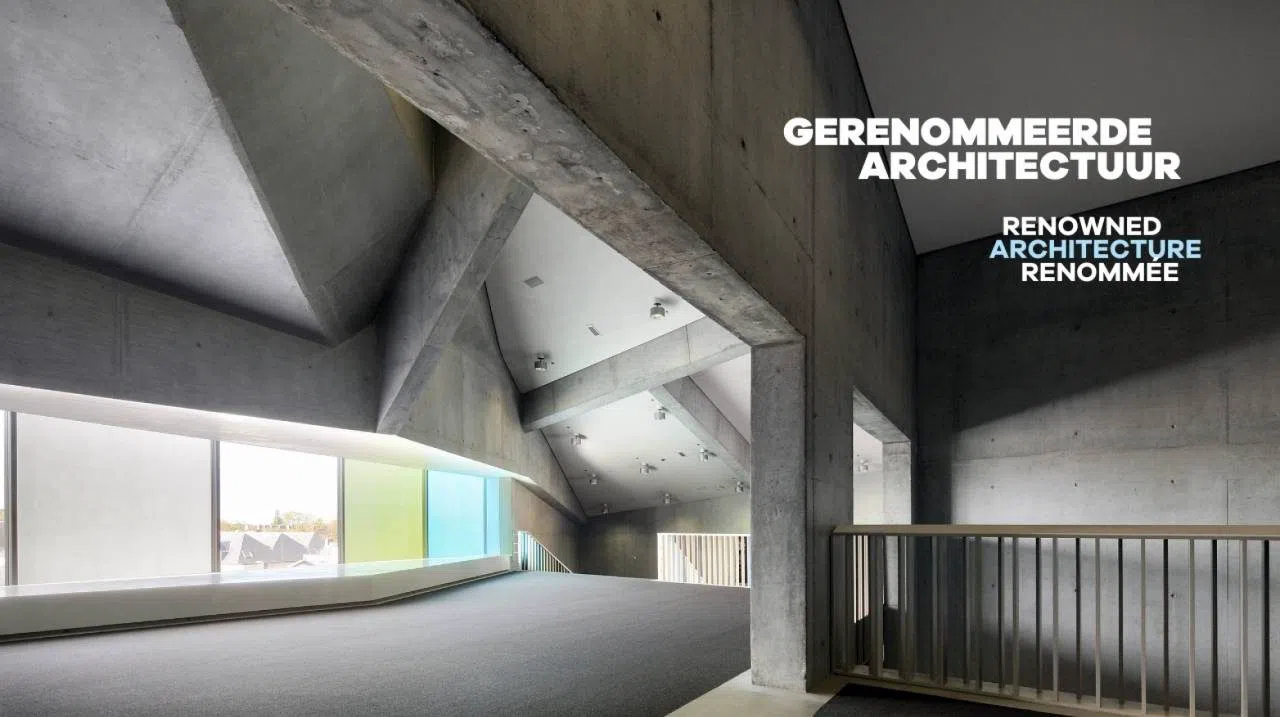
The Concertgebouw Circuit ('t Zand, west of the centre) is a self-guided architecture route through the concert hall that ends on the roof, and it is the city's second great view with almost no queue. It costs €15, or €9 for under 26s, and takes about 90 minutes. Check the calendar first: it opens at weekends plus Wednesday to Friday in school holidays, and guided English circuits run only on scheduled dates and need booking. The self-guided version does take groups.
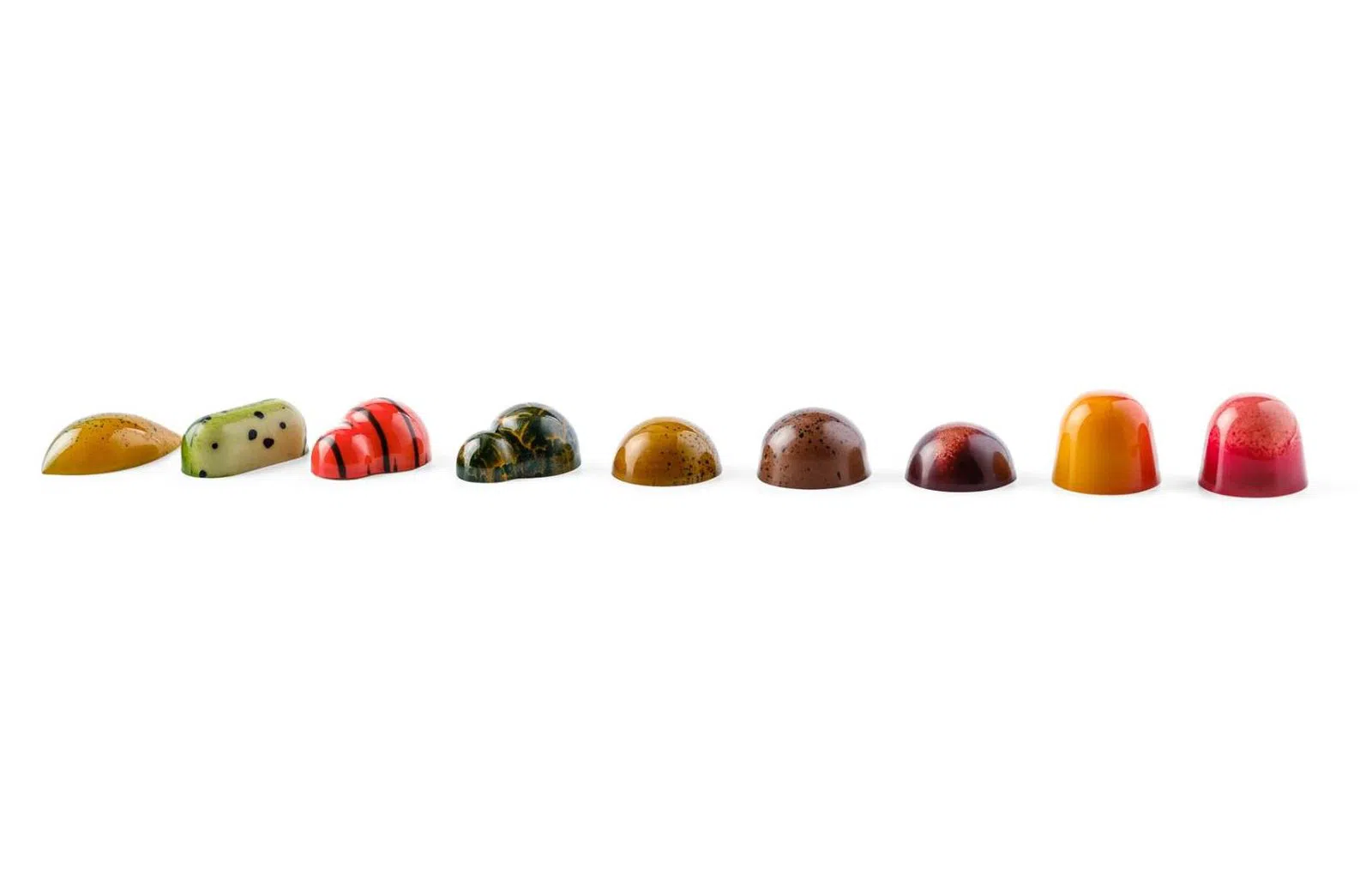
Walk back east and stop at The Chocolate Line (Simon Stevinplein, off Steenstraat), which is the serious end of Bruges chocolate rather than the souvenir end. Boxes run €5 to €30. It opens Tuesday to Saturday 09:30 to 18:30, Monday from 13:00 and Sunday from 10:30, and the shop is small enough that it fills instantly when a coach party lands, though thirty seconds of patience usually clears it.
What it costs and how to move around
The station is a 15 to 20 minute walk from the Markt, or a short bus ride if you are carrying luggage. Once you are in, everything in this article is walkable and nothing needs a taxi. The surface is cobbles almost everywhere, which matters for wheeled cases, prams and anyone unsteady: wear flat shoes and allow a few extra minutes on every leg. Sleeping inside the ring canal is what makes the early-morning belfry slot and the quiet beguinage half hour possible at all; start with a Bruges hotel search and prioritise a location east or south of the Markt over a marginally cheaper room outside the centre.
Prices here are in euros. Cards work in museums, at the brewery and in restaurants, but carry €30 to €40 in cash for the small bars, the €2 beguine's house museum and anywhere with a single till and a long queue behind you.
Mondays are the weak day: the windmill is closed and the chocolate shop opens at 13:00. Weekends kill the Bistro Bruut plan entirely and are the only time the Concertgebouw circuit is reliably open, so the two constraints pull against each other; pick which one you care about. Book the belfry the moment your dates are fixed, and treat 15:00 as the hard deadline for any group museum entry.
Rough budget per person: belfry €16, canal boat €15, Musea Brugge Card €49 for 72 hours across four sites, brewery tour €11 online, windmill €5, Concertgebouw circuit €15. That is about €111 in admissions for a full two days, before food. Add €25 to €40 a day for beer and lunch at the places above, more if dinner is the set menu.
For more on the city beyond these two days (day trips, seasons, where to stay long), see the Bruges guide.
Before you go
Is two days enough for Bruges?
Two days is the right length for the centre. The historic core is barely two kilometres across, so a single day forces you to queue at the busiest hours for the belfry, the boats and the museums all at once. Spread over two days you do the same list either side of the crowds, with time to sit down.
Do I need to book the Belfort in advance?
Yes. Tickets are timed, and only 15 to 25 people are released every twenty minutes onto the 366-step staircase. Book the first climb of the day when you book your travel. Groups cannot climb at all: the staircase is too tight, so it is individual timed tickets only.
Which canal boat jetty should I use in Bruges?
The fare is fixed by the city across all five licensed jetties: €15 adult, €9 for ages 4 to 11, about thirty minutes. Choose by queue length alone. Rederij Stael on Katelijnestraat runs from mid-February to the end of December and is reliably quieter than Rozenhoedkaai.
Is the €49 Musea Brugge Card worth it?
It covers every Musea Brugge site for 72 hours. If you visit the Groeningemuseum, Museum Sint-Janshospitaal, the Church of Our Lady Museum and BRUSK across two days, the card comes out ahead of four standard adult admissions. For a single museum, buy the individual ticket instead.
Can a group of ten get into the famous Bruges beer bars?
Not comfortably. 't Brugs Beertje and De Garre are small rooms that do not really do reservations, and De Garre is walk-in only in practice, best at opening. Café Vlissinghe in Sint-Anna is the exception: it takes reservations, but only for parties of 10 or more.