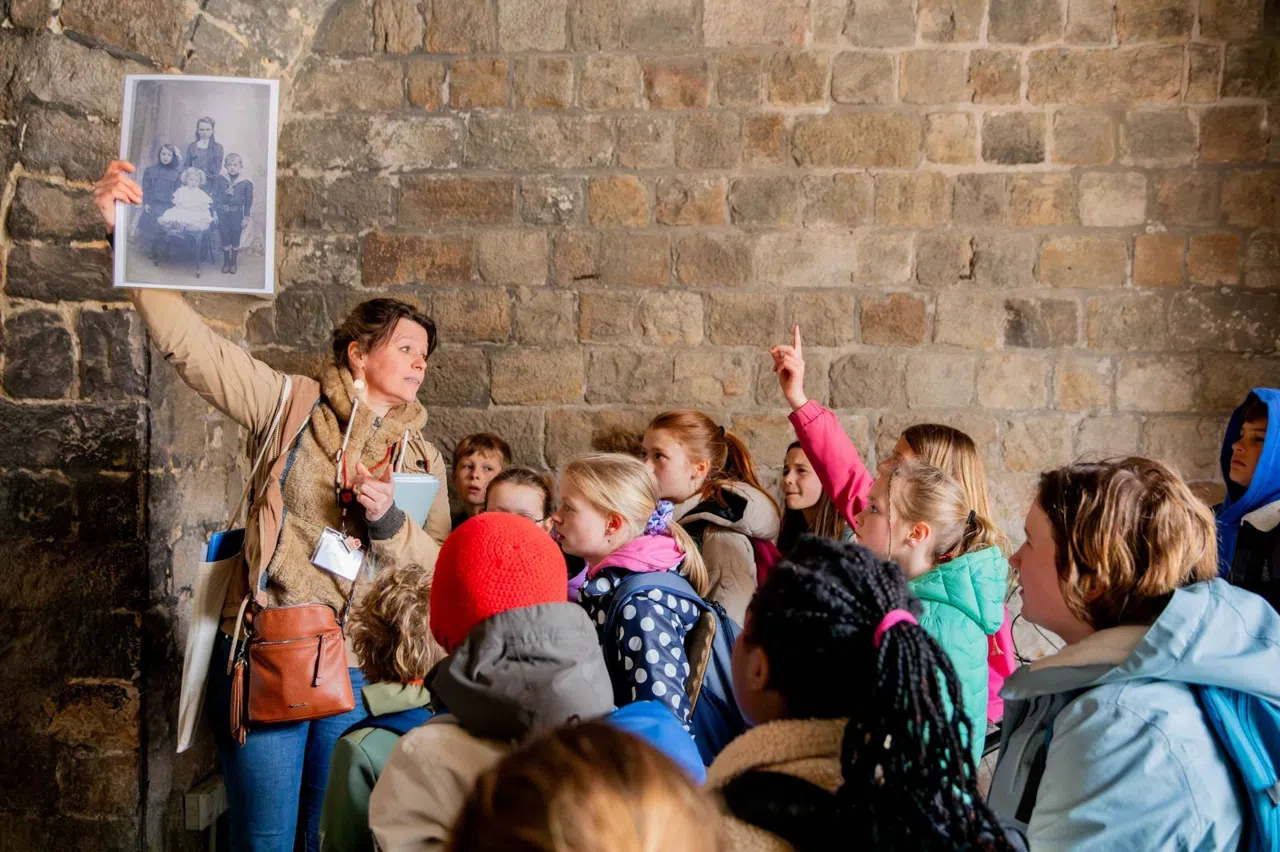

Essex Farm is a low concrete bunker set back a few metres from the road north of Ypres, and you can walk its bays in about two minutes. That is where 'In Flanders Fields' was written in May 1915, and on a private battlefield day it is usually the first door you walk through, eight or nine hours before the last one. The sites are scattered across a dozen villages that no single public transport route links, which is the whole argument for a car and someone who knows what order to take them in.
What the day actually covers
This is a private full-day tour of the Flanders battlefields, departing from Brussels, and it runs seven days a week, Monday to Sunday. Door to door it takes eight to ten hours, most of the driving loaded into the first and last stretch, with the middle of the day spent inside a tight cluster of villages around Ypres. That clustering is the only reason a day trip works: once you are in the salient, the gaps between stops are short.
There is no fixed itinerary. Private means you and the guide agree on six to eight stops out of a longer list before you set off. That matters more than it sounds, because the difference between a good battlefield day and a blurred one is usually three stops too many. The pickup address is a booking question rather than a published point, so put yours in writing: a hotel in Bruges, or the cruise berth at Zeebrugge if you are off a ship for the day. If you are building a Bruges stay around the trip, the Bruges hotel search is the place to start, and a central address makes an early departure far less fraught.
A typical shape is two or three free cemeteries, two ticketed museums, one trench site you physically walk through, and a sit-down lunch inside a narrow midday window. Expect roughly half the day on your feet, on grass, gravel and in one case mud.
The first stops north of Ypres
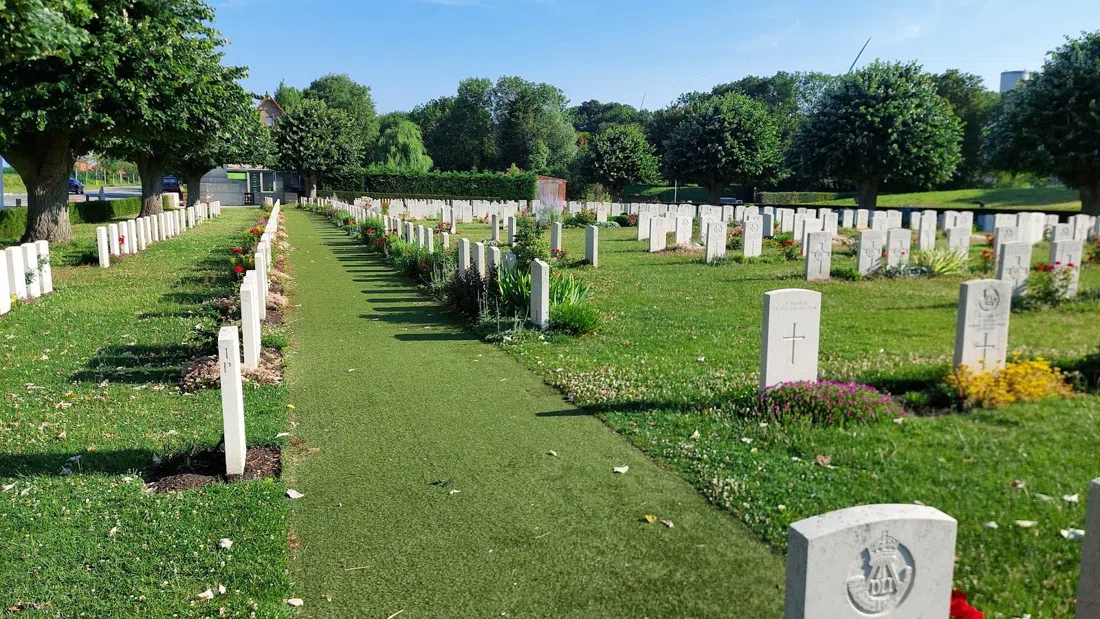
Essex Farm Cemetery and the John McCrae Site (Boezinge, north of Ypres) is open ground with no ticket and no gate. The bunker was an advanced dressing station, and the graves beside it include a fifteen-year-old soldier. It takes fifteen minutes and it sets up everything that follows, which is why guides put it first. Parking is a small lay-by, fine for a car or minibus, awkward for a full coach.
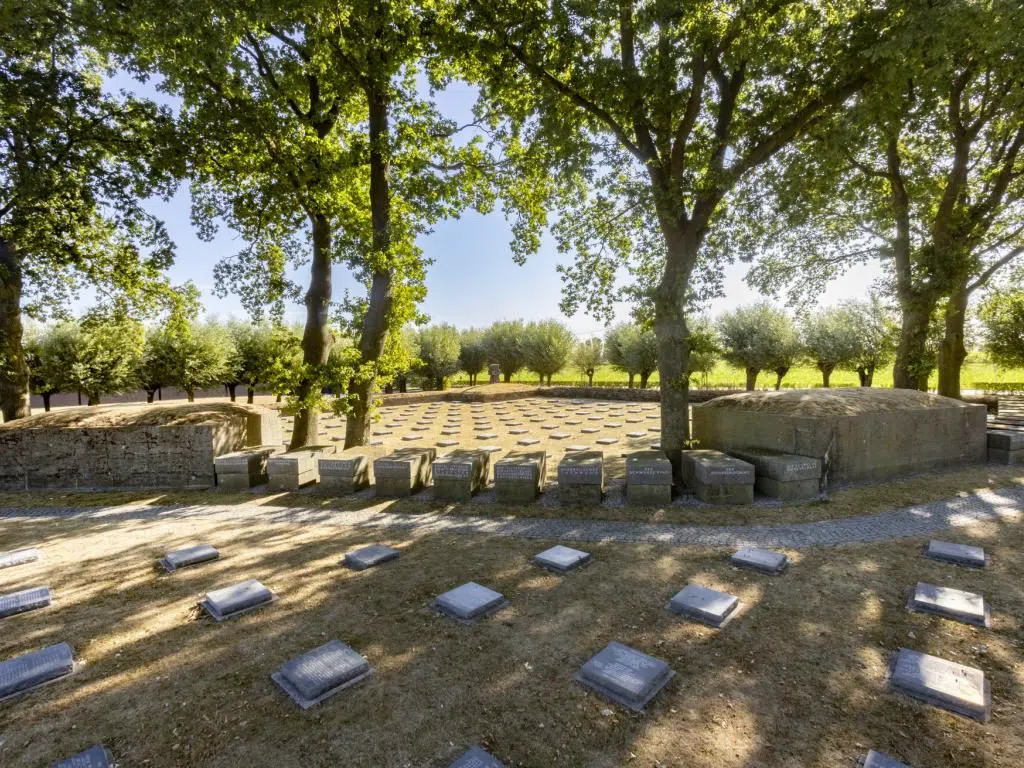
Langemark German War Cemetery (Langemark) is free, unticketed, and the deliberate counterweight to the white Commonwealth headstones. Dark stone, low light, oak trees and mass graves. It has been UNESCO-listed since 2023 along with the other Western Front sites, and groups are asked to keep their voices down at the entrance, which most do without being told. Half an hour is enough; it is also the stop that keeps a battlefield day from being told entirely from one side.
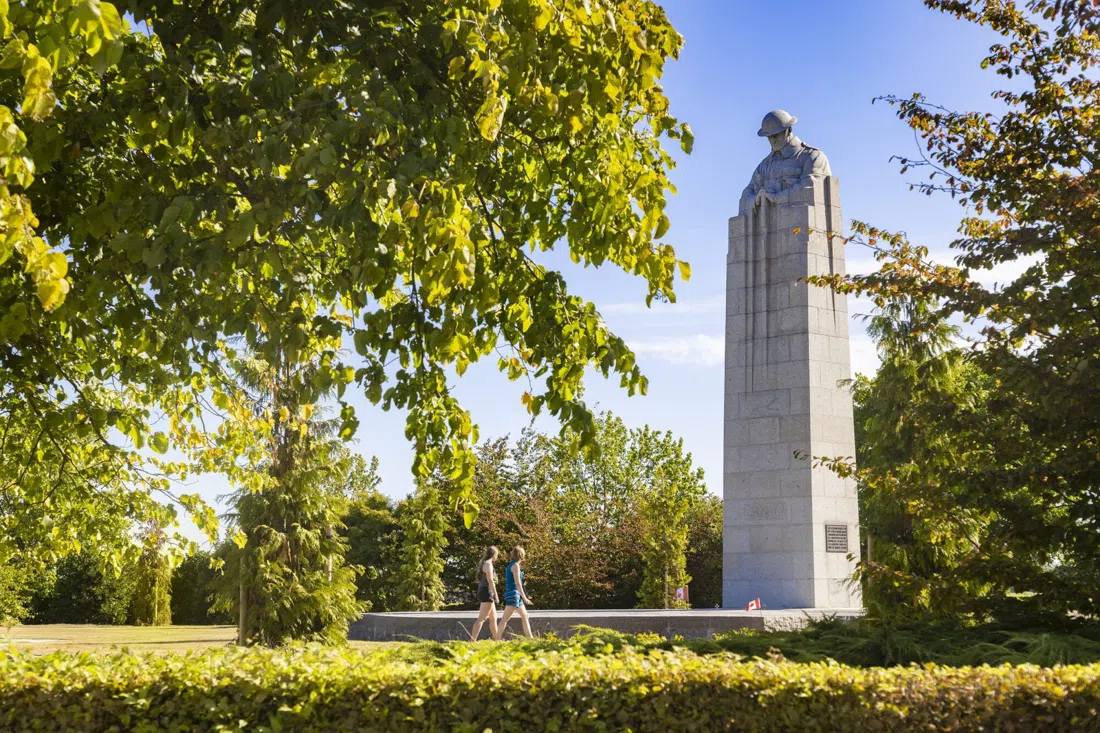
Canadian Memorial 'The Brooding Soldier', Vancouver Corner (Sint-Juliaan) is a roadside memorial park, free, and a ten-minute stop. It marks where the First Canadian Division held the line through the first poison gas attack of the war in April 1915, and it is also UNESCO-listed since 2023. Parking is limited and suits cars and minibuses rather than coaches. It falls naturally between Langemark and Tyne Cot.
Tyne Cot and the museum that puts you underground
Tyne Cot Cemetery and Visitor Centre (Passendale, outside Zonnebeke) is the largest Commonwealth war cemetery in the world and, for most people, the emotional centre of the day. No ticket, no booking; coaches and minibuses park at the visitor centre above the cemetery, and you walk down into it. The visitor centre opens 10:00 to 18:00 daily but closes completely from 1 December to 31 January. The cemetery itself stays open sunrise to sunset all year, so a winter visit still works. You just lose the names being read aloud inside and the context the centre gives you.
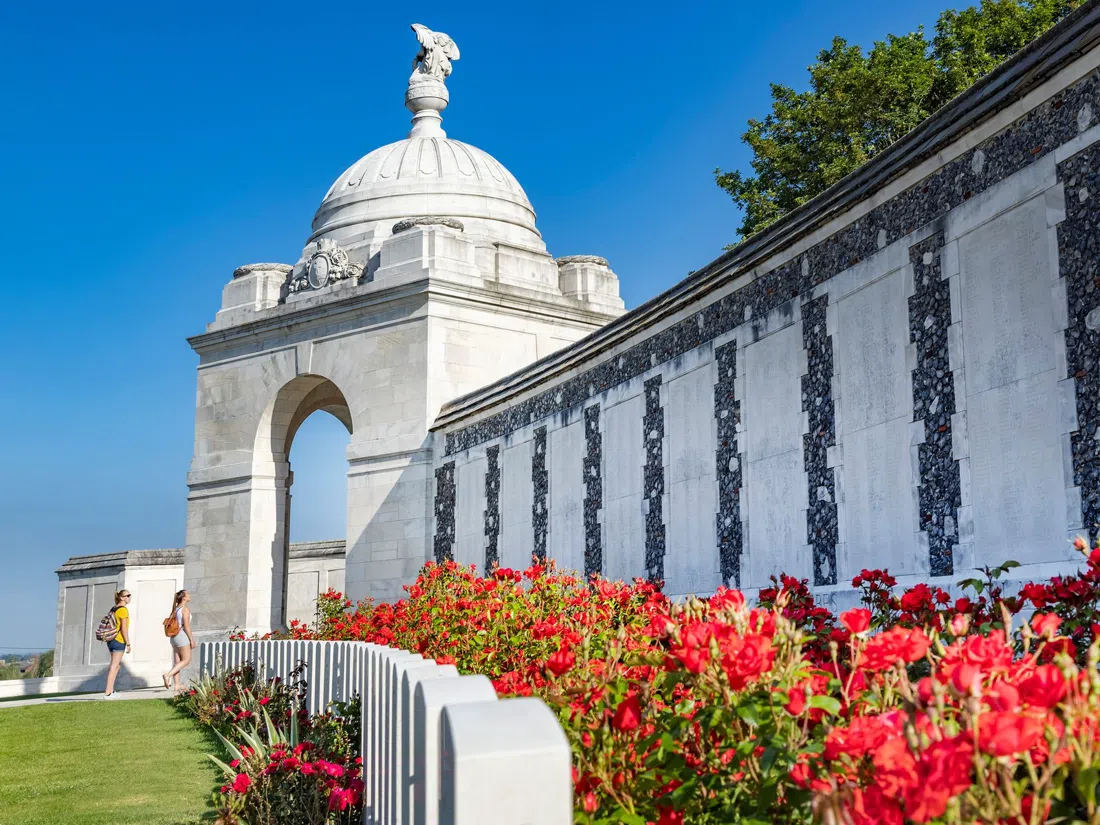
Memorial Museum Passchendaele 1917 (Zonnebeke, a few minutes from Tyne Cot) is around €13 to €15 for an adult and is the one museum where you walk through a reconstructed dugout and a trench system rather than reading about them. The underground section is low, cool and narrow in places. It runs a proper group operation (pre-booked rates, guides, coach parking) and private tours commonly block-book a slot, which is worth doing because the dugout route moves in a one-way flow and gets slow when two groups arrive together. Closed 24 to 26 and 31 December and 1 to 2 January.
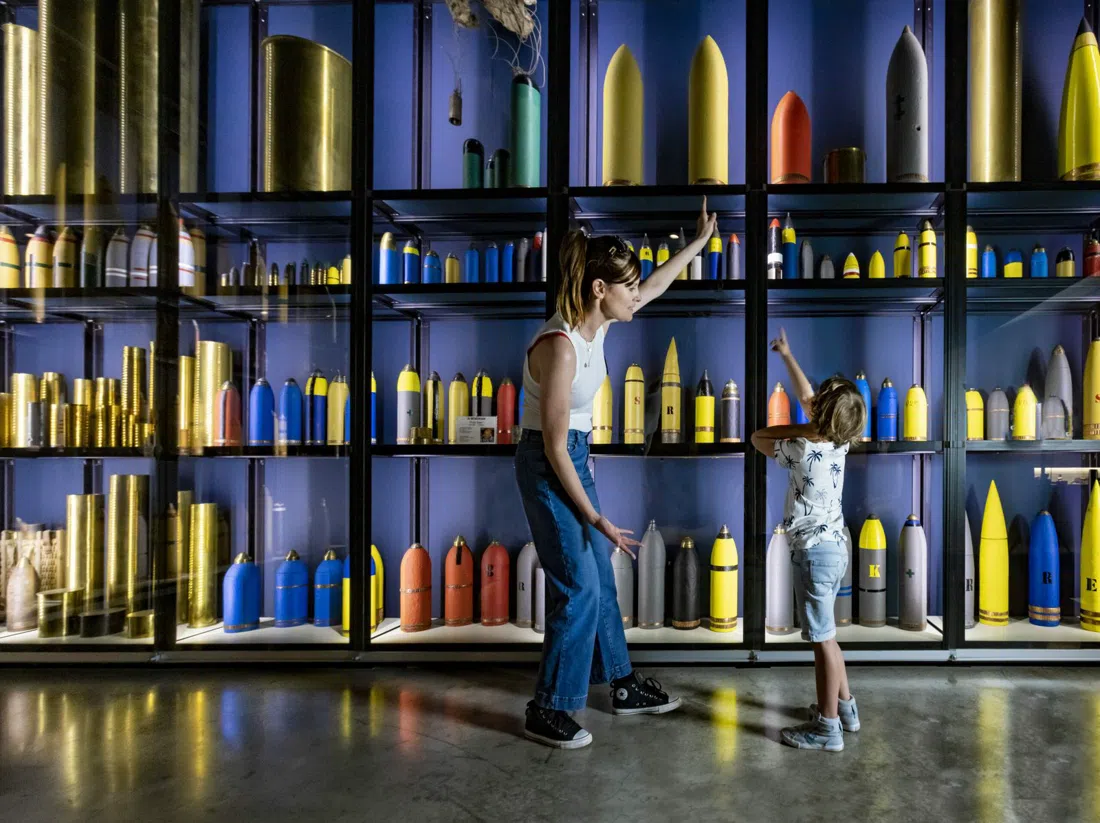
Paired, those two take about two and a half hours and they are the part of the day most people remember.
Where you stand in real trenches
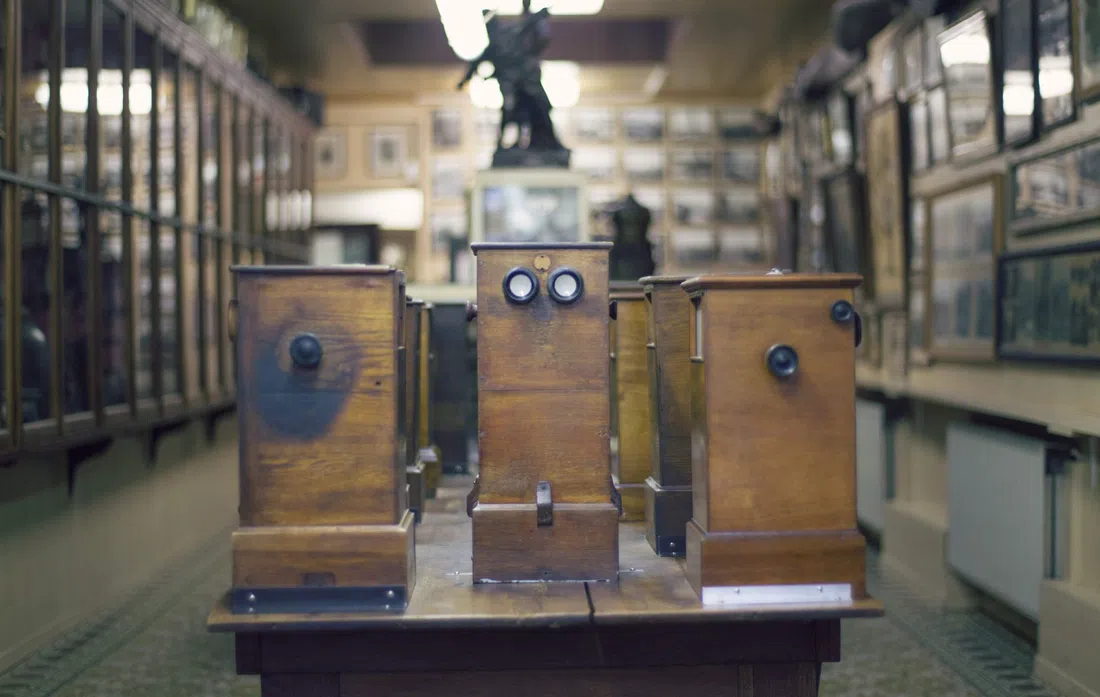
Sanctuary Wood Museum Hill 62 (Zillebeke, east of Ypres) is around €10 to €12 and is the only site near Ypres where the trenches are original and untidied rather than rebuilt. That means standing water, uneven duckboards and genuine mud, so wear boots rather than trainers. The museum attached to it is a family-run, cheerfully chaotic collection of objects and stereoscopic photographs. It takes groups but congests quickly, and from mid-December to the end of January it is groups-by-reservation only. Couples and pairs get far more out of it than a party of twenty.
Hill 60 Memorial Site (Zillebeke) is the opposite kind of stop. Open ground behind a metal gate, no ticket, no fixed hours, a small car park that works for a minibus. Nothing is reconstructed; the ground itself is the exhibit, still visibly buckled by the 1917 mine blasts. Unmanaged and unexplained, it is the clearest case in the salient for having a guide, because alone you are looking at a lumpy field.
Bayernwald German Trenches (Wijtschate, in Heuvelland) is €5 for an adult and €2 under 25, open daily 09:00 to 17:00, and shows the line from the German side on the ridge where Hitler served as a runner. The entry is barcode-gated and tickets are not sold on site: you collect them first at the Heuvelland Visitors Centre in Kemmel. Self-drivers get caught by this constantly. A private guide simply handles it.
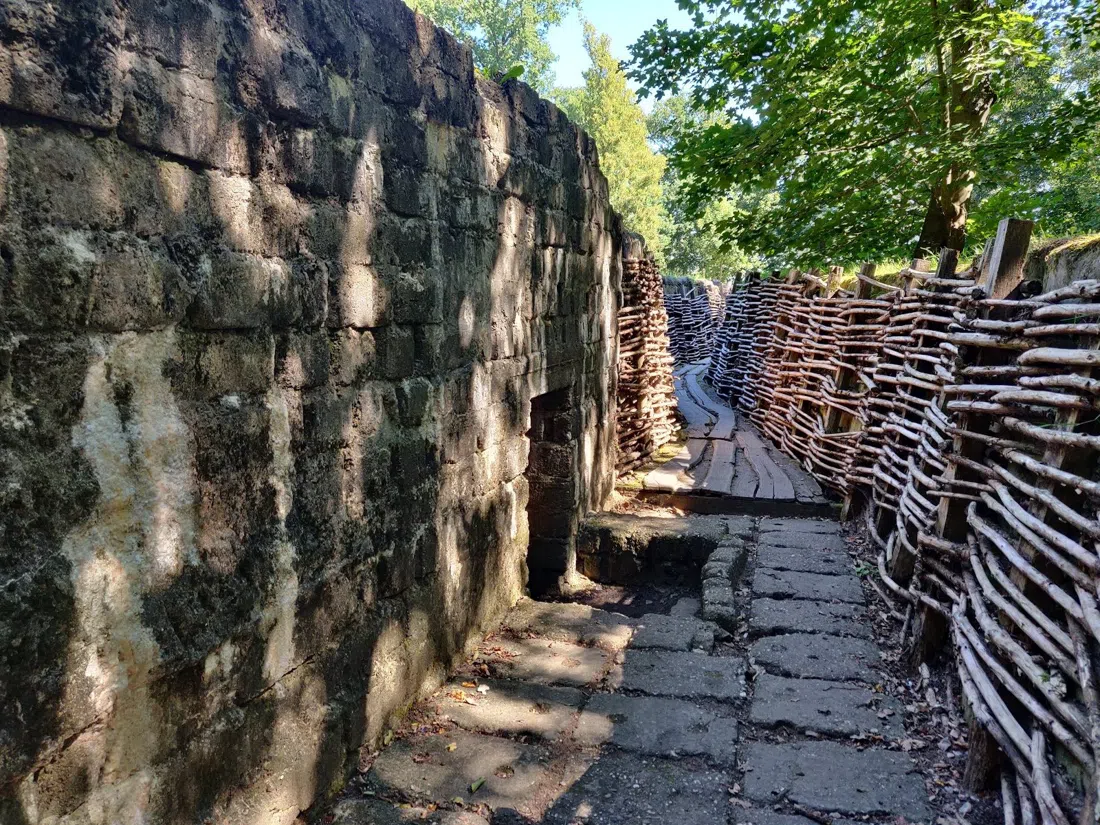
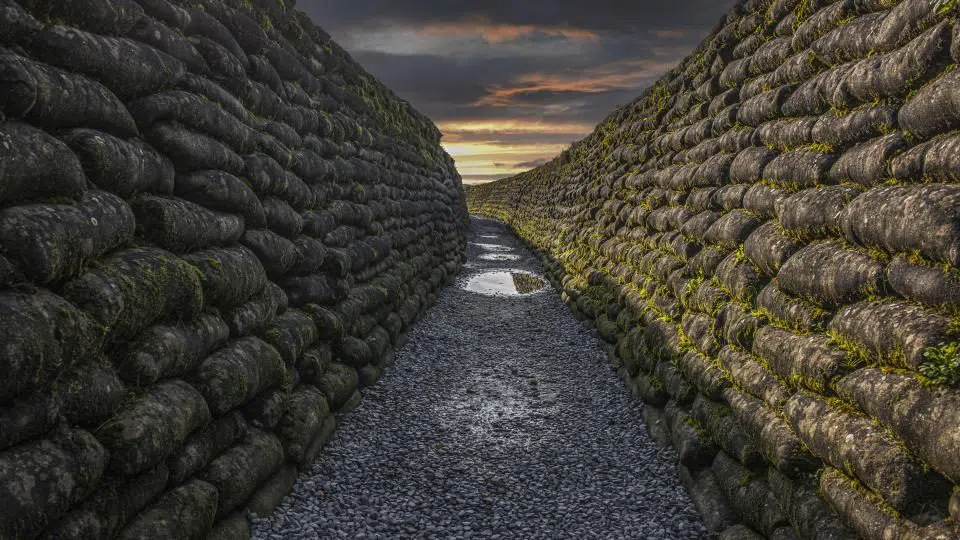
Trench of Death (Dodengang) (on the Yser, a quarter of an hour from Diksmuide) is around €5 and is the Belgian army's own surviving trench, with a visitor centre and interactive displays. It is a real change of perspective from the British salient, but it only opens 15 February to 30 November, daily 09:30 to 17:30 with last entry at 16:30, so it is off the table on a winter trip, and it is far enough north that fitting it in usually costs you a stop elsewhere.
Ypres in the middle of the day
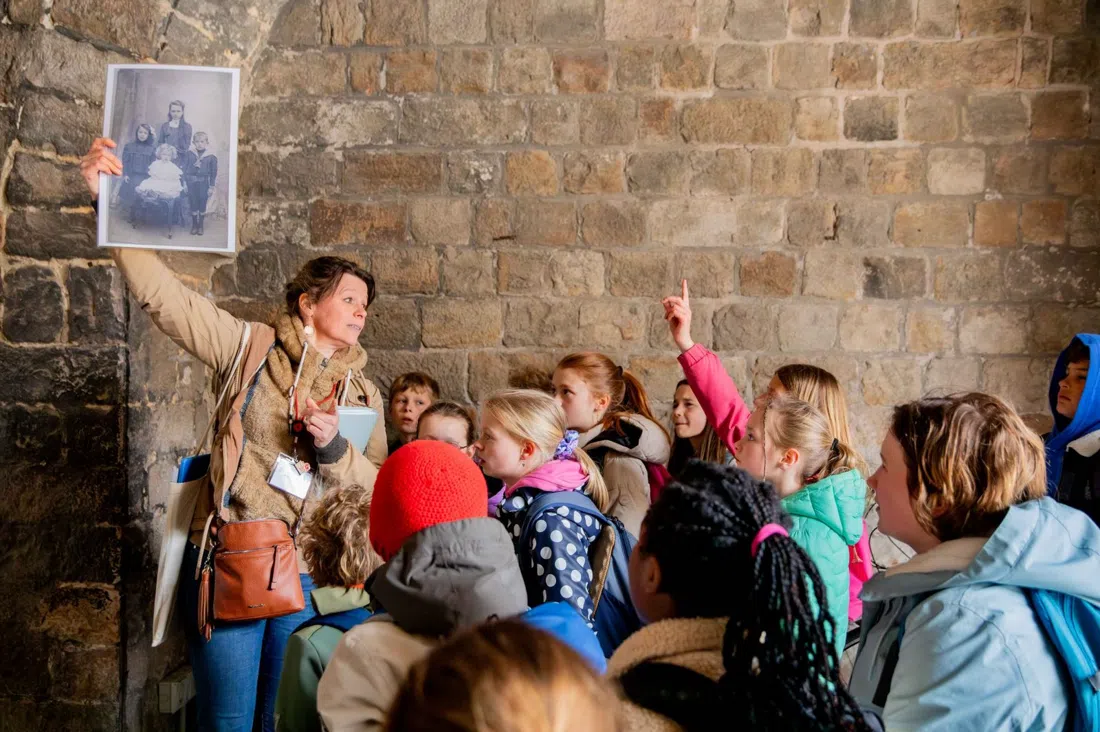
In Flanders Fields Museum (in the Cloth Hall on Ypres's market square) is the anchor museum of the salient and the stop almost every private day from Brussels builds its Ypres hour around. Entry is €12 for an adult, €10.50 over 60, and €6 to €7 for young visitors, with the belfry climb €2 on top. Group rates and pre-booked guides are standard. Watch the calendar: it closes on Mondays from 16 November to 31 March and shuts for a fortnight in early January.
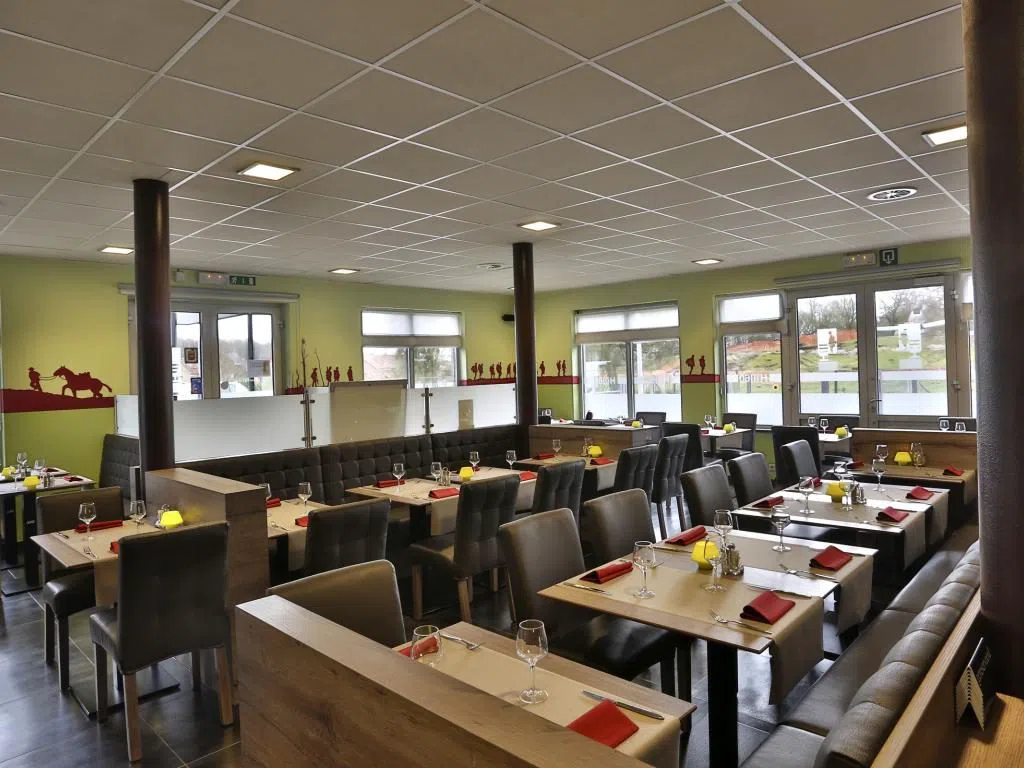
In 't Klein Stadhuis (on the market square, in a former annex of the town hall) is the practical lunch stop, €20 to €35 a head with a drink. Lunch service runs 12:00 to 14:00 only, Tuesday to Saturday, and it is closed Sunday and Monday. A drop-in party of twelve will not get a table. This narrow window is the single thing that most often breaks an itinerary, so raise mealtimes when you book the day rather than at 13:30 in the car.
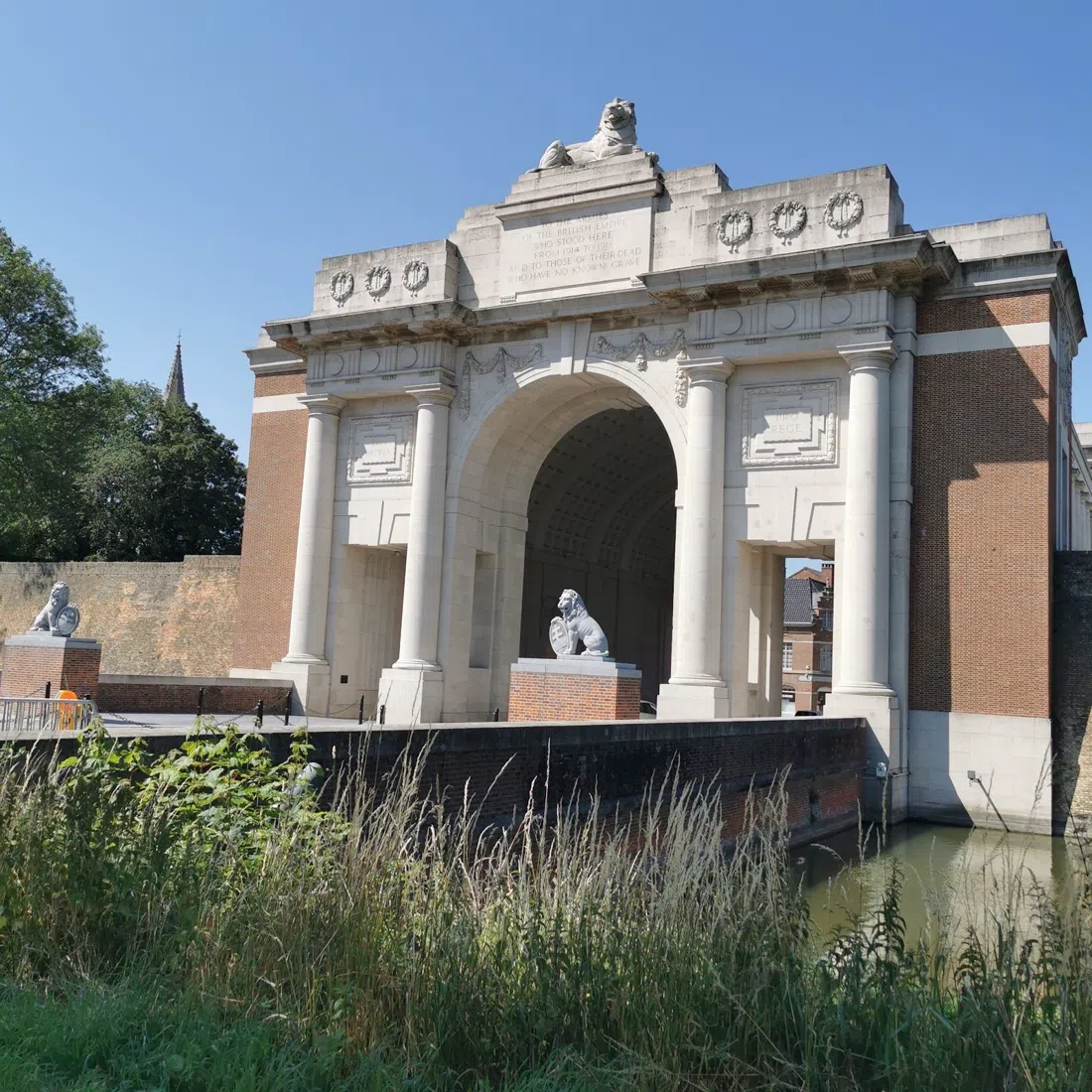
Menin Gate Memorial (five minutes' walk east of the market square) is open-air and free, and the Last Post has sounded under the arch at 20:00 every night since the memorial fully reopened in spring 2025 after a two-year restoration. A full day leaving Brussels in the morning normally reaches the Gate in daylight, not at eight in the evening. If the ceremony is the reason you are coming, say so before you book, and if you want to lay a wreath, that slot has to be arranged in advance with the Last Post Association.
Hooge Crater Museum (Zillebeke, four kilometres out of Ypres on the Menin road) is €9.50 for an adult, €7 for students and €6 for ages 7 to 18, and it holds a dense private collection with a themed café attached. That café is why guides use it as the coffee-and-objects stop on a long day. It is closed Mondays and Tuesdays and takes an annual winter break, and reservations are recommended to guarantee entry.

Poperinge and the stops behind the lines
Talbot House (Poperinge town centre) is around €10, with under-7s free, and is the rare WWI site that is warm rather than grim: the 'Every-Man's Club' of 1915 where rank was left at the door. You can make tea, play the piano and sit in the garden, which is exactly why a good guide places it late in a heavy day. It is closed Mondays except for pre-booked group visits, and it also runs guided group tours and overnight stays.
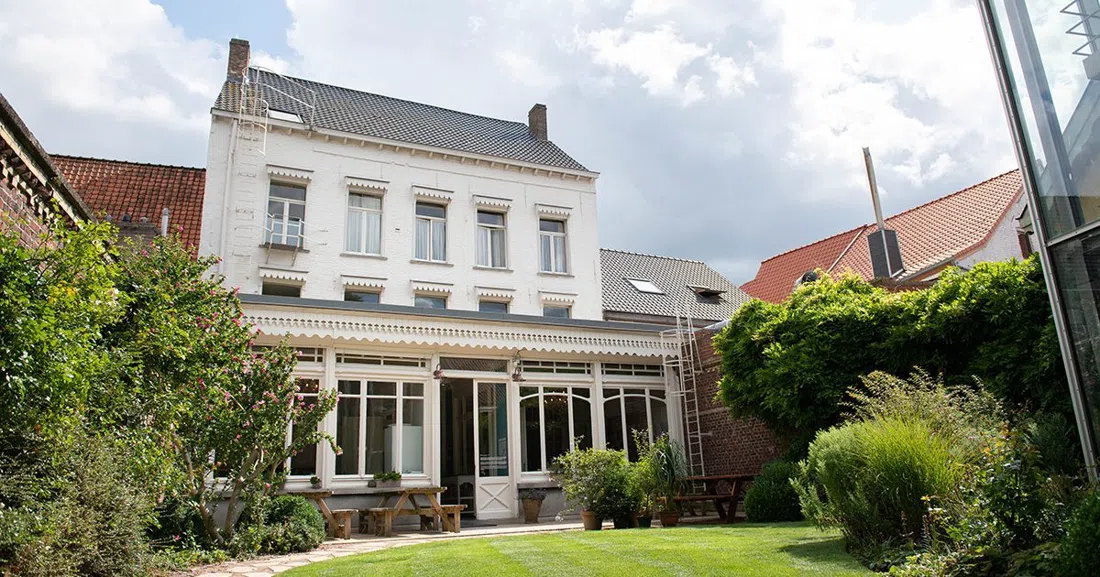
Death Cells and Execution Site, Poperinge Town Hall is free, unstaffed and open roughly 06:00 to 22:00 daily. It takes ten or fifteen minutes and it is the hardest stop on any itinerary: 27 Commonwealth soldiers, many of them shell-shocked, were shot in this courtyard. The hologram in the dark cell is genuinely upsetting, and I would not take a younger child in. The courtyard is small, so larger groups go in two or three waves.
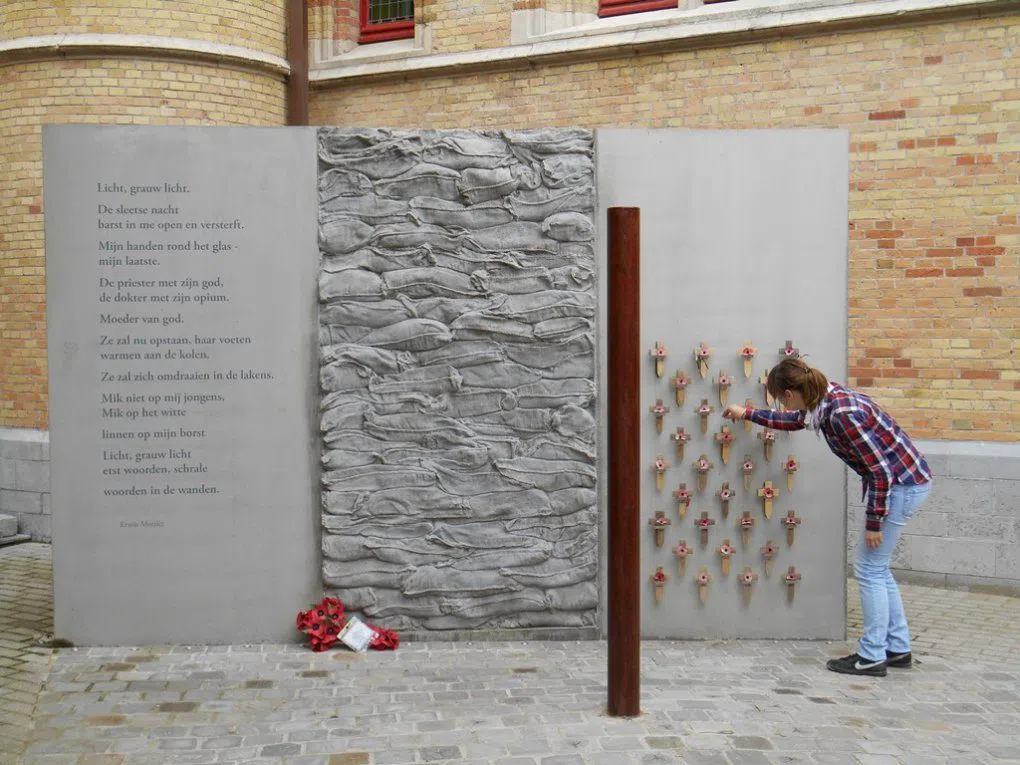
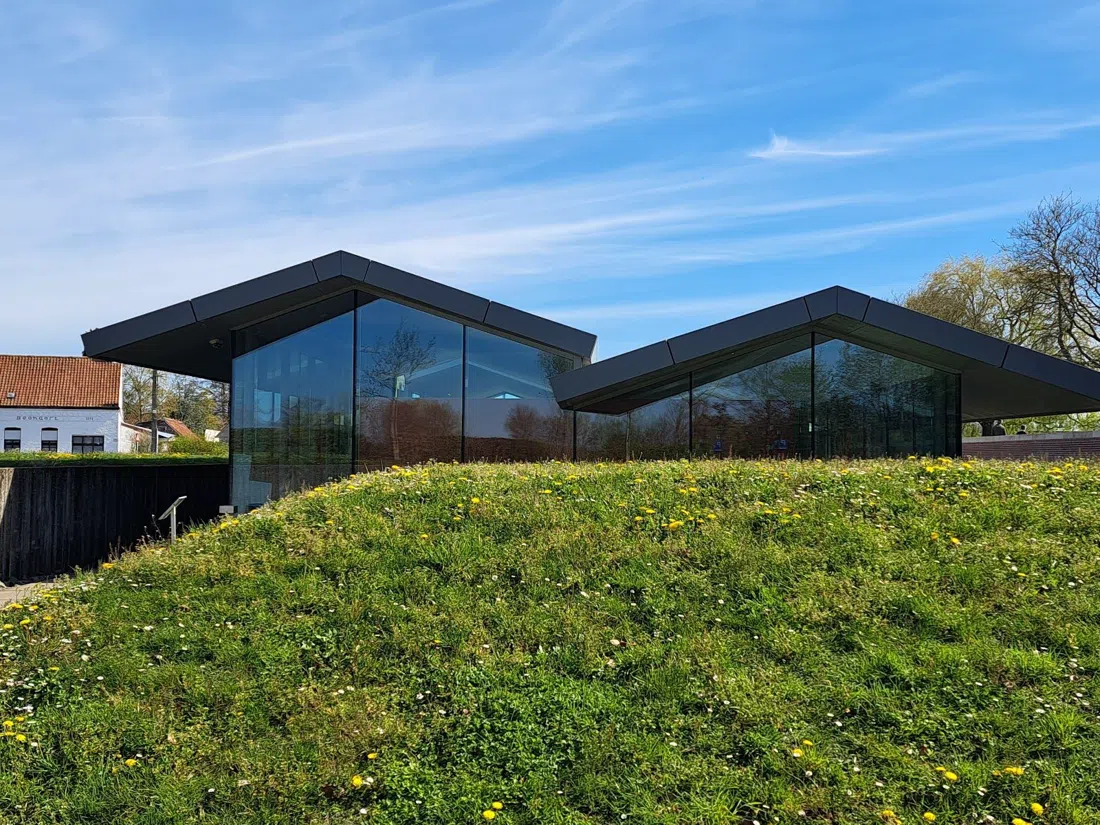
Lijssenthoek Military Cemetery and Visitor Centre (outside Poperinge) is free and always open, with a car park on site. This was the main casualty clearing station behind the lines, so almost everyone buried here died of wounds rather than in action, and the visitor centre's day-by-day timeline makes that arithmetic land harder than any museum caption. Restoration of the entrance building ran into January 2026 with access via the side entrance, so check the state of it if you are driving yourself.
Tickets at the door against a private car
Almost everything that matters in the salient is free. Essex Farm, Langemark, the Brooding Soldier, Tyne Cot, Hill 60, the Poperinge death cells and Lijssenthoek all cost nothing, and the Menin Gate ceremony is free as well. If you somehow did every paid site in one day (the Ypres museum, Passchendaele, Sanctuary Wood, Hooge Crater, Talbot House, Bayernwald and the Trench of Death) you would spend roughly €65 to €70 a head, plus €20 to €35 for lunch.
So nobody books a private day for the admissions. The private full-day tour here starts from 1,044 USD per person, and what that buys is the car, a guide who can read Hill 60's ground for you, the Bayernwald ticket run to Kemmel, a lunch table inside the 12:00 to 14:00 window, and a route that does not waste ninety minutes backtracking. Reviewer numbers are still thin, 16 traveller reviews across the bookable tours here, with the top tour rated 4.9 out of 5 from those 16, so read them rather than counting them, and book ahead rather than hoping to arrange a private car on arrival. A guided option is attached to this page.
If you would rather drive yourself, it is entirely doable: pick five stops, collect the Bayernwald barcode in Kemmel first, and book the lunch table by phone. The sites that punish a self-drive day are the unmanned ones, where there is nobody to explain what you are standing on.
Best time to go
Mid-April to early October is the straightforward window: the Trench of Death is open from 15 February to 30 November, the Tyne Cot visitor centre runs 10:00 to 18:00 daily outside its 1 December to 31 January closure, and the ground at Sanctuary Wood is walkable rather than waterlogged. Late spring and September are the best of it, with long daylight and without high-summer coach traffic at Tyne Cot.
Avoid Mondays if you can. The Ypres museum closes Mondays from 16 November to 31 March, Hooge Crater closes Mondays and Tuesdays, Talbot House is Monday-closed except for pre-booked groups, and the market-square lunch stop is shut Sunday and Monday. A Monday day trip can quietly collapse into free sites only.
Winter is not a write-off, since the cemeteries stay open sunrise to sunset and are at their most affecting under low cloud, but accept that you lose the Trench of Death, the Tyne Cot centre, Hooge Crater, and the Ypres museum for a fortnight in early January. For time of day, go early: the free cemeteries are emptiest before 10:00, and finishing at Talbot House rather than the death cells sends you home in better shape.
Is it worth it
For anyone with a family connection, a reading habit, or a genuine interest in how the Western Front worked, yes. This is one of the few battlefield days where the ground, the museums and the cemeteries are close enough together to make sense in eight to ten hours. It suits couples and small parties of four to six best. Mobility matters: Hill 60 and Sanctuary Wood are uneven, and Passchendaele's dugout is narrow.
It suits two groups badly. If you want a light sightseeing day, this is not it, because the Poperinge cells and Lijssenthoek are heavy and the cumulative effect of six cemeteries is real. And if your sole priority is the Last Post at 20:00, a morning departure from Brussels is the wrong vehicle for it; that wants an evening in Ypres instead.
Practical notes
The tour is a private car or minibus with pickup confirmed when you book, so give a Bruges hotel address or the Zeebrugge cruise berth explicitly. If you are driving yourself, everything is within a short hop of Ypres once you are in the salient, but satnav will happily send a coach down a farm track; use the visitor-centre car parks at Tyne Cot, Lijssenthoek and the Trench of Death.
Carry some euro cash. The free sites cost nothing, but the small family-run museums (Sanctuary Wood, Hooge Crater, Talbot House) and a market-square lunch are simply easier with notes, and you will want a few coins for a donation box.
On timing, plan for eight to ten hours and six to eight stops, not twelve. Book the 12:00 to 14:00 lunch slot before anything else, then build the route around it. Last entry at the Trench of Death is 16:30. The Poperinge death cells stay accessible until about 22:00 if the day runs late.
Door entries for a full programme come to roughly €65 to €70 a head plus €20 to €35 for lunch. The private guided day starts from 1,044 USD per person and is priced for the car and the guide, not the tickets.
Wear boots or shoes you do not mind ruining, and bring a waterproof. Flanders mud is not a figure of speech at Sanctuary Wood.
For what to do with the rest of your stay, the canals, the museums and where to eat without queueing, see the Bruges guide.