At five to eleven on a Wednesday the Markt still sounds like an ordinary square: chairs scraping on terraces, a horse cart, a tour group counting itself. Then 47 bronze bells start up over your head, none of it recorded and none of it amplified. If you are inside the tower at that moment, you climb past the person making it happen, hands and feet working a wooden keyboard in a chamber barely wider than a hallway. Bruges is one of the few cities left where that is a trade with a salary attached rather than a museum display.
Climbing past the keyboard
The Belfort (Belfry of Bruges) rises straight off the Markt in the old centre, and the climb is 366 steps with no lift for most of the height. The staircase narrows as it goes, and the landings are where you get your breath back. The landing that matters sits just below the top: the carillon chamber, where the city carillonneur Wim Berteloot or one of the deputies, Brecht Berteloot and Jean-Pierre Hautekiet, plays live every Wednesday, Saturday and Sunday from 11am to noon, year-round. There is no glass and no viewing room. You file past a working musician mid-piece, close enough to hear the mechanism as well as the bells.
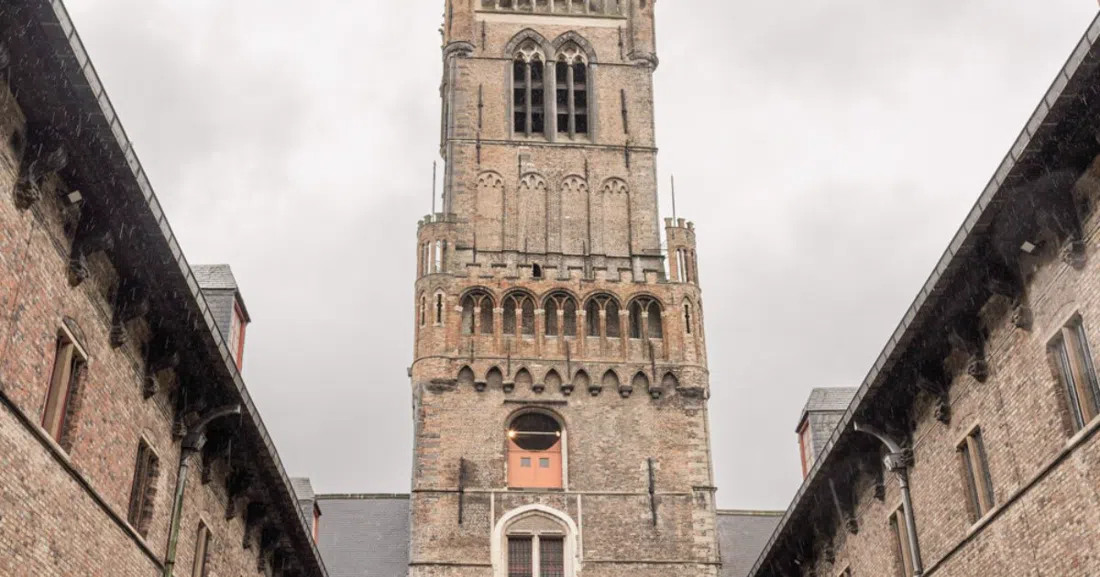
Tickets are €15-16 for adults, €13-14 for under-18s, free under 7, and they buy the climb only. The concert itself costs nothing if you stay in the courtyard below. The door policy is the hard part: entry is by individual timed ticket and there are no group visits at all. A party of ten books ten separate slots or splits up, and schools are the only exception, with restrictions. If you are travelling as a group and someone has promised the whole party a belfry climb, that promise cannot be kept here.
Put one seasonal warning in your calendar. The instrument goes quiet for a few weeks each spring while hundreds of pins are reset in the automatic drum; in 2026 that ran from 6 March to 5 April. During a window like that the climb still works and the view is unchanged, but you can pay €16, do 366 steps and hear nothing played by hand. Check the dates before booking a March trip.
Hearing it properly without the stairs
Street level on the Markt is the worst seat in the house. The sound arrives as a wash off the facades, loud and shapeless, and you lose the inner voices entirely. What you want is height and a little distance, and the terrace at the Historium Tower & Duvelorium on the Markt has both. The terrace opens from 11am daily and entry is free, with no museum ticket required; drinks run roughly €5-8. The Historium Story itself is around €18-27 depending on add-ons, and it is a commercial attraction rather than a heritage one, so be clear with yourself about why you are there. You are buying a beer at the right altitude, one square's width from 47 bells, and that is a good transaction. It also handles groups properly, which the belfry does not.
The courtyard at the foot of the tower is the other free option, and the honest answer for any group of any size: no ticket, no door staff, just arrive and listen.
Summer evenings at eight
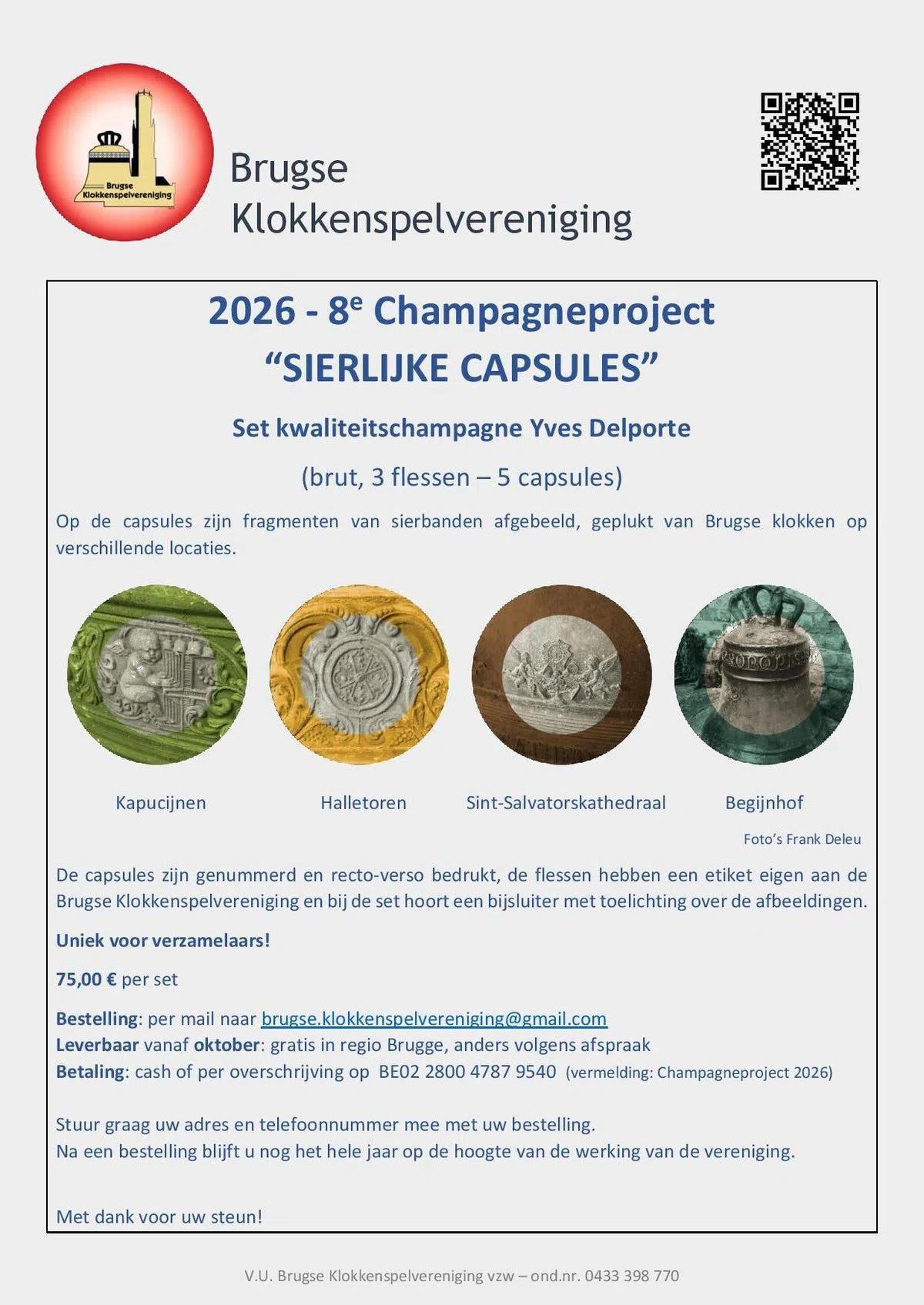
From mid-June to mid-September the Brugse Klokkenspelvereniging runs the Beiaard Zomerconcerten in that same courtyard in the old centre, at 8pm, free and unticketed. Mondays belong to the city carillonneur and the deputies; Wednesdays bring guest carillonneurs from elsewhere in Belgium and abroad. The society also programmes 'beiaardPLUS' nights, which pair the tower carillon with a piano, a folk band or brass down in the courtyard, one instrument fixed 80-odd metres up and another at ground level. That is a stranger and better listening problem than it sounds. René Keerman chairs the society and owns a mobile carillon of his own, which tells you how small and hands-on this world is.
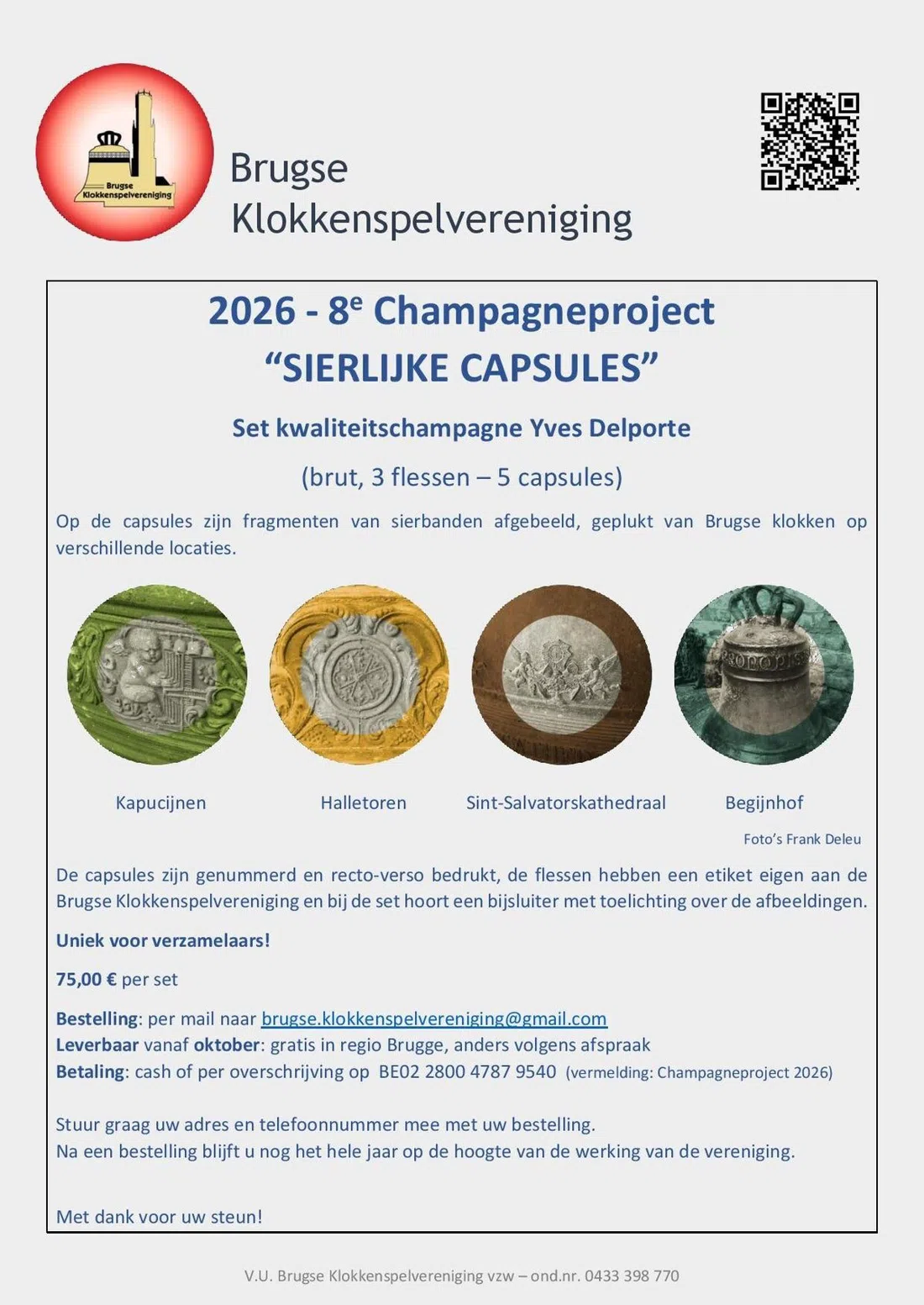
There are no reservations, so the only tactic is arriving early enough to get a chair. The society also live-streams the Wednesday, Saturday and Sunday 11am concerts on Facebook, which is how you hear a Bruges carillonneur from the other side of the world, and a sensible way to check what you are flying for.
The night the bells accompany singing
Once a year the carillon stops being a soloist. At the Beiaardcantus Brugge on the Markt, deputy city carillonneur Brecht Berteloot plays while several hundred people on the square sing back at the tower. The ticket includes the cantus, beer and the songbook, or codex. The format is collective by design, so student clubs book in blocks, and it suits a group better than almost anything else in this article.
It is also the one event here you cannot improvise. The 7th edition on 23 April 2026 sold out completely. Treat the spring 2027 edition as a diary-first item and buy the moment tickets open, rather than turning up on the night and hoping.
The two carillons nobody writes about
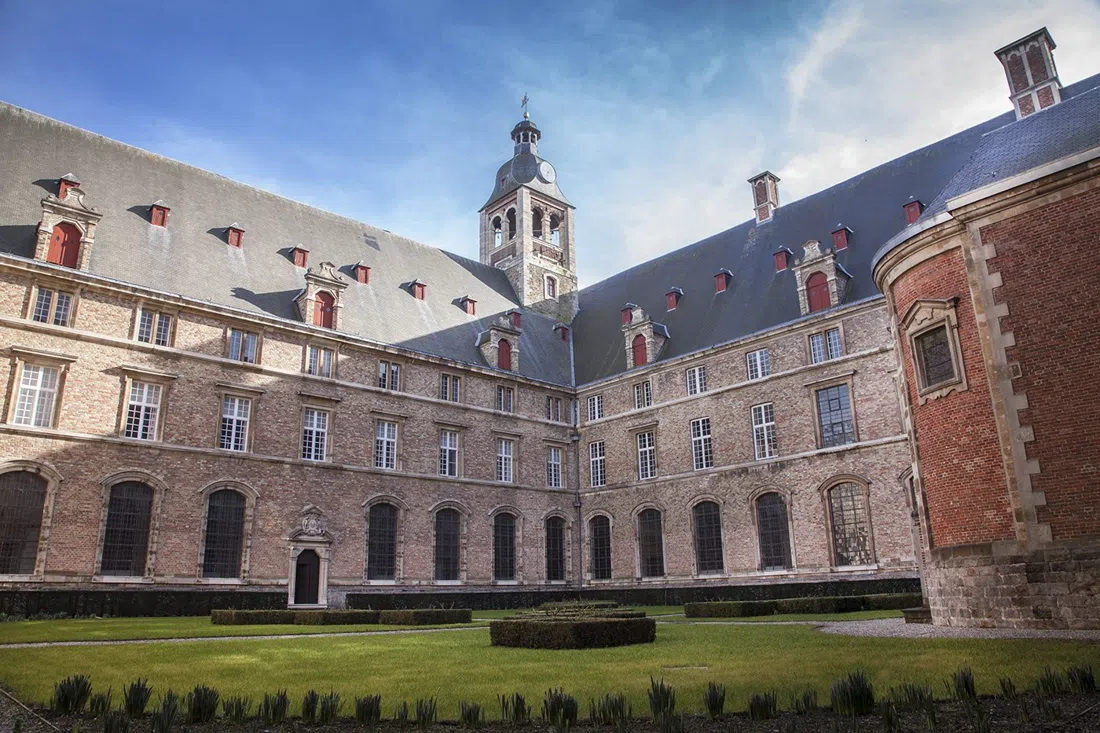
There are exactly three active carillons in the city, and the Belfort gets all the attention. The Grootseminarie Brugge (Ten Duinen), on the old seminary complex east of the centre, has 26 bells. Access is effectively groups-only: guided tours of the complex run Monday to Friday by prior appointment, take about 90 minutes, and can be combined with a meal or a meeting on site. Price is on request through 050 33 03 62 or [email protected]. Two caveats, both important. This is a working seminary rather than an attraction, and the standard tour covers the abbey buildings and the gardens, so if the carillon is the reason you are coming, say that explicitly when you book instead of assuming tower access comes with the ticket.
The third is Onze-Lieve-Vrouw-Bezoekingkerk in Lissewege, the white-washed village north of the centre, and it is the only tower in Bruges you can climb for nothing. No ticket, no booking. The stair and the platform at the top are tight, so a group needs to go up in small batches rather than as one body; the Ter Doest abbey barn next door absorbs large parties far more gracefully. There is a free organ concert on the last Sunday of each month, 10.30am to 11.30am, and the village is used as a festival venue, so a flat ride out along the canal can be timed to land on live music rather than an empty church. For anyone building a wider itinerary, the Bruges guide covers how these outlying parishes fit with the centre.
Where the trade comes from
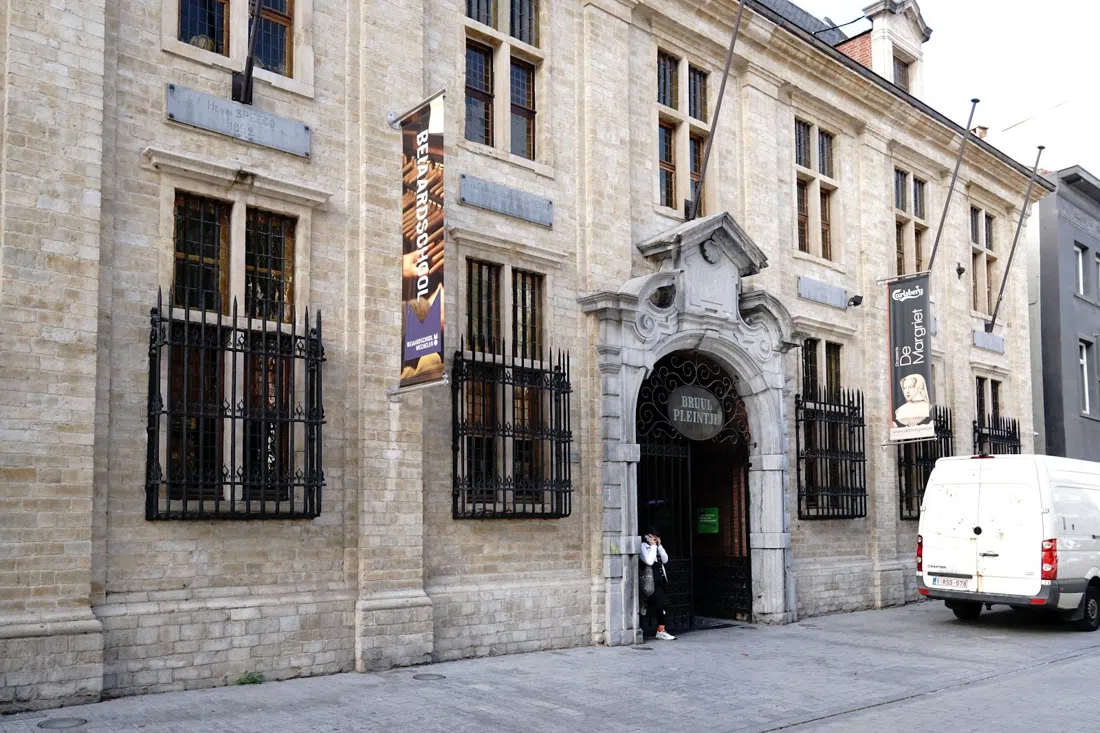
A carillonneur here is a trained professional, not an enthusiast with a key to a tower, and that is down to one institution: the Koninklijke Beiaardschool 'Jef Denyn' (Royal Carillon School). It was founded in 1922 by the carillonneur Jef Denyn, with backing from Herbert Hoover, John D. Rockefeller and William Gorham Rice, and it remains the first and largest carillon school in the world. Adèle Colson became its first female graduate in 1929 and now has a chamber carillon pavilion named after her. The school is an institution rather than a visitor site, and talks and visits are by arrangement, but its public face is a free summer recital series that anyone, including a coach party, can simply attend.
The profession is also spread thin. One of Bruges' deputies also holds a city carillonneur's post in a small town a few kilometres up the canal; another appears on free open-air Monday-evening bills on other Flemish towers through the 2026 season. The guest carillonneurs who turn up on Wednesday nights here are the same small circuit of colleagues. When you hear a Bruges concert you are hearing one person out of a profession you could fit in a single room.
When the weather turns
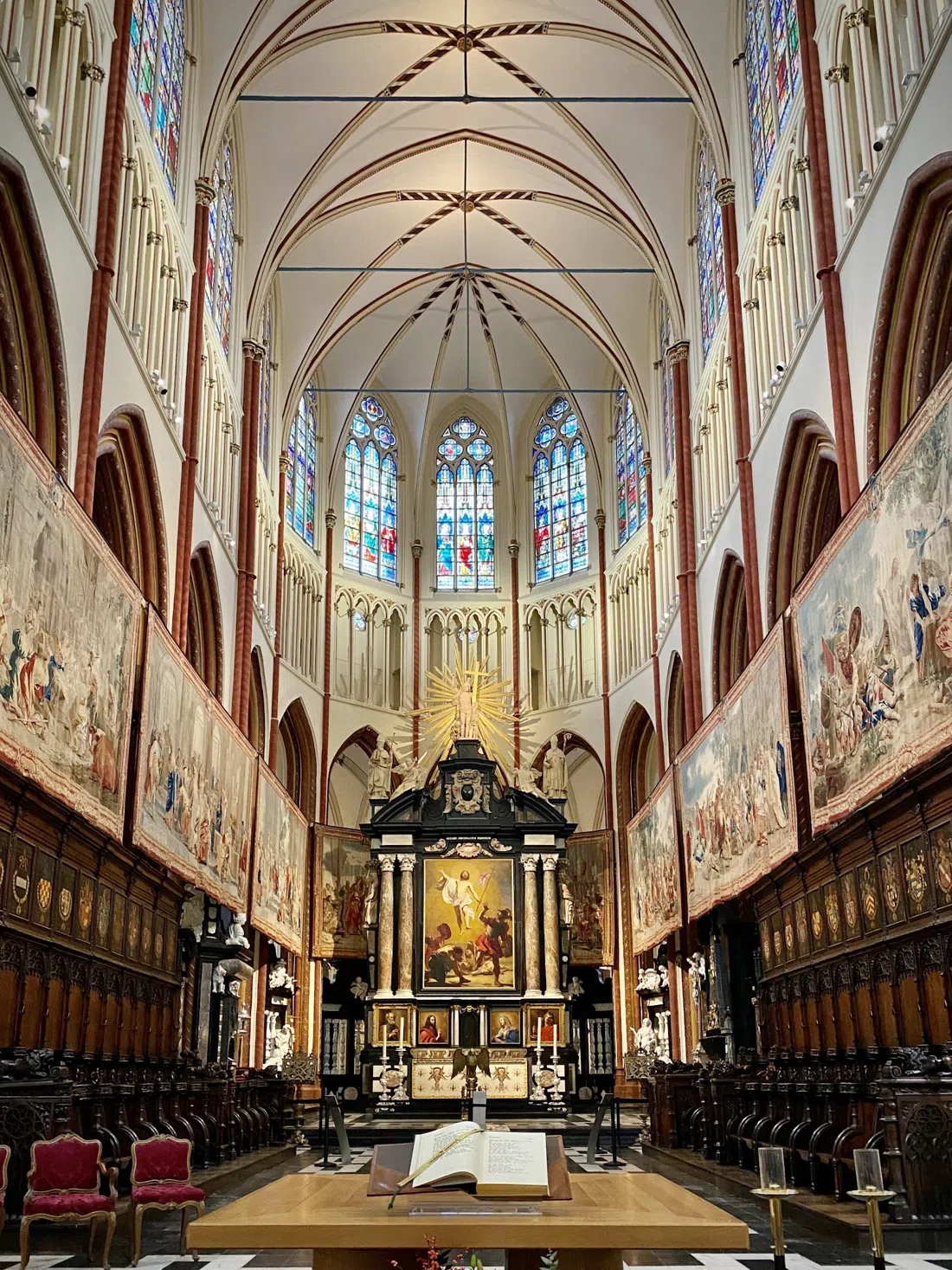
Bells are an outdoor instrument, and Bruges is Bruges. When the rain sets in, swap the bells for pipes and go indoors. Sint-Salvatorskathedraal, two minutes off the main shopping street in the centre, is free to enter with generous daytime hours, and its Kathedraalfestival is run by artistic director and cathedral organist Ignace Michiels across spring, summer and autumn runs, bringing organists from Germany, Spain, Hungary, Austria, the Czech Republic and the Netherlands. Concerts are €12 for organ solo and €15 for organ with voice or instrument, with an €80 season subscription. Seating in the nave is unreserved, so groups sit together easily; email ahead for a block.
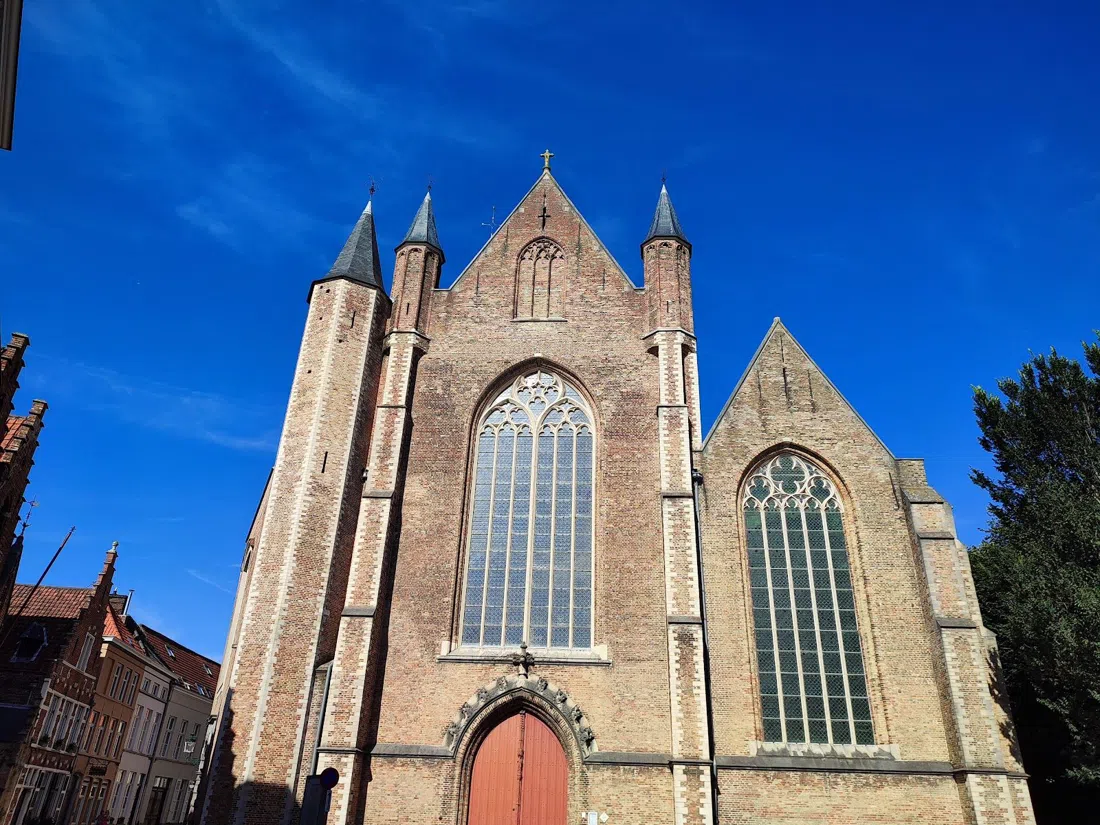
Cheaper and more informal is Sint-Jakobskerk, a five-minute walk north-west of the Markt, which puts on free organ concerts every Friday at 10am through July and August with organists from across Belgium, run with the Cultuurraad. It is the cheapest serious live music in the city. Check the opening hours before you walk over: the church is open 1pm to 5pm daily, so a morning visitor outside concert days will find the door shut.
A tower built to make noise in
The modern inversion of the belfry sits at the Concertgebouw Brugge on 't Zand, at the western edge of the centre. Its Concertgebouw Circuit and Sound Factory is a tower you climb in order to make sound rather than to look out of, on a self-guided route with timed tickets and 80 audioguides. Entry runs €0-12, which makes it the best-value hour in this article; medium-sized groups work well, and it is worth asking about group rates above roughly 15 people.
One date links the two towers directly. On Saturday 31 October 2026 the hall's Iedereen Klassiek opens with an 11am carillon concert over the Markt, billed as classical sounds across the city, with the Sound Factory open the same day. Iedereen Klassiek is pay-what-you-can from €7. If you have one Saturday in Bruges this autumn, that is the one that gives you bells played by hand and a hands-on tower in the same morning.
Inside the belfry with early music
The MA Festival Brugge is the one programme that puts concerts inside the Belfort itself, as well as in Sint-Jakobskerk, Sint-Annakerk and the Lissewege church: the same towers, heard from within rather than from the pavement. Tickets come in three tiers, including genuinely free concerts, and the daily pattern clusters two to three concerts, which makes day-pass-style planning realistic.

Timing is the catch. The 2026 edition ran 31 July to 9 August and is finished. The 2027 edition is 30 July to 8 August, with the programme published on 21 March 2027. The venues are small churches with small capacities, so if a group wants in, book on the day the programme drops rather than a fortnight before travelling.
The tower that is not a carillon
One correction for anyone chasing bells with a map. Onze-Lieve-Vrouwekerk, south of the Markt by the Gruuthuse, is Bruges' other great tower and the visual counterpoint to the belfry; the pair of them are how you work out where you are in the skyline. But there is no public tower climb and no carillon here. The nave is free and open to all; the museum section sells timed tickets at €10 for adults, free under 13, with a combination ticket with the neighbouring Gruuthusemuseum at around €19, and it is included in the Musea Brugge Card. Open Monday to Saturday 9.30am to 5pm and Sunday 1.30pm to 5pm. Come for the interior and the sightline, and do not expect tower music.
Practical notes
Everything in the centre is walkable, including the Concertgebouw and both churches, and the station is a short walk or bus ride from the Markt. Lissewege is a flat ride out along the canal by bike, or a short local train hop; allow a half day if you want the tower, the barn and a coffee.
Cards work everywhere that sells a ticket, but keep €10-20 in coins and small notes for church collection boxes, a chair at a free concert and terrace drinks. Belfry tickets are timed and worth buying ahead, especially in summer and on concert mornings.
The anchor is 11am on Wednesday, Saturday and Sunday, all year. Mid-June to mid-September adds the free 8pm courtyard series on Mondays and Wednesdays. Avoid the spring maintenance window if the carillon is the whole point of the trip, and in July and August put Friday at 10am in Sint-Jakobskerk on the list.
A full carillon day can cost nothing: courtyard concert at 11am, the Lissewege climb, a free Friday organ recital, and the Markt terrace for the price of a beer. Spend properly and you are looking at €15-16 for the belfry climb, up to €12 for the Concertgebouw circuit, €12-15 for a cathedral concert and €10 for the Onze-Lieve-Vrouwekerk museum, well under €60 for a dense two days. For staying within walking distance of the 11am bells, start with a Bruges hotel search and favour anything inside the ring canal; the Markt is loud three mornings a week, and that noise is what you came for.