The Bruges issue
Bruges in October Before the Boats Stop Running
October keeps the canals, the mill and the museums on summer hours with a fraction of the queue, but four dates inside the month decide which version of the city you get.
By Marit HendriksSlow days through the canals
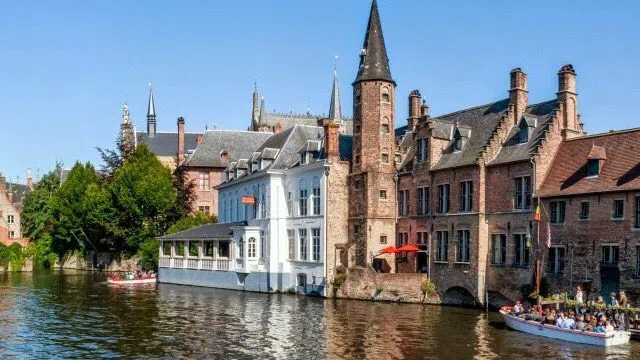
The Rozenhoedkaai railing is wet at eight in the morning and dry by eleven through most of October, and in that gap you can stand at the most photographed corner in Bruges with four other people instead of four hundred. The boats are still sailing, the windmill on the ramparts is still turning, the museums are still on summer hours. All three of those things have an end date, and in 2026 the dates fall inside the month.
Pick your week around four dates
October here is really two half-months. Up to the first weekend the city runs a full summer timetable and behaves like a quieter September. After that things start folding away one at a time, and the gaps are wide enough that they should decide which week you book rather than the other way round.
Four dates matter in 2026. On 4 October the Damme canal boat drops from daily sailings to weekends only, and it stops entirely on 1 November. On 25 October the clocks go back and the long blue hour over the canals moves to teatime. 31 October is a Saturday, and it is the single strongest dated reason to be in the city all month. On 2 November the main museums and the working windmill close their summer opening.
So: come in the first week and everything runs at once, with light until seven and the Damme boat sailing daily. Come for the last weekend and you get the emptiest streets of the shoulder season plus a citywide music day, at the cost of darkness by six. Both are good trips. They are not the same trip, and plenty of people book the second while planning the first.
Plan your Bruges trip
Live prices from our booking partners.
Free cancellation on many rooms. We may earn a commission when you book.
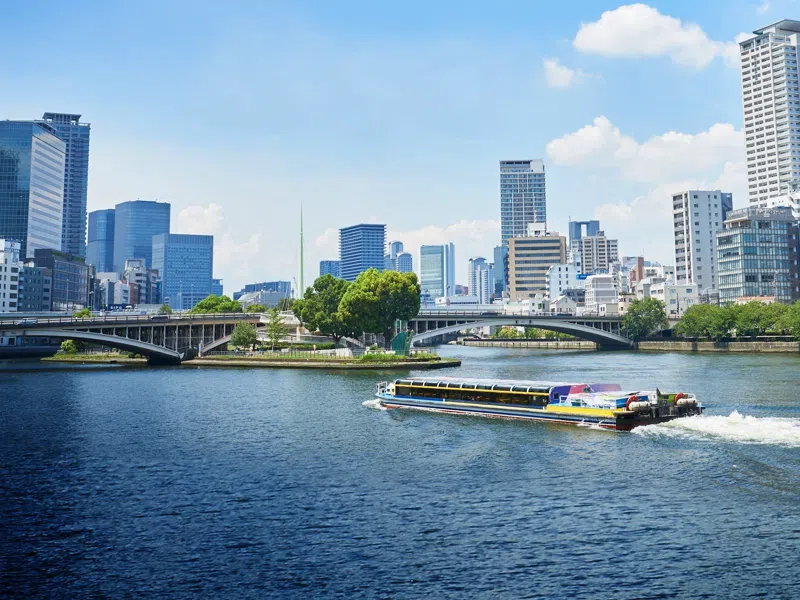
Getting on the water while the boats still run daily
Five licensed jetties sell the half-hour canal loop and they cover much the same water, so the practical question is which one you reach first. Rederij Coudenys (Rozenhoedkaai landing stage) is the one most visitors walk into, because the stage sits at the foot of the steps below the viewpoint. Tickets are €15 for adults and €9 for children aged 4 to 11.
Individuals cannot pre-book, at all. Tickets are sold on the jetty and nowhere else, so if a third-party site offers you a named seat and a time, it is selling you something the operator does not sell. Groups of twenty or more are the exception: reserve directly with the operator and the rate drops to €12 per person, a price held to 31 December 2026.
October is the last month of guaranteed daily sailings, 10:00 to 18:00. From November to February the jetties move to a rota and only one of the five operates on any given day, which is why a winter visitor queues for an hour for the same thirty minutes on the water. Go before eleven. The light is still low across the brickwork, the boats are not running full, and you will not spend the trip looking at the back of someone's phone.
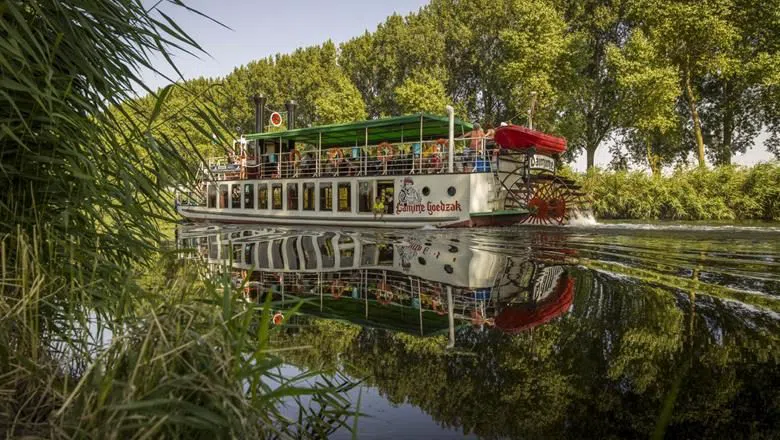
The longer trip is Lamme Goedzak (the Damme run, from the canal north-east of the centre), which takes you out along a straight tree-lined waterway to a small town that exists mainly as a good lunch and a walk back. It costs €12 one way, €18 return, and €7 return for children up to twelve. The one-way fare is the useful one if you would rather come back along the canal on foot or by bike; it is flat the whole way. Groups are welcome here in a way they are not on the small city boats, and charters and group rates are arranged directly with the operator. Watch the dates: daily until 4 October 2026, weekends only until 1 November, then nothing until spring.
Where to spend a wet afternoon
October rain in Bruges usually arrives sideways for twenty minutes and then gives up. You do not need to rebuild the day around it, but you do want one indoor room chosen in advance rather than a damp argument in the Markt.
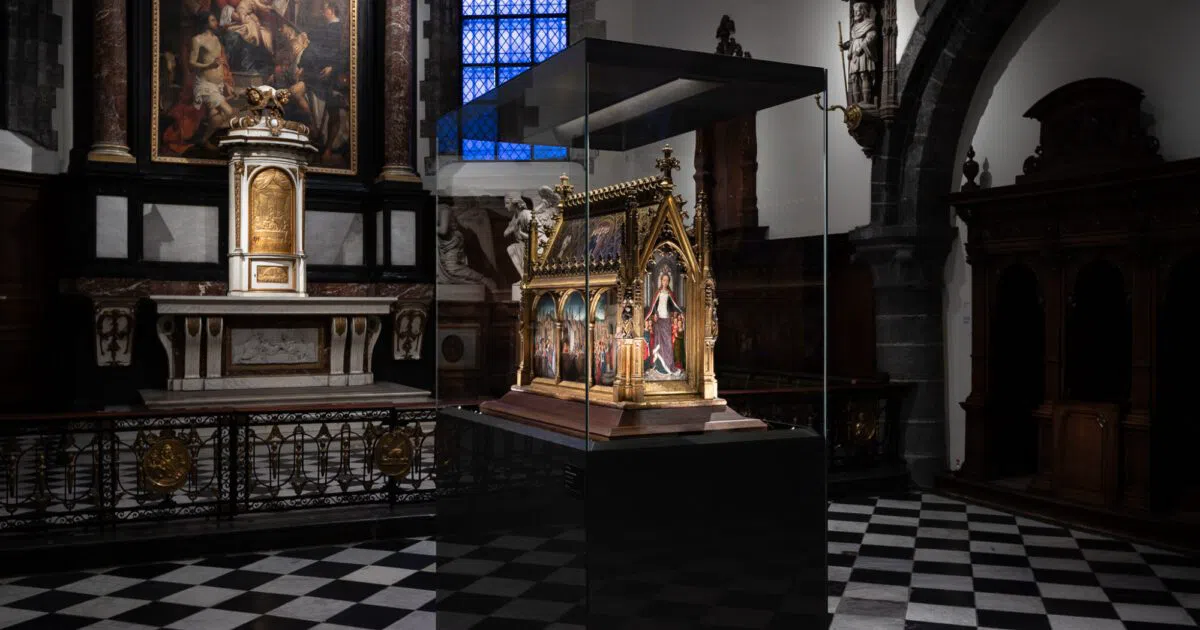
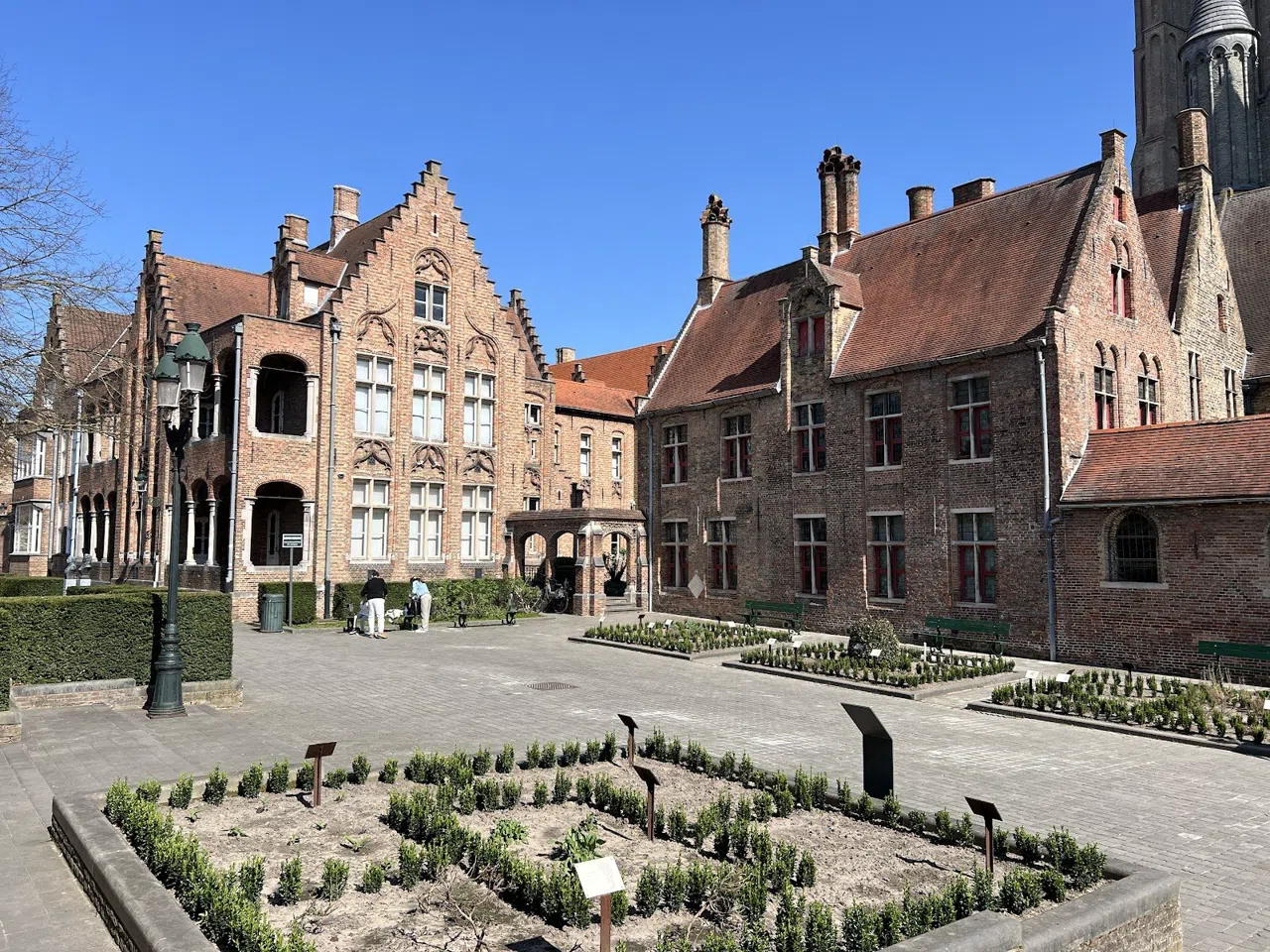
Museum Sint-Janshospitaal (Mariastraat) is the best of them. It is one of Europe's oldest surviving hospital buildings, and the Memling panels are hung in the rooms the order actually used, which does more for them than any gallery wall. Entry is €15 for adults, €13 under 26, €7 under 18 and free under 13. It closes on Mondays.
Groeningemuseum (Dijver) holds the Flemish Primitives and runs 10:00 to 18:00 until 2 November, at the same prices. This is a closing window rather than a permanent fixture: the collection moves to BRUSK for a long renovation from 2027, so the museum as you have read about it for the last thirty years has one more full season. It closes Mondays.
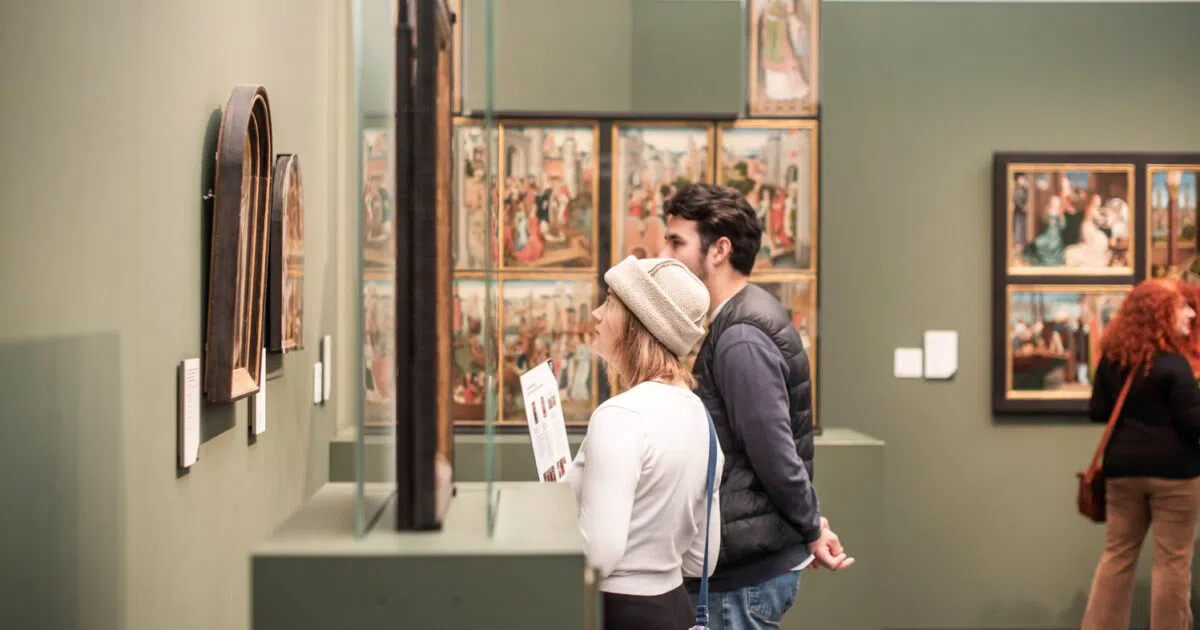
Gruuthusemuseum (Dijver, a two-minute walk on) is €15 for adults and closes Wednesdays, staggered against the Groeningemuseum's Monday, so one of the pair is always open whichever day you land on. The thing to see is the private oratory built out over the church next door, a wooden box from which the family could hear Mass without going outside.
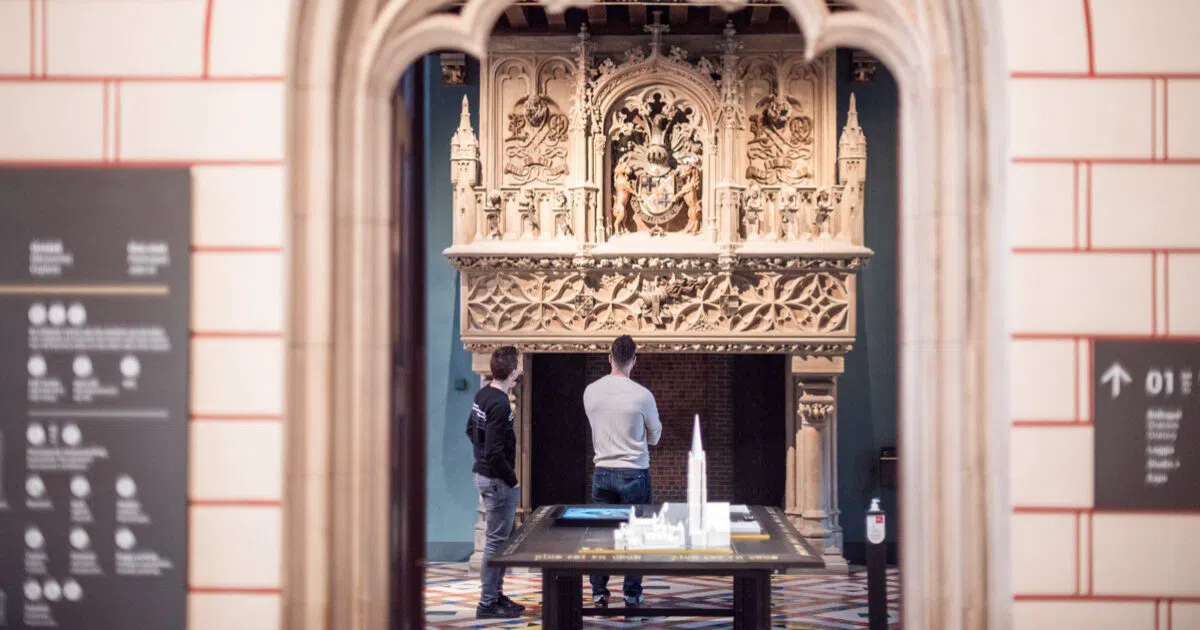
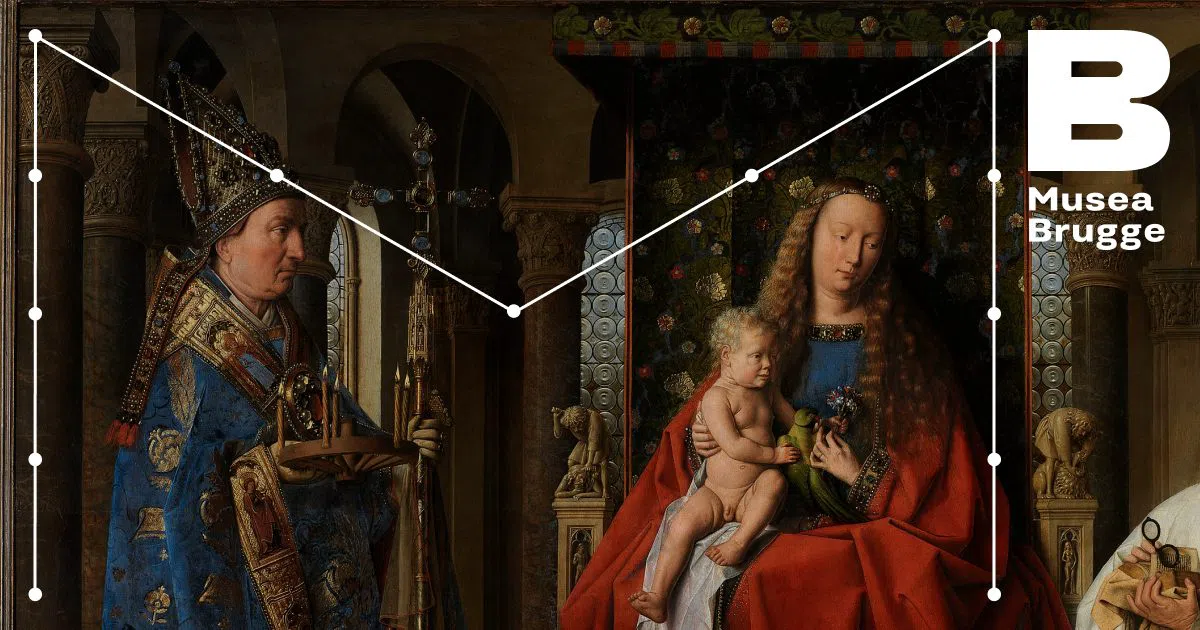
That church is Onze-Lieve-Vrouwekerk Museum (Mariastraat), and the nave is free to enter; the museum section holding the Madonna and the Burgundian tombs is ticketed through Musea Brugge. The Madonna is the only Michelangelo that left Italy in his lifetime. It is ten minutes' walk from the Belfry and, in autumn, rarely queued at all. In July that sentence would be a lie.
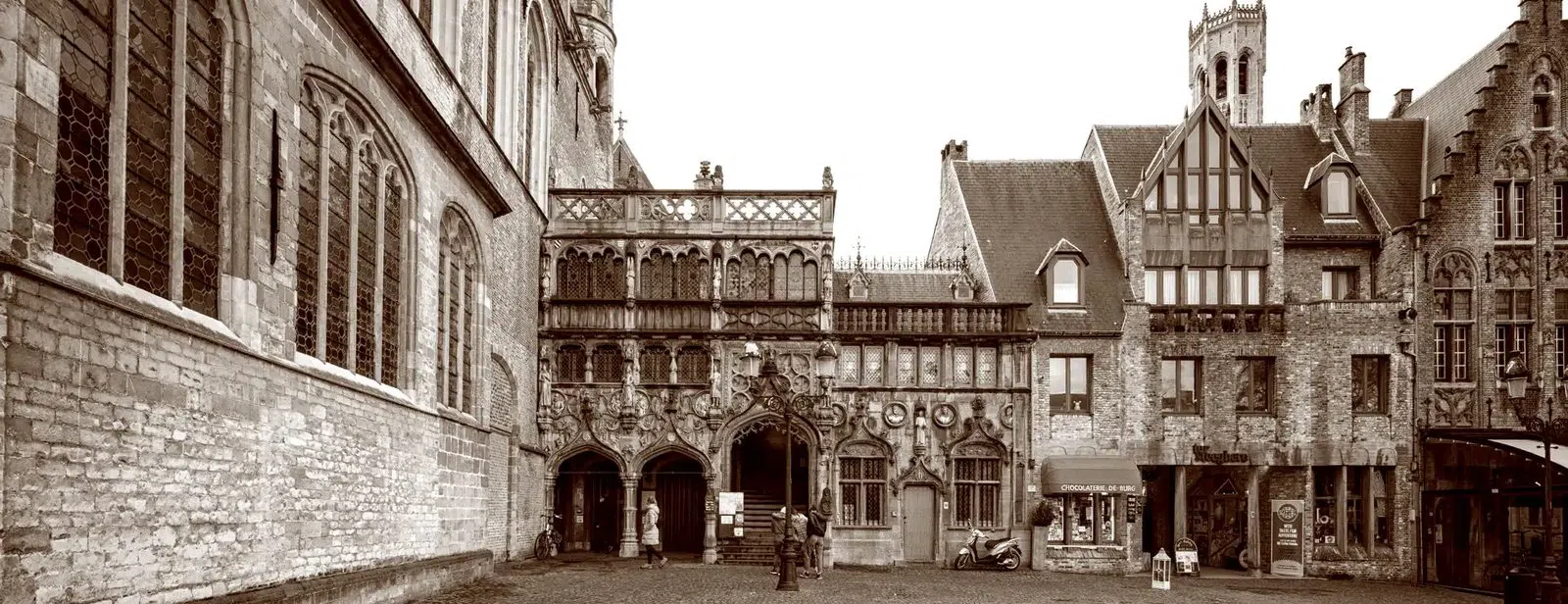
Basilica of the Holy Blood (Burg) is free, with a €5 treasury museum that is free for under-12s. Time this one rather than assuming: it opens 9:30 to 12:30 and again 14:00 to 17:30, and the relic is not on show at every hour. The upper chapel is small and reached only by stairs, so a large party should go up in waves rather than as a block. Guided group visits for all the Musea Brugge sites are booked through the museum service, not at the door.
Two climbs and one wind warning
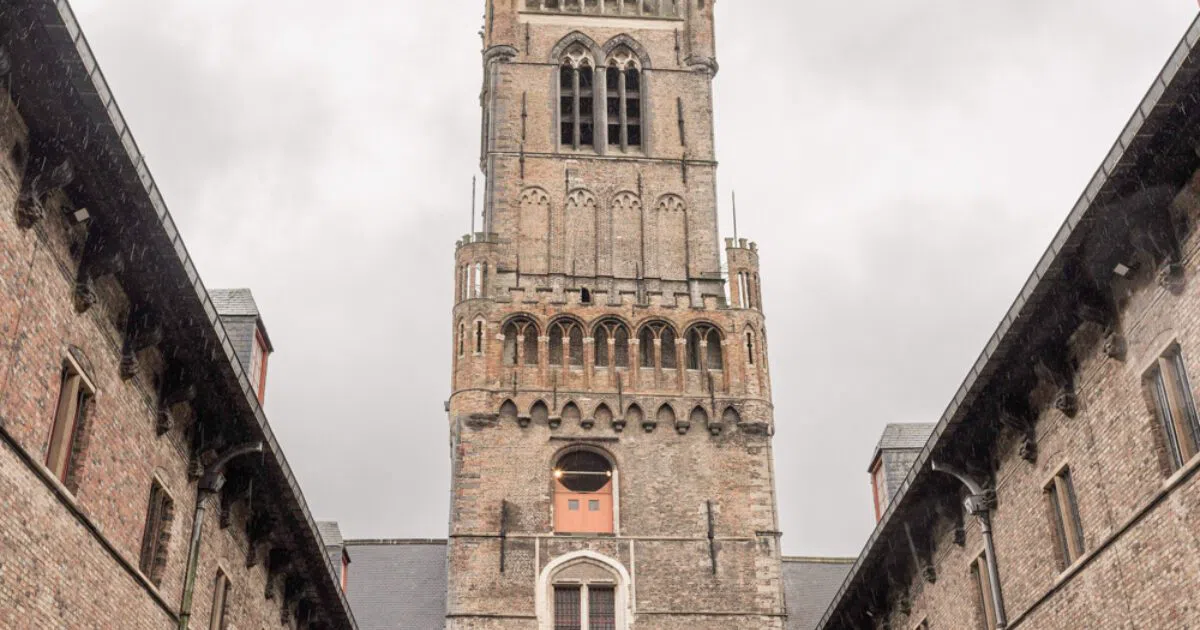
Belfort (Markt) costs €16 for adults from April to November and at weekends, €14 for ages 7 to 17, free under 7, and you should book the timed slot before you arrive. Between 15 and 25 people start the climb every twenty minutes, and there are explicitly no group visits: a party of twelve books as twelve individuals and will be split across two or three slots, so agree where you are meeting afterwards before anyone starts up.
The warning is wind. The tower closes at short notice in strong wind, and this close to the coast that is a real October risk, not a theoretical one. Do not put the climb on your last morning, and have the Basilica or one of the Dijver museums ready as the substitute.
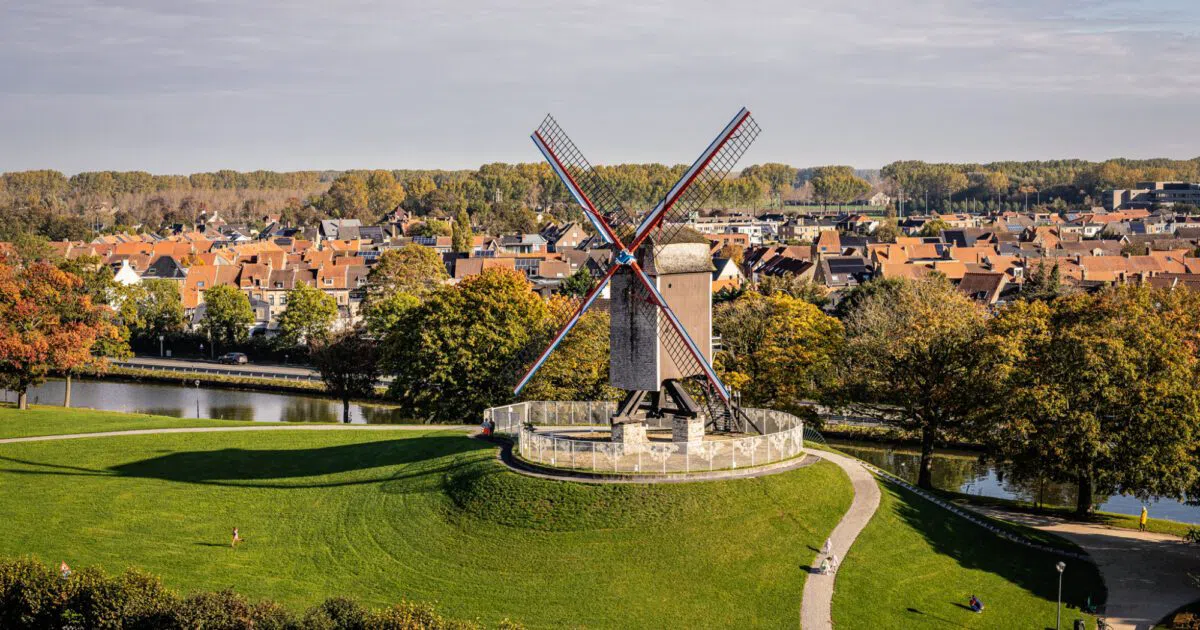
The better climb, for my money, is Sint-Janshuismolen (Kruisvest, on the eastern ramparts), a working windmill with a modest Musea Brugge entry and free admission under 13. It is one steep timber staircase into a cramped cap, so it takes small groups only and no guide can hold a large party inside. Its season also ends: it runs summer hours only to 2 November, then drops to a single Sunday a month all winter. If you want to see grain actually being milled, October is the last easy chance.
Beer and chocolate in rooms that hold ten people
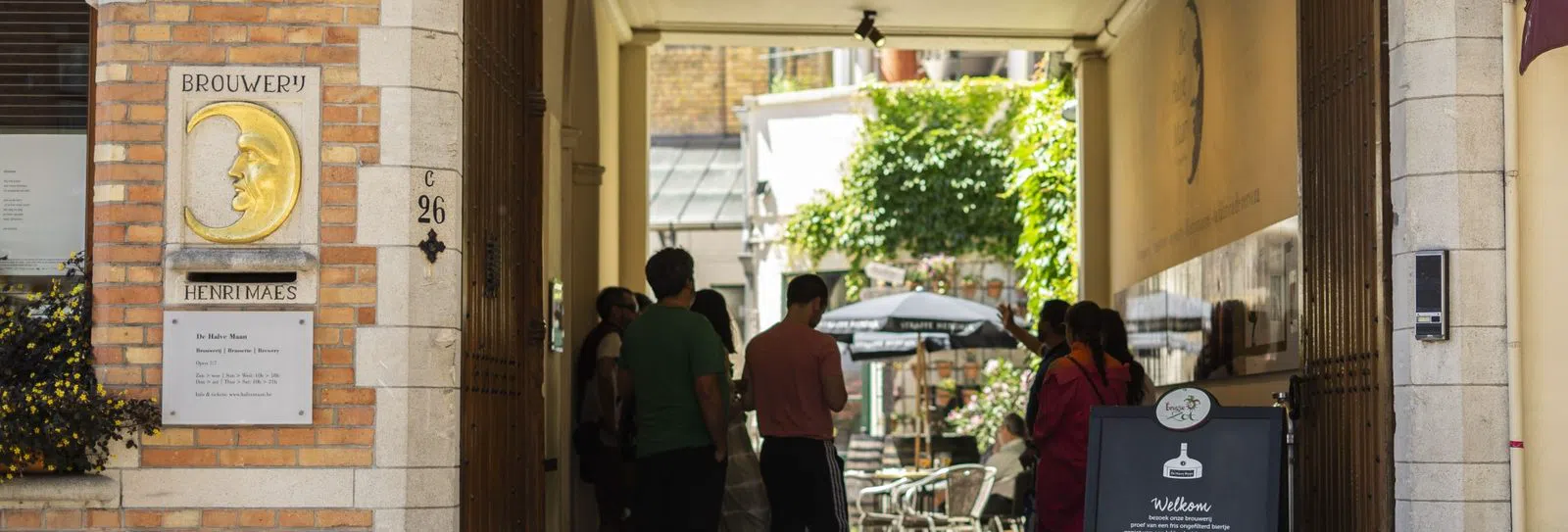
Brouwerij De Halve Maan (Walplein) is the working brewery in the centre and the tour is a genuine one. The classic runs 45 minutes for €16 and includes a beer; the XL tasting is €26 for 90 minutes and three beers, at weekends. Before you book, note the 220 steep steps on the route, which rule it out for some readers entirely, and the cap of 25 people per group, with custom and private tours arranged on request. The underground beer-pipeline sequence was rebuilt with new AV in 2024 and is better than it sounds.
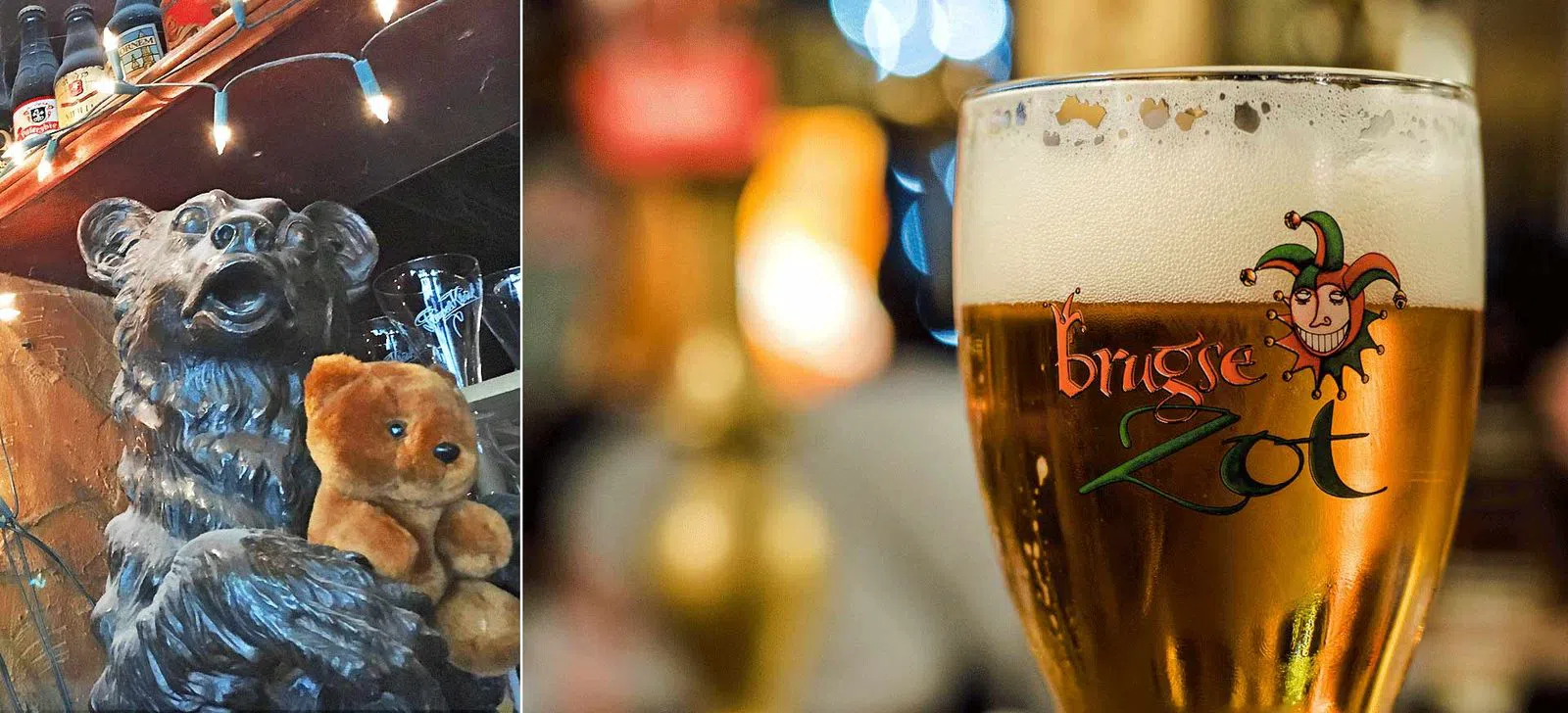
't Brugs Beertje (Kemelstraat) has been rated among the world's best beer cafés for years and is still a small brown room with a long list, at €4 to €7 a beer. It opens at 16:00 and closes on Wednesdays, which catches people out constantly. There is no reservations culture; a handful of you will be fine, six or more will be standing.
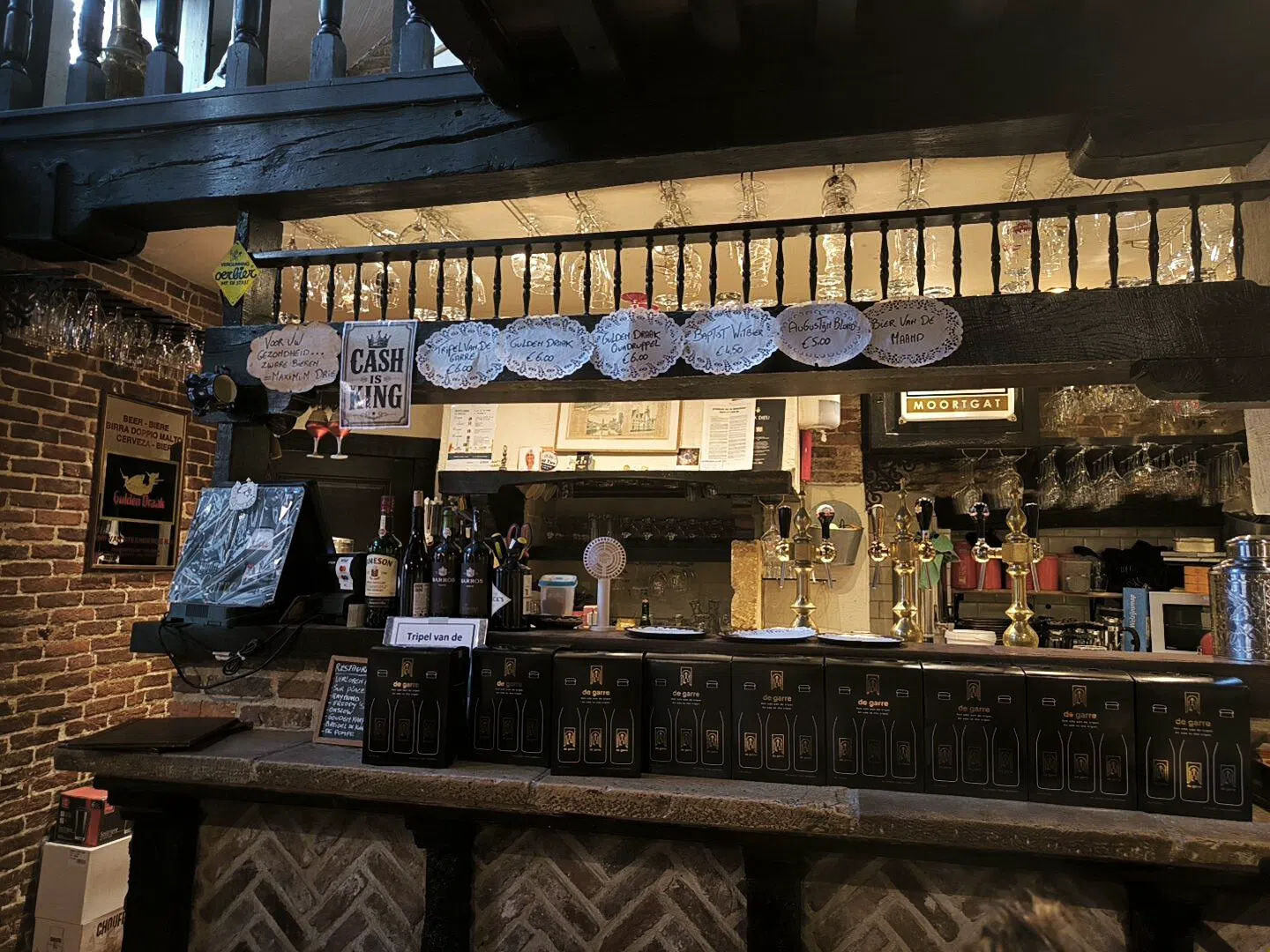
Staminee De Garre (down the alley off Breidelstraat) is tiny and linked by stairs, and the staff cap the room and limit the house Tripel van De Garre to three per person, sensibly, at that strength. It is brewed by Van Steenberge and poured essentially only here. The alley is easy to walk past twice. Expect around €6 to €9 for the tripel, and do not bring a group.
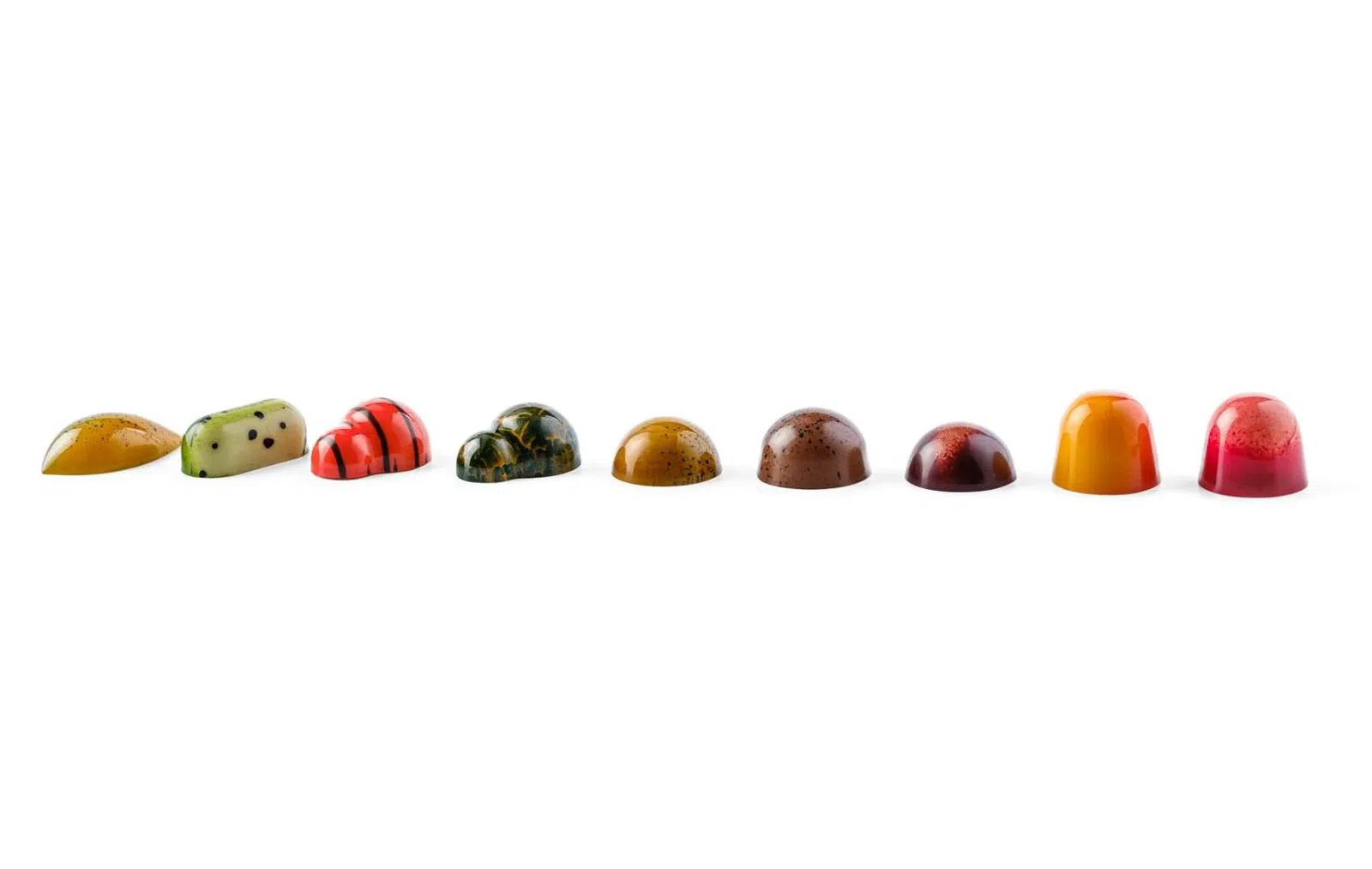
The Chocolate Line (Simon Stevinplein) is Dominique Persoone's original 1992 shop and one of the few places in the centre making chocolate from the bean on site rather than reselling someone else's couverture. A few euro per piece, boxes from roughly €15, no booking needed at the counter; the workshop side runs tastings for groups on request.
The day out to Ypres
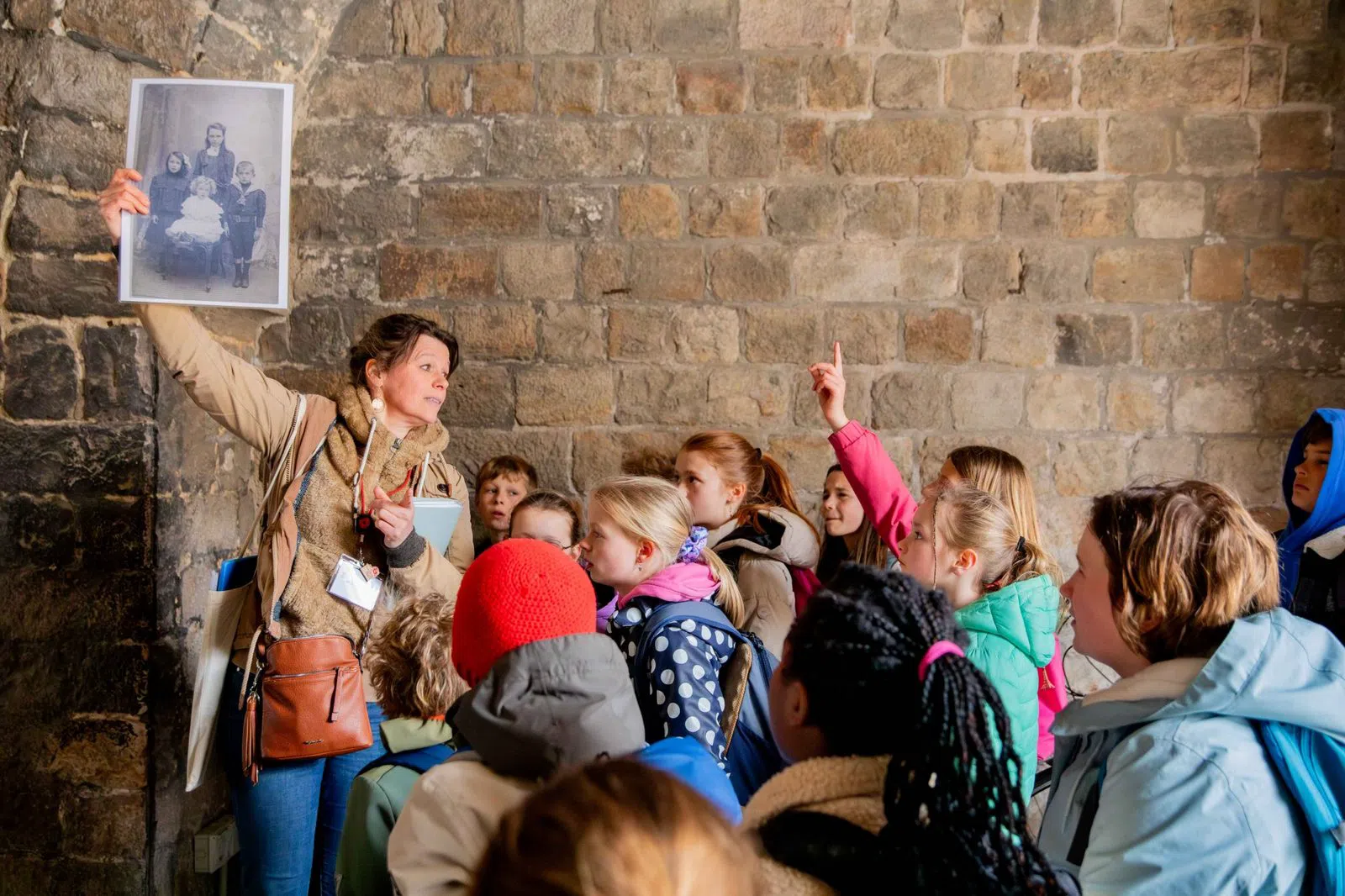
If you take one full day out of the city, take it to the In Flanders Fields Museum, Ypres (Grote Markt, in the rebuilt Cloth Hall). Entry is modest; the usual way to do it from here is a guided full-day coach or minivan trip of about ten hours, run by several Bruges-based operators, which costs considerably more than the ticket but solves the transport and the battlefield sites in one go. Groups are straightforward to place. The museum opens daily 10:00 to 17:00.
October suits this trip better than summer does. The fields read properly in low, flat light, and the Last Post is sounded at the Menin Gate every evening. After the clocks change on 25 October it falls in full darkness, which most people find the stronger version.
The last Saturday of the month
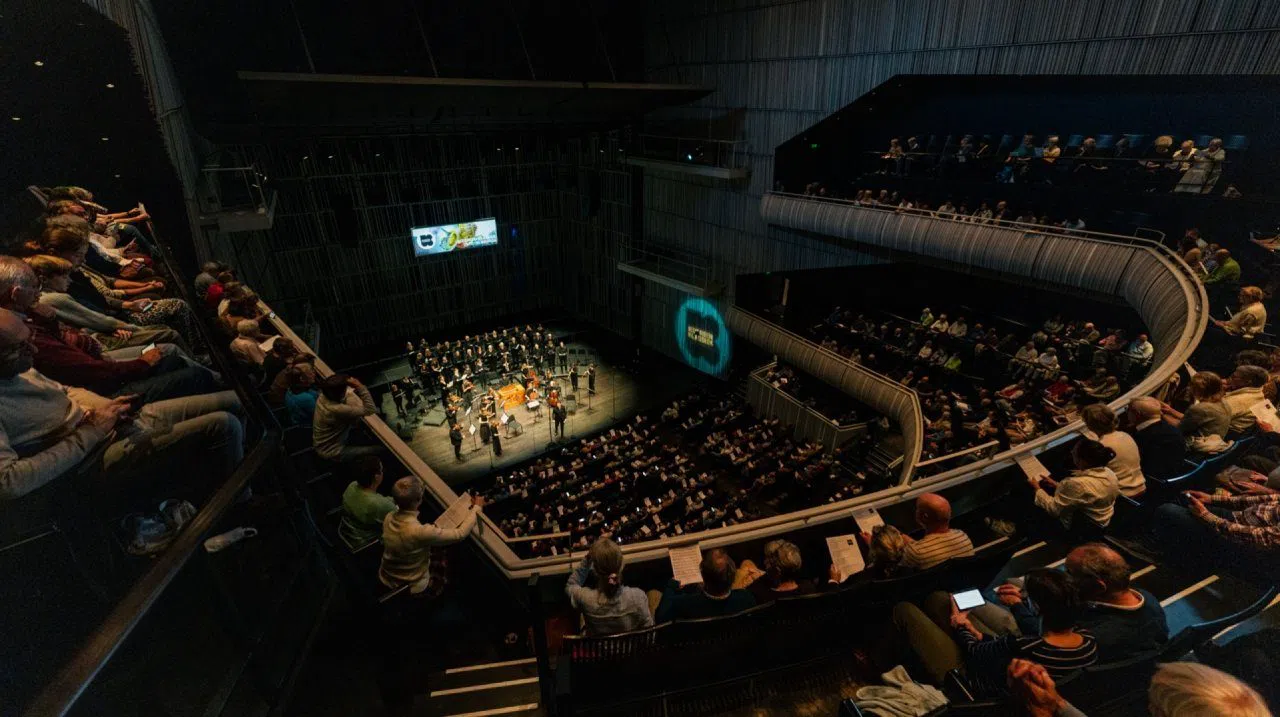
Concertgebouw Brugge ('t Zand) hosts Iedereen Klassiek on Saturday 31 October 2026, and it is the strongest single dated reason to be in Bruges this month. It is a citywide classical day rather than a single concert: street pianos, Bach sing-alongs, small stages scattered through the centre and a full orchestral finale in the hall. Tickets start from €7 with a pay-what-you-can option, and because the day spreads across many small venues a group can split up and regroup without anyone missing the main event.
It is also the one weekend in October when beds are genuinely tight, so book early. Start with the Bruges hotel search and work outward from the centre if the canal-side places have gone.
One dinner outside the ring
De Jonkman (Maalse Steenweg 438, east of the centre) is Filip Claeys' two-star kitchen, built on North Sea bycatch (the fish the boats land and nobody has been taught to order) and produce from small local farms. Tasting-menu prices are what you expect at that level: this is the splurge dinner of the trip, not a casual booking. There is a dedicated private dining room alongside the main one, so it takes groups properly. Book well ahead, and sort the ride back before you sit down; it is outside the centre and you will not casually flag a taxi at eleven.
Practical notes
The station sits about twenty minutes' walk south of the Markt, and the historic centre is small enough that you will walk everything except De Jonkman and the Ypres day. Cobbles are relentless, so bring shoes you would happily do 15,000 steps in, and note that most canal-house hotels have narrow stairs and no lift.
Everything here is priced in euro. Cards work almost everywhere, but carry €20 to €30 in cash for the small beer cafés, the Basilica treasury and the odd market stall.
Boats and the Belfry first thing, museums after lunch when the rain tends to arrive, cafés from 16:00 when 't Brugs Beertje opens its doors. Remember the two closing days: Mondays take out Sint-Janshospitaal and the Groeningemuseum, Wednesdays take out the Gruuthusemuseum and 't Brugs Beertje. Plan those days around the church, the Basilica and the brewery.
A realistic day without the splurge dinner: €15 canal boat, €16 Belfry, €15 museum, €16 brewery tour, plus €25 to €35 on food and beer, so call it €90 to €110 a head. The Ypres day roughly doubles that. Iedereen Klassiek, at €7, is the cheapest good thing in the month.
For everything outside this month, where to base yourself, what changes in spring, the rest of the museum network, start with the Bruges guide.
Before you go
Are the canal boats still running in Bruges in October?
Yes. October is the last month of guaranteed daily sailings from 10:00 to 18:00. Rederij Coudenys at the Rozenhoedkaai landing stage sells tickets on the jetty for €15 adult, €9 for children aged 4 to 11. From November to February the five licensed jetties move to a rota and only one operates each day. The separate Damme boat, Lamme Goedzak, sails daily only until 4 October 2026, then weekends only until 1 November.
Can I book anything in advance, or is it all walk-up?
It depends on the attraction. The Belfort must be booked as a timed slot: only 15 to 25 people start every 20 minutes. De Halve Maan tours and De Jonkman should also be booked ahead. Canal boat tickets cannot be pre-booked by individuals at all; they are sold on the jetty only. Groups of 20 or more are the one exception and reserve directly with the operator at €12 per person.
Which museums close on which days in Bruges?
The Groeningemuseum and Museum Sint-Janshospitaal close on Mondays; the Gruuthusemuseum closes on Wednesdays. The stagger is deliberate, so one of the Dijver pair is always open. 't Brugs Beertje also closes Wednesdays and only opens at 16:00. The Basilica of the Holy Blood runs 9:30 to 12:30 and 14:00 to 17:30 daily, but the relic is not displayed at every hour.
Is it worth timing the trip around 31 October?
If you like classical music, yes: Iedereen Klassiek falls on Saturday 31 October 2026, a citywide day of street pianos, Bach sing-alongs and an orchestral finale at the Concertgebouw, from €7 with a pay-what-you-can option. The trade-off is light. The clocks go back on 25 October, so that weekend is dark by six, and the Damme boat has already stopped.
What does a day in Bruges cost in October?
Roughly €90 to €110 per person for a full day: €15 canal boat, €16 Belfry, €15 museum entry, €16 brewery tour and €25 to €35 on food and beer. Children pay less throughout: free under 13 at the Musea Brugge sites, €9 on the boat, free under 7 at the Belfry. A guided full-day trip to Ypres roughly doubles the daily figure.