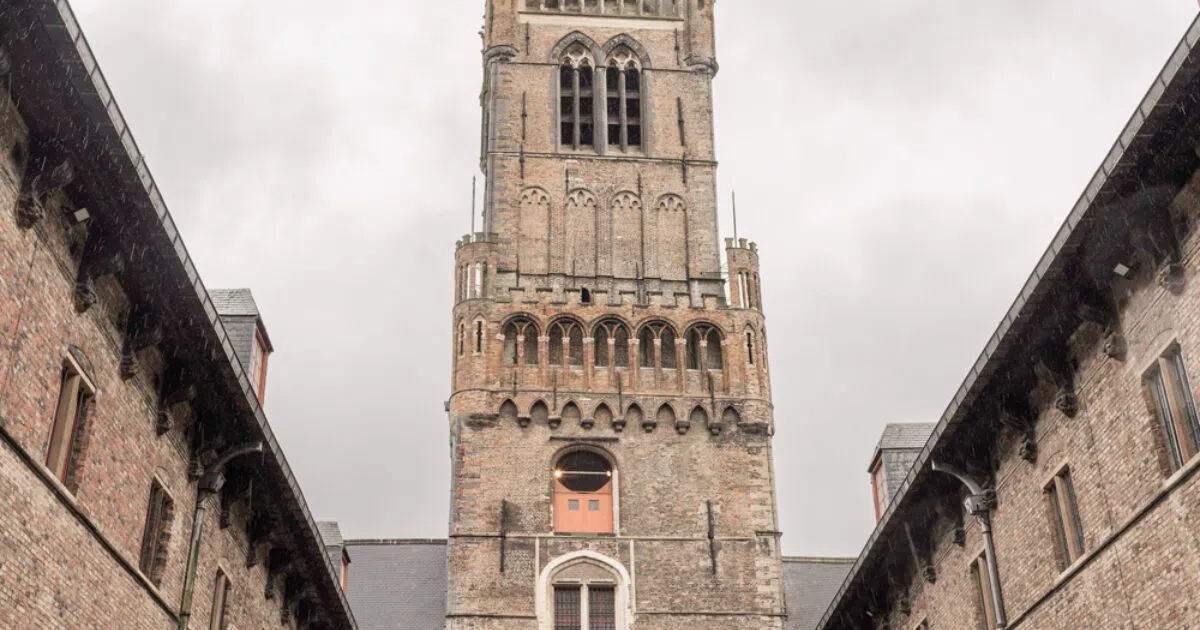
The carillon never announces itself. Two minutes before the hour the drum inside the Belfry starts turning, the quarter-phrase drops onto the Markt from somewhere above the gulls, and the terraces go quiet for as long as it lasts. Bruges has kept time this way since its bells were recast after the fire of 1741, and it is still the most dependable thing in the city centre, more dependable than the trains or the weather.
This is a listening itinerary rather than a sightseeing one. Some of it is ticketed and worth the money; a lot of it is free, seated and under-attended. Below, in the order a two- or three-day trip can reasonably take them, are the places in Bruges where bronze still does the work. For everything else in town, the Bruges guide covers the rest of the centre.
Standing inside the sound
The way in is not off the square itself. Walk to the south side of the Markt, under the arch into the inner courtyard at Markt 7, and the ticket desk and the staircase are both there. Belfort van Brugge (Markt, the Belfry of Bruges) works on timed entry: €15–16 adult, €13–14 for ages 7 to 17, free under 7. Queues build from mid-morning, so take the first slots of the day or a late-afternoon one and skip 10am to 1pm entirely.
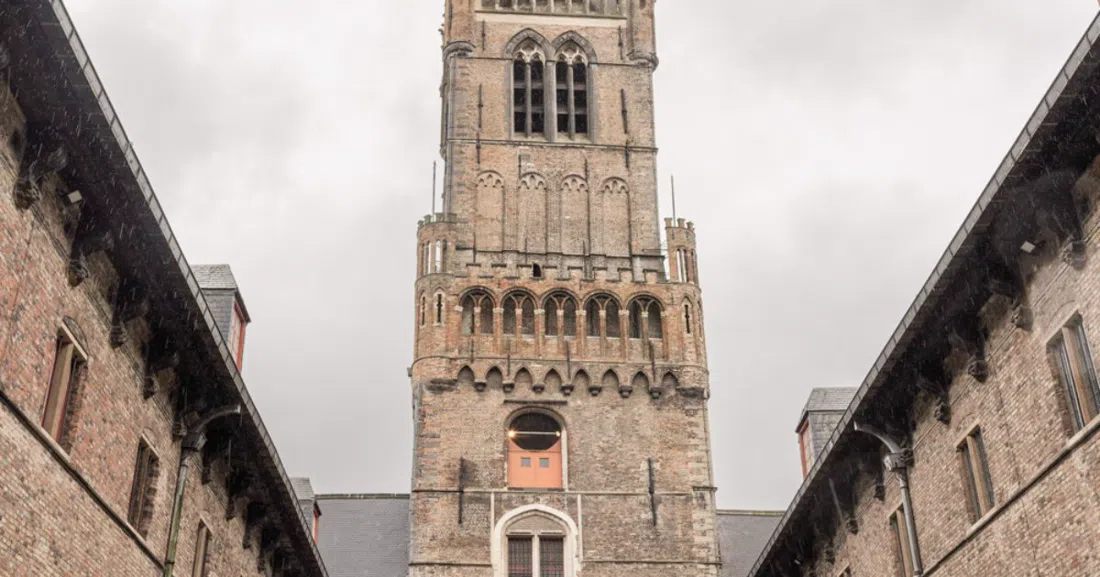
One door policy to plan around: Musea Brugge states that no group visits are possible in the tower. A family buying five individual tickets is fine. A coach party, a school trip or a stag group hoping to go up together is not. The tower is sold one person at a time, and no arrangement changes this.
The top is the reason for the climb. Forty-seven bells, cast by the Bruges founder Joris Dumery after the 1741 fire destroyed what came before, still hang in the frame they sound from. Every hour a pinned drum plays the automatic melodies; that drum is re-pinned every two years, and the 2026 setting brings four new tunes, including the andante from Haydn's 'Surprise' symphony and 'My Grandfather's Clock'. Time your climb for Wednesday, Saturday or Sunday between 11am and noon and city carillonneur Wim Berteloot is playing live, which is the difference between hearing the bells and standing inside them. It is genuinely loud at close range, which matters if you are bringing small children or anyone sensitive to noise.
The free concerts in the courtyard
Most visitors pay to climb and never learn that the better seat costs nothing. The Carillon summer concerts (Belfry inner courtyard, Markt 7) run from 17 June to 19 September 2026, with evening concerts on Mondays and Wednesdays at 8pm and some 4pm slots in August and September. There are no tickets, no bookings and no limit on numbers, which makes this the one bell event in Bruges that suits a group of any size. You turn up.
Berteloot programmes it with his deputies Brecht Berteloot and Jean-Pierre Hautekiet and a run of international guests, and there are two four-handed duo concerts, on 29 July and 19 August, where two players share the same keyboard. Arrive fifteen minutes early on the evening dates if you want a seat rather than a patch of cobble against the wall. The courtyard is open to the sky, so a wet Monday means standing under the arch. Bring a jacket rather than an umbrella, which blocks the view for whoever is behind you.
Eleven July nights when the square fills
For eleven nights only, 1 to 11 July 2026, Het Belfort Vertelt (Markt) turns the tower into the screen for a free open-air projection show. Arrive for the opening: a live carillon concert at 10pm, before the projection starts at 10.45pm. It is the one occasion in the year when the bells are played to a packed square at night, and the acoustics of a full Markt are nothing like an empty one.
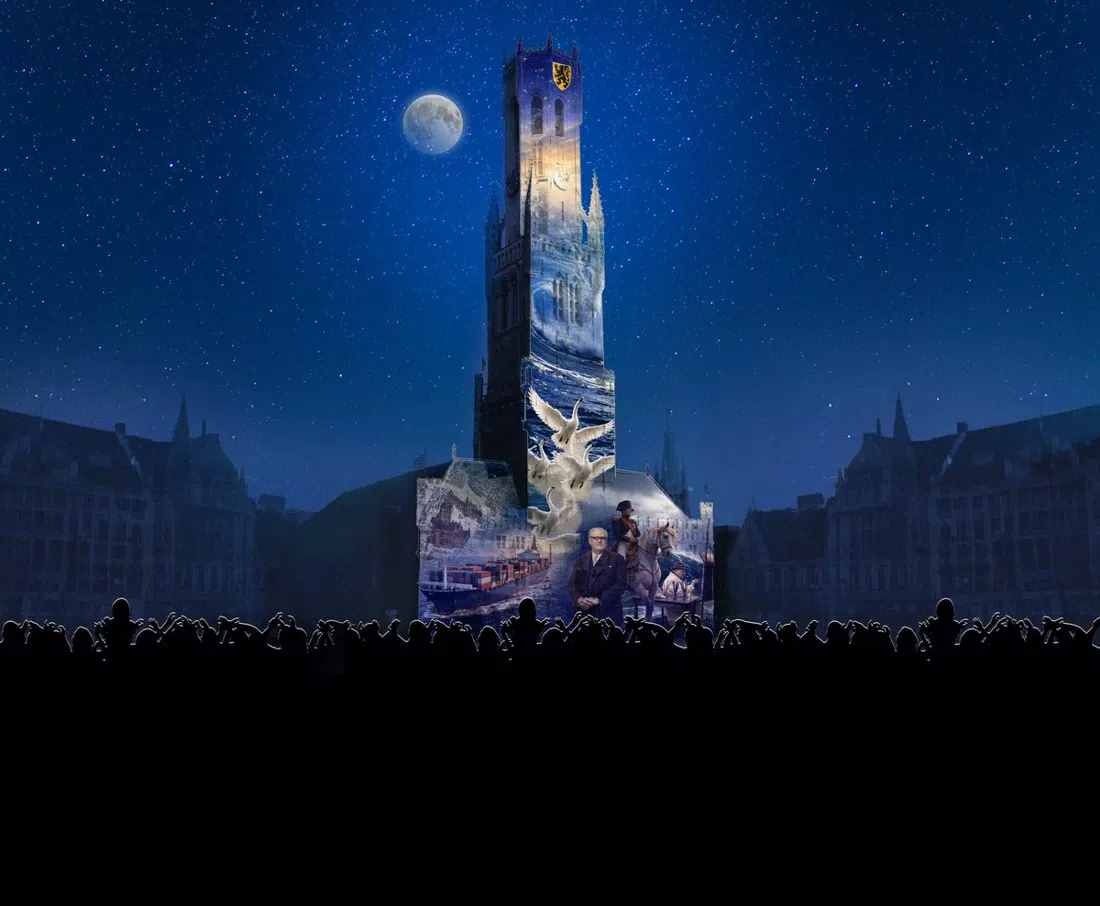
The 2025 production replays at 11.15pm for anyone who misses the first showing. There are no tickets and no seating plan, and the organisers are targeting 100,000 visitors across the run, so the square will be dense. Stand towards the Provinciaal Hof side if you want space, and expect the terraces to be full from about 8pm. An indoor version now runs permanently at Historium if your dates fall outside the eleven nights.
Two terraces worth the price of a coffee
The 11am hour is the one to sit through, and the courtyard benches are a scramble. Duvelorium Grand Beer Café (Markt 1, on the first floor of the Historium building) is the best paid-for seat in the city for it: a raised balcony directly opposite the tower, nine draught beers, €5–9 each. It is free to enter, open seven days from 11am and until 10pm on Saturdays. Groups of 40 or more can book the room exclusively, with or without the Historium attraction attached. It is the world's only Duvel-themed café, which will read as either a draw or a warning.

Across the square, Grand Café Craenenburg (Markt 16) is the older listening post and the less self-conscious one. Margaret of York watched the wedding tournaments from this house in 1468 and Archduke Maximilian was held prisoner in it in 1488. It opens from 8am most days, Wednesdays from 7pm, and does coffee or beer at €4–8 and mains at €18–28. Walk-in groups are generally fine on the terrace and in the big taproom, but book ahead for ten or more in summer. It is touristed and unfashionable and still exactly the right place to sit through a quarter-hour chime.

A bell you can walk up to and read
Head west out of the centre, roughly ten minutes on foot from the Markt, and the Dumeryklok (Joris Dumeryplein, the old foundry quarter west of the centre) sits at street level in the open air. It is an original Belfry bell by Joris Dumery, parked in the neighbourhood where he had his works, and the only bell in Bruges you can stand beside, put a hand on and read the inscription of. It is free, always accessible, unlimited in numbers and takes five minutes, which makes it the easiest stop to build into a walking group's route. It is still rung by foot at certain festivities.
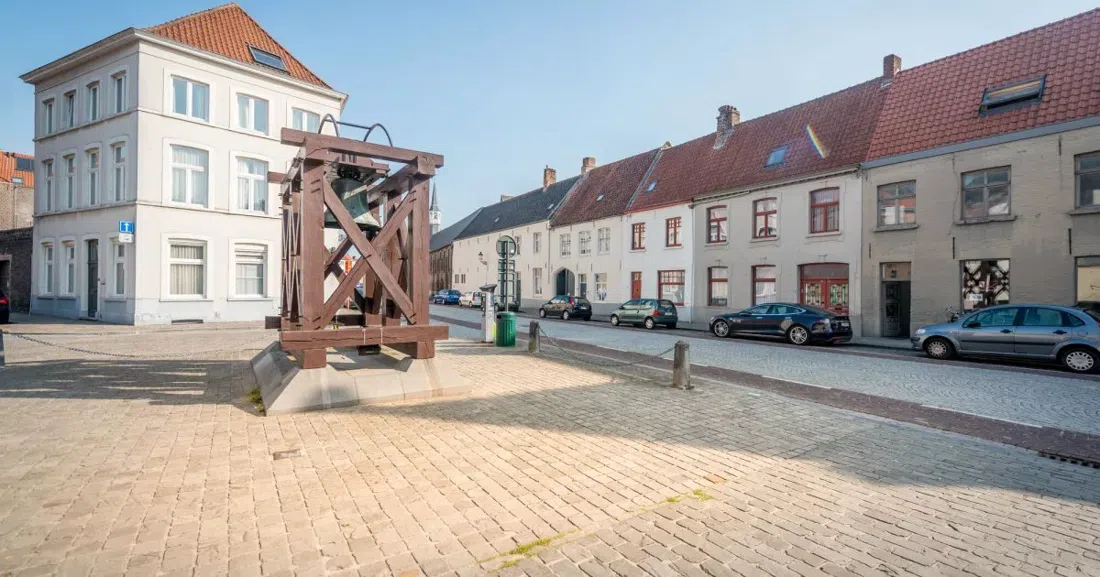
Hands on the bells at 't Zand
The Concertgebouw Brugge — Sound Factory & Concertgebouw Circuit ('t Zand, at the western edge of the old town) is where the story stops being something that happens above your head. The roof-terrace instrument is built from bells taken down from the Belfry, and you play it yourself; the lantern tower holds digital sound labs around it. The Concertgebouw Circuit costs €0–12 depending on the route, and you collect one of the 80 audioguides and a set of headphones in the entrance hall. It is self-guided, so it works well for couples and for teenagers who will not sit through a concert.
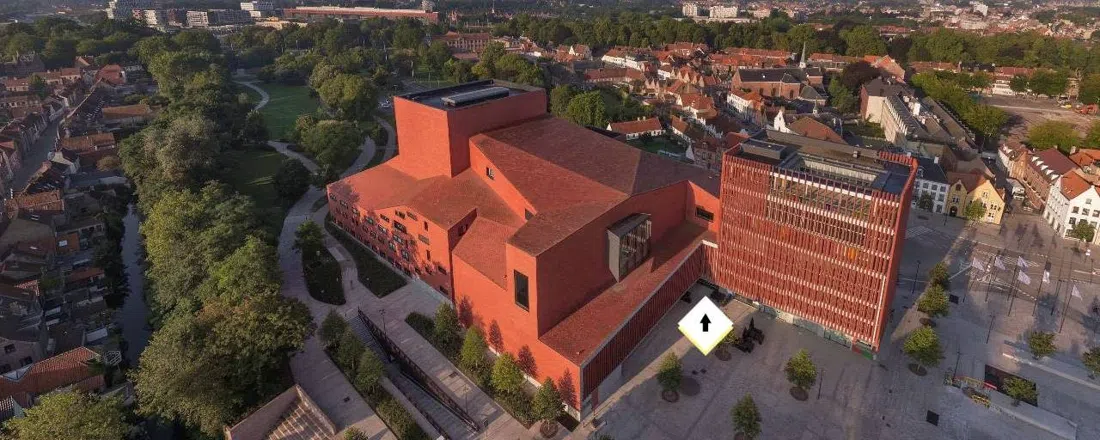
Slots run Wednesday to Sunday, from 2pm to 5pm on weekdays and from 10am at weekends. Check dates before you build a day around it: the circuit is programmed in blocks around the concert season and closes between them. Groups can book a tour through the education desk rather than turning up en masse.
The towers that answer the Belfry
Walk south down Mariastraat and Onze-Lieve-Vrouwekerk (Mariastraat, the museum quarter) is the tower that answers the Belfry across the roofs, and it shapes where the sound lands in the southern half of the old town. The church itself is free; the O.L.V.-kerk Museum half is €10 adult, €9 under 26, €5 under 18, free under 13, or €19 combined with the Gruuthusemuseum, and it holds Michelangelo's only sculpture to leave Italy in his lifetime. Open 9.30am to 5pm, Sundays from 1.30pm. Groups of 15 or more get a reduced rate and one free guide, but the ceiling is 20 people per group and every group must arrive by 3pm.
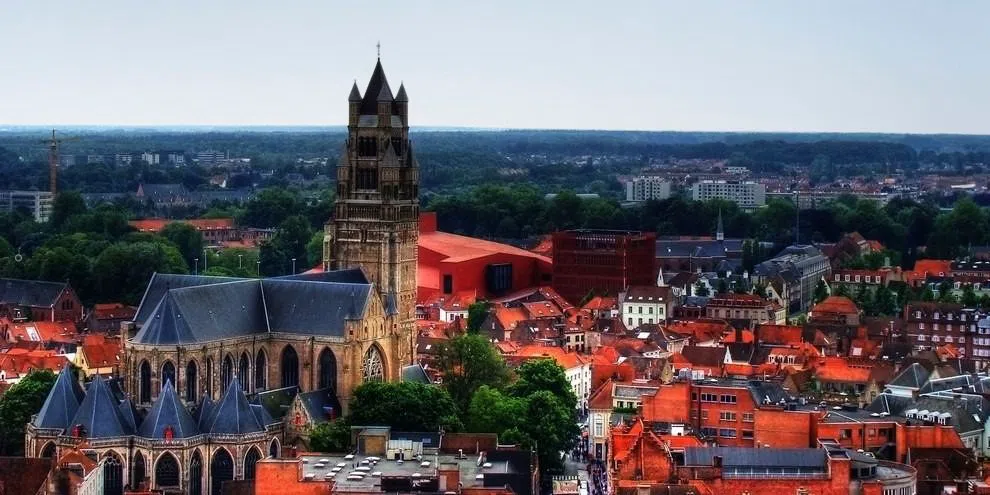
Two minutes further west, Sint-Salvatorskathedraal (Zuidzandstraat, by Steenstraat) has the deepest voice in Bruges in the great Salvator and Maria bells. Be realistic about it: the bell frame has had a difficult decade. A three-tonne bell fell twice, the cracked Eligius bell silenced the tower for months, and Flemish heritage money has been going into securing the bell crowns. The full peal is not guaranteed on any given day, so treat hearing it as luck rather than an itinerary item. Entry is free and groups are admitted; guided visits and treasury tours are by arrangement on +32 50 33 61 88. The Cathedral Festival organ recitals under titular organist Ignace Michiels run through the summer, from about €12, and are the reliable way to hear the building sound.
Bells that mark a ritual rather than an hour
On the Burg, a two-minute walk from the Markt, the Basiliek van het Heilig Bloed (Burg) is where the bell-marked ritual year is loudest: the daily veneration of the relic at set hours, and the Ascension Day Holy Blood Procession, which empties the whole city into the streets. Entry is free and it is generally open 10am to 5pm with a midday break, veneration roughly 11.30am to noon and again 2pm to 4pm.
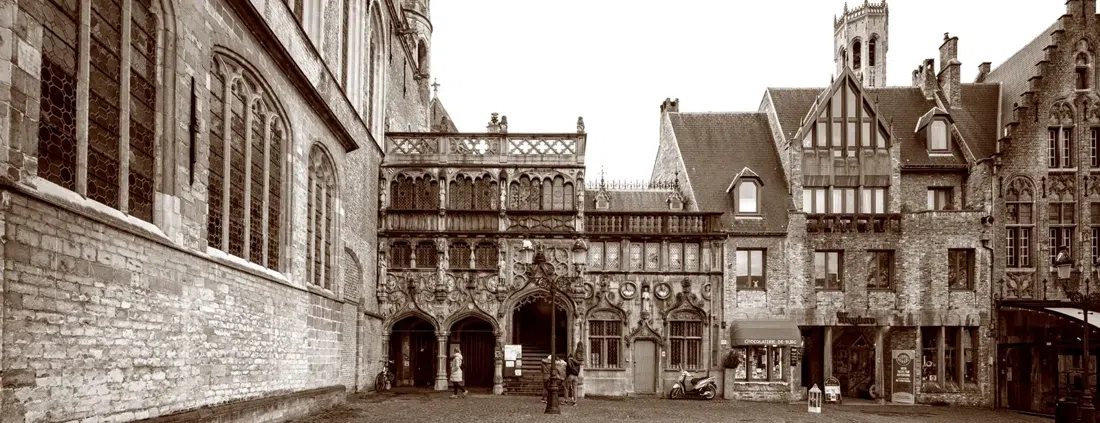
Groups are accepted, but the upper chapel is small and the veneration slots are not the moment to arrive with twenty people. Split large parties, or come outside those hours and let the queue do its own thing.
The quietest tower in Bruges
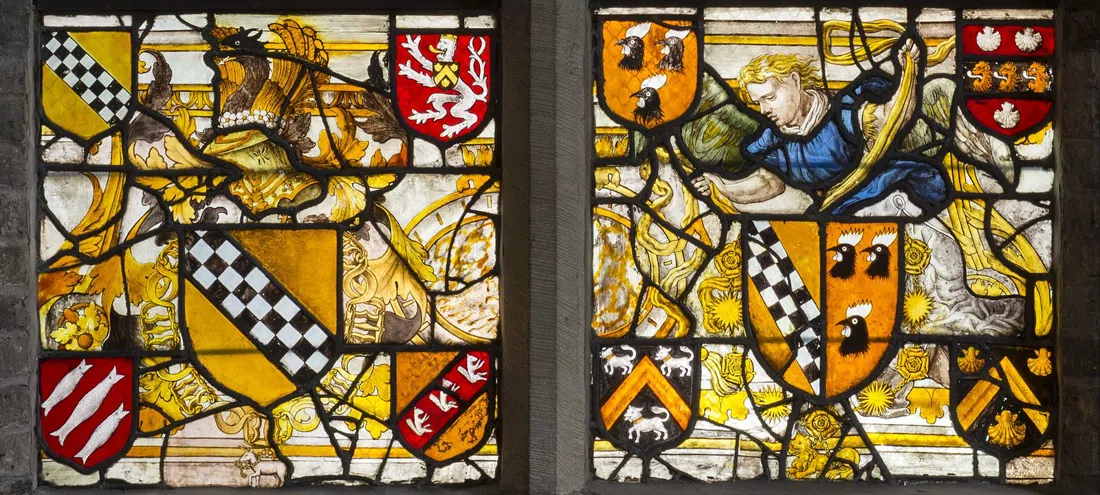
Out in the Sint-Anna quarter, ten minutes east of the Burg, Adornesdomein & Jeruzalemkerk (Jeruzalemstraat, Sint-Anna) is still owned by the founding family after five and a half centuries. Its Jerusalem chapel has a small bell, and hearing that against the Belfry's 27 tonnes is the whole point of walking out here. Tickets are about €10 adult, sold only at the estate reception, and families go free from the third child. Open Monday to Saturday 10am to 5pm, closed Sundays and public holidays. Space is genuinely limited, so groups must register in advance. This is not a place to improvise with a crowd.
The hour kept by voices instead of bronze
Across the water at the Minnewater, the Prinselijk Begijnhof Ten Wijngaarde / Monasterium De Wijngaard (Wijngaardplein, by the Minnewater) is the deliberate counterweight to the carillon. Come in the afternoon for the sisters' sung vespers and it is the human voice, not a bell, marking the hour, the only place in the centre where that is true. The courtyard, gardens and church are free.
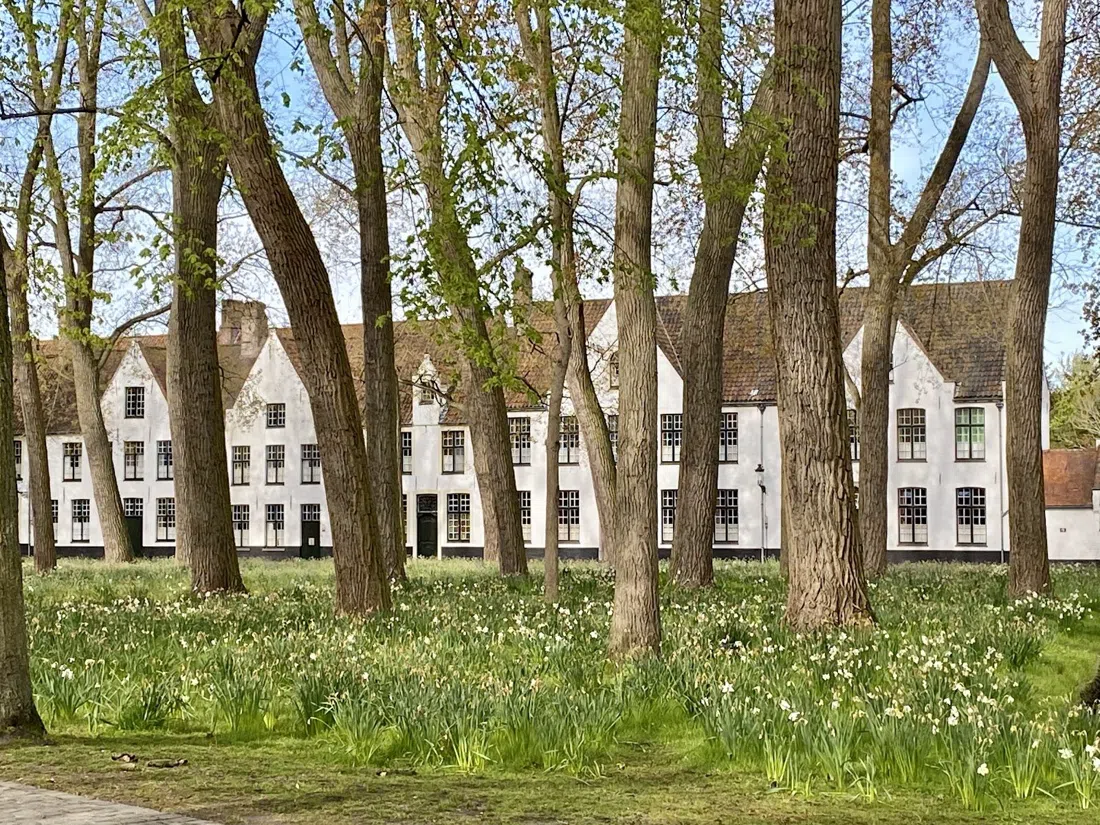
It is also a working convent, and the signs asking for silence are meant. Gates run roughly 6.30am to 6.30pm; go before 9am or after 5pm if you want to hear anything at all over the day-trippers. Large groups should stay outside the church during services.
The carillon out in the polder
Bruges has a second carillon and almost nobody visits it. Beiaard Lissewege (Onze-Lieve-Vrouw-Bezoekingkerk, Lissewege village, 10 km north) has six bells, two of them iron, plus 18 tierce bells, chiming automatically over an empty polder village. Take the train to Station Lissewege or cycle out; both are straightforward, and the ride is flat the whole way. The church, the setting and the tower climb are all free.
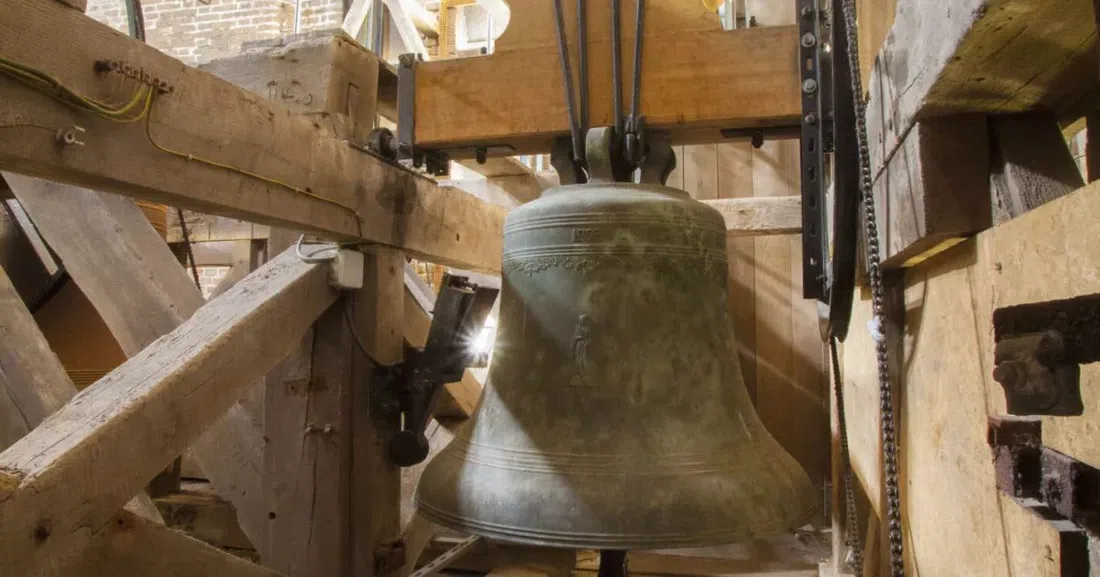
This is the best entry on the list for anyone who wants the sound without the crowd. The tower access is narrow, so small groups are fine but a coach party is not. Call Visit Bruges on +32 50 44 46 46 before bringing one.
The repertoire the carillonneurs borrowed
If your dates land in early August, MA Festival Brugge (Musica Antiqua, venues across the city) is the human-scale companion to the bells: the same early repertoire the first carillonneurs were arranging for bronze. It runs 31 July to 9 August 2026 and includes the Musica Antiqua competitions for young baroque soloists. Concerts are ticketed at roughly €15–45, with group bookings through the box office; the fringe concerts and the VéloBaroque bike ride are free or near-free and need no planning. It has run since 1960 and is the reason Bruges is taken seriously as a music city rather than a postcard.

Practical notes for a bell-led trip
The whole centre is walkable: the Markt to the Begijnhof is about fifteen minutes, the Markt to 't Zand about ten. Lissewege is a short train ride from Brugge station or an easy flat cycle. You will not need a car and you will not want one; the centre is largely closed to through traffic.
Cards are accepted almost everywhere, but carry €20–30 in cash for church donation boxes, candle stands and the occasional terrace that still prefers it. Nothing on this list needs booking through a third-party reseller. Buy the Belfry slot direct, and buy the Adornes ticket at the estate reception, which is the only place it is sold.
Build the day around 11am on a Wednesday, Saturday or Sunday, which is the live carillon hour. In summer, add a Monday or Wednesday 8pm courtyard concert, which costs nothing. Early morning and after 5pm are the only quiet windows in the centre. Sundays start late in the churches (Onze-Lieve-Vrouwekerk opens at 1.30pm) and the Adornes estate is closed.
A full bell day runs roughly €35–45 a head: the Belfry at €15–16, the Concertgebouw Circuit at up to €12, the O.L.V. museum at €10, plus a beer or coffee on the Markt at €4–9. Strip out the ticketed climbs and the same day costs nothing at all, because the courtyard concerts, the Dumeryklok, the cathedral, the basilica, the beguinage and Lissewege are all free. For somewhere to sleep within earshot of the quarter-hour chime, start with the Bruges hotel search and pick something between the Markt and the Burg if the bells are the point of the trip, or south towards the Minnewater if you would rather sleep through them.