Cross the little bridge at Wijngaardplein, duck under the gatehouse arch, and the city drops away in about four steps. Bruges' Begijnhof has run on the same clock since the 13th century — bells, silence, and a stand of white poplars that turn gold weeks before the rest of town notices autumn has started. This is a walk built around that clock: what the courtyard looks like across its four seasons, and which handful of doors nearby are worth opening on the way.
The Courtyard That Time Didn't Skip
The Princely Beguinage Ten Wijngaarde (Begijnhof), on the southern edge of the centre at Wijngaardplein, is not a museum piece dressed up to look lived-in — it is lived in. Beguines, lay religious women who worked and prayed without taking permanent vows, occupied these whitewashed houses from 1245 until the last of them died in 1927. Benedictine sisters moved in the same year and have kept the rhythm going ever since. The gate opens roughly 06:30 to 18:30 daily, entry is free, and no group needs to book ahead to walk the courtyard on foot. The one rule that matters: silence. Signs ask for it, and the sisters' residential wing is off-limits and actively steered around by anyone managing a tour group. Large groups are welcome but expected to lower their voices to something closer to a library than a plaza — this is still someone's home, not a stage set. For a group that wants the actual history rather than a self-guided lap, an official guide can arrange respectful, briefed entry rather than a loud walk-through.
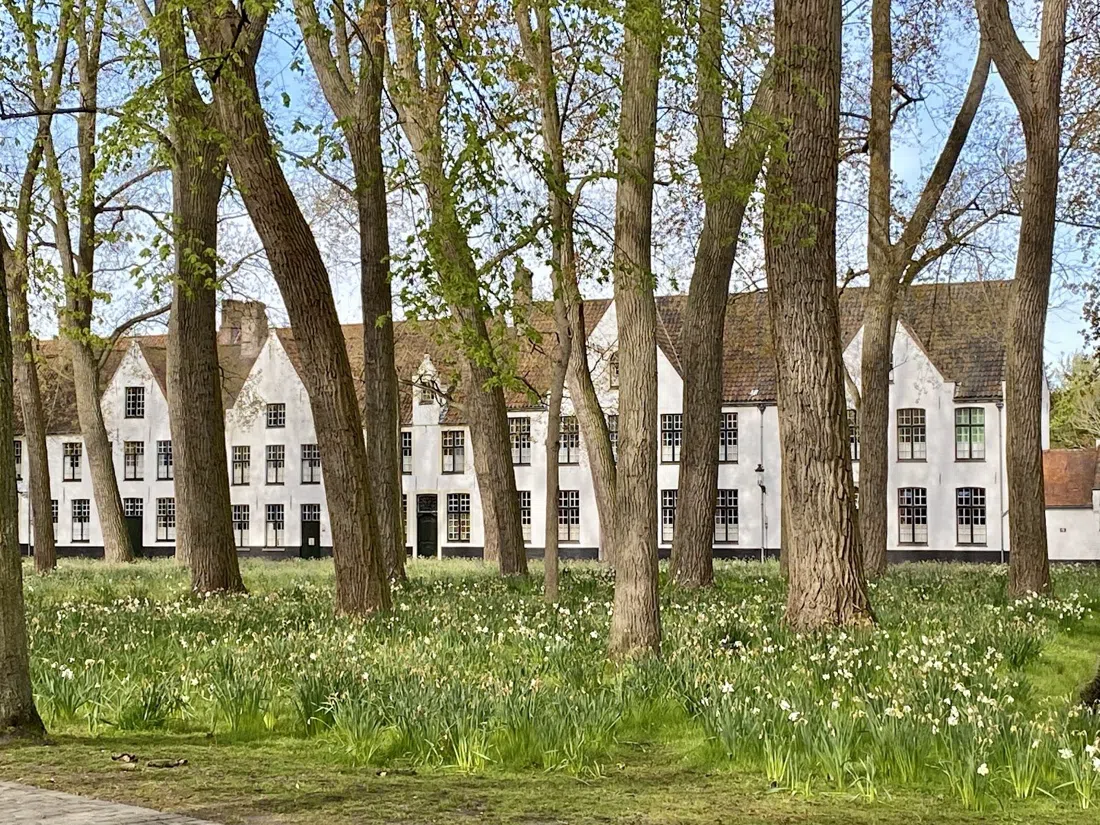
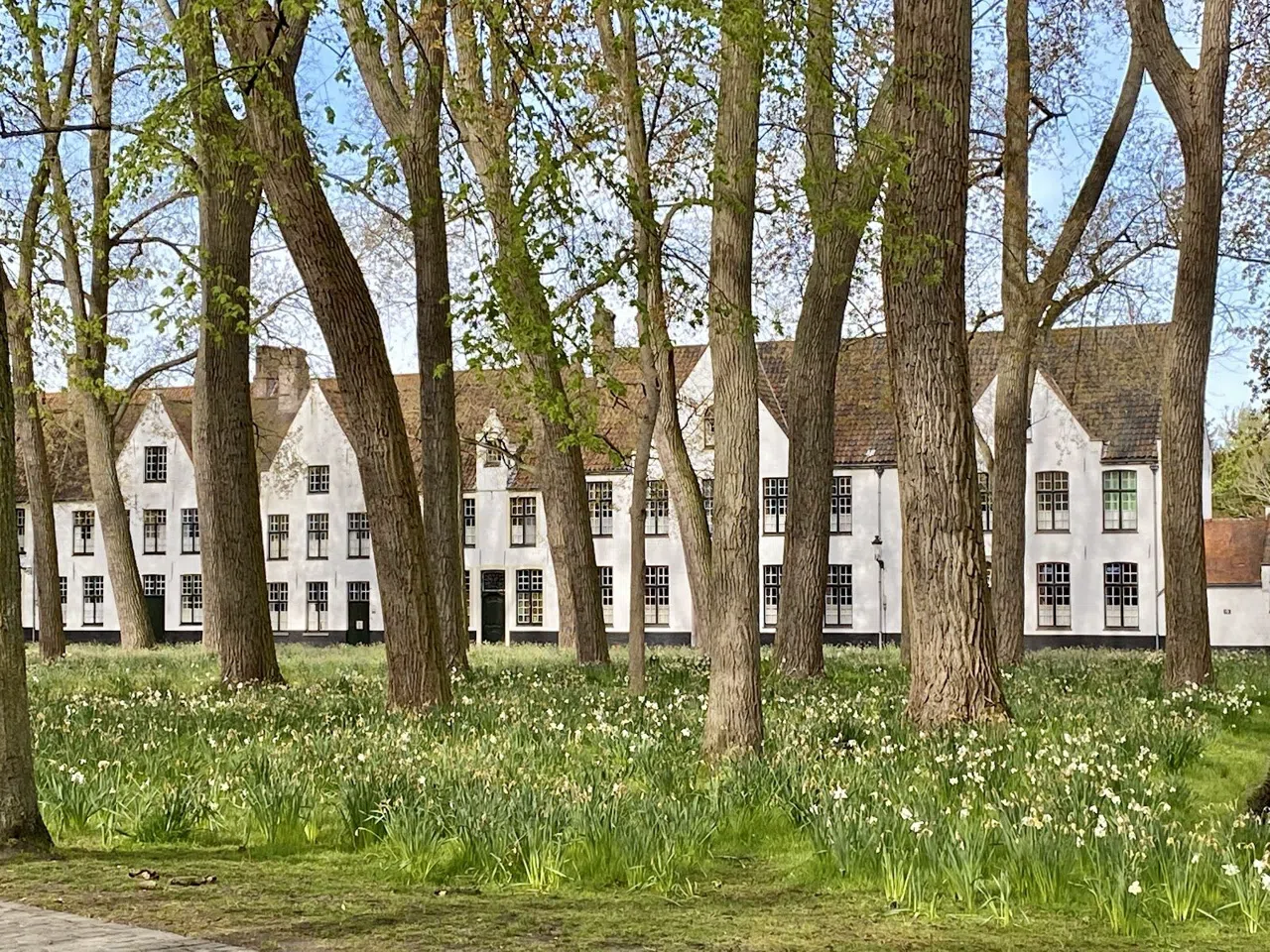
What strikes most first-time visitors is how small the whole thing is — a single oval green ringed by around thirty houses, one church, one gate. That scale is the point. A beguinage was never meant to be a monument; it was meant to be a street.
Inside a Beguine's House
The courtyard shows you the outside of that life. The Begijnhuisje Museum, one of the houses just inside the gate, shows you the inside — low ceilings, a spinning wheel, a kitchen scaled for one person's daily bread rather than a communal refectory. It's the only interior on this walk that actually demonstrates how a beguine lived day to day, which makes it essential rather than optional if the horticulture and the architecture outside have you asking but what did she actually do all day. Rooms are narrow enough that operators cap groups at around 15 people at a time, so larger parties should expect to split and rotate rather than file through together. Entry is €2–4, separate from the free courtyard outside, and the museum runs Monday to Saturday 10:00–17:00, Sunday 14:30–17:00 — it's closed while the gate itself is still open in the early morning and late evening, so this is a midday stop, not a bookend.
Season by Season, One Courtyard
The Begijnhof's real trick is that it never looks the same twice. Spring starts with a scatter of daffodils under the poplars in March, thickening through April into the kind of soft yellow carpet that makes the courtyard's lawn look deliberately underplanted the rest of the year — it isn't; this is a working garden on a bulb cycle, not a display bed refreshed for tourists. By May the poplars are in full leaf and the courtyard reads green and closed-in, shade pooling under the canopy in a way that makes the white house-fronts glow rather than glare.
Summer is the test of the silence rule. Peak-season footfall through the gate is heaviest between 11:00 and 16:00, and this is when the "quiet, please" signage earns its keep — arrive at opening instead, and the courtyard is close to empty, the sisters' washing sometimes visible on a line, the whole place feeling considerably more like 1927 than a Tuesday in July. Just south of the gate, the Minnewater Park & Lake of Love does the opposite job in summer: it's the release valve, an open public park with no booking and no cap on group size, where the same crowd that just tiptoed through the Begijnhof can talk normally again on a bench by the water. There are no boats on the lake itself — this is a walking park, not a punting one — but it's the green lung that makes the whole area breathe, and it's free.
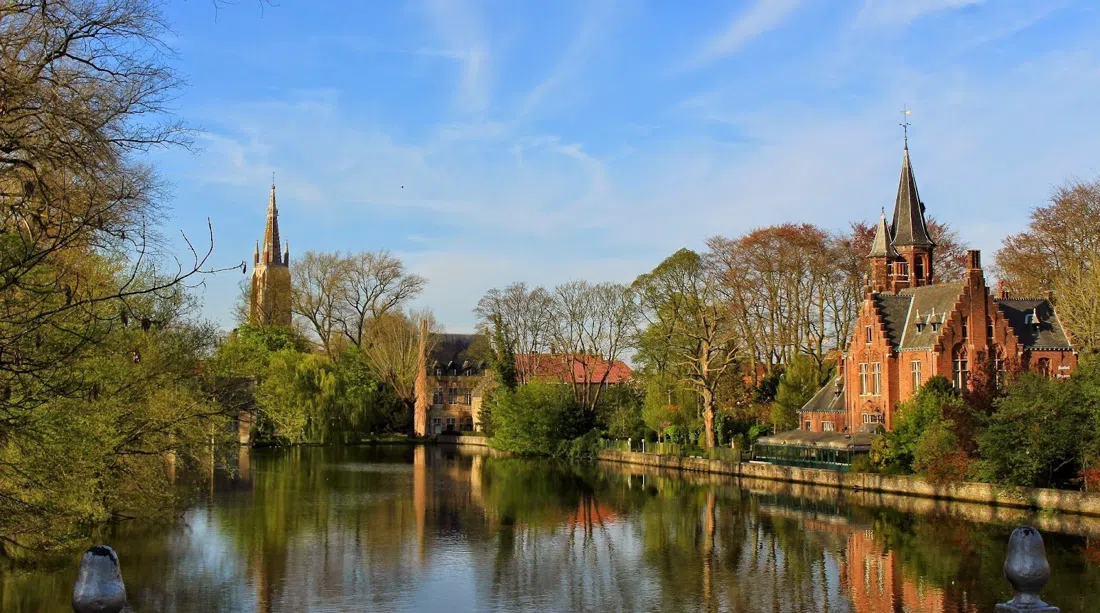
Autumn is when the horticulture argument for this walk is strongest. The poplars turn early and dramatically, and because the courtyard is compact and enclosed, the light off the gold canopy bounces around the white façades in a way that a taller, denser tree cover elsewhere in the city can't replicate. Minnewater's edges color too, more raggedly, with the wider mix of species around the lake dropping leaves onto the path through October and into November. This is also the quietest of the three warmer seasons for foot traffic, which makes it arguably the best month for both the Begijnhof and the park together.
Winter strips the courtyard back to structure — bare poplars, the church spire more visible without leaf cover, and a stillness that has nothing to do with tourism and everything to do with a working religious house in its off-season. The gate hours don't shrink meaningfully, but the light does, and a late-afternoon January visit can mean walking the courtyard in near-dusk with the windows of the sisters' wing lit from inside. It's the month this walk feels least like sightseeing and most like eavesdropping on a life that has nothing to do with you — which, respectfully, is exactly what it should feel like.
The Lace That Outlived the Sisters
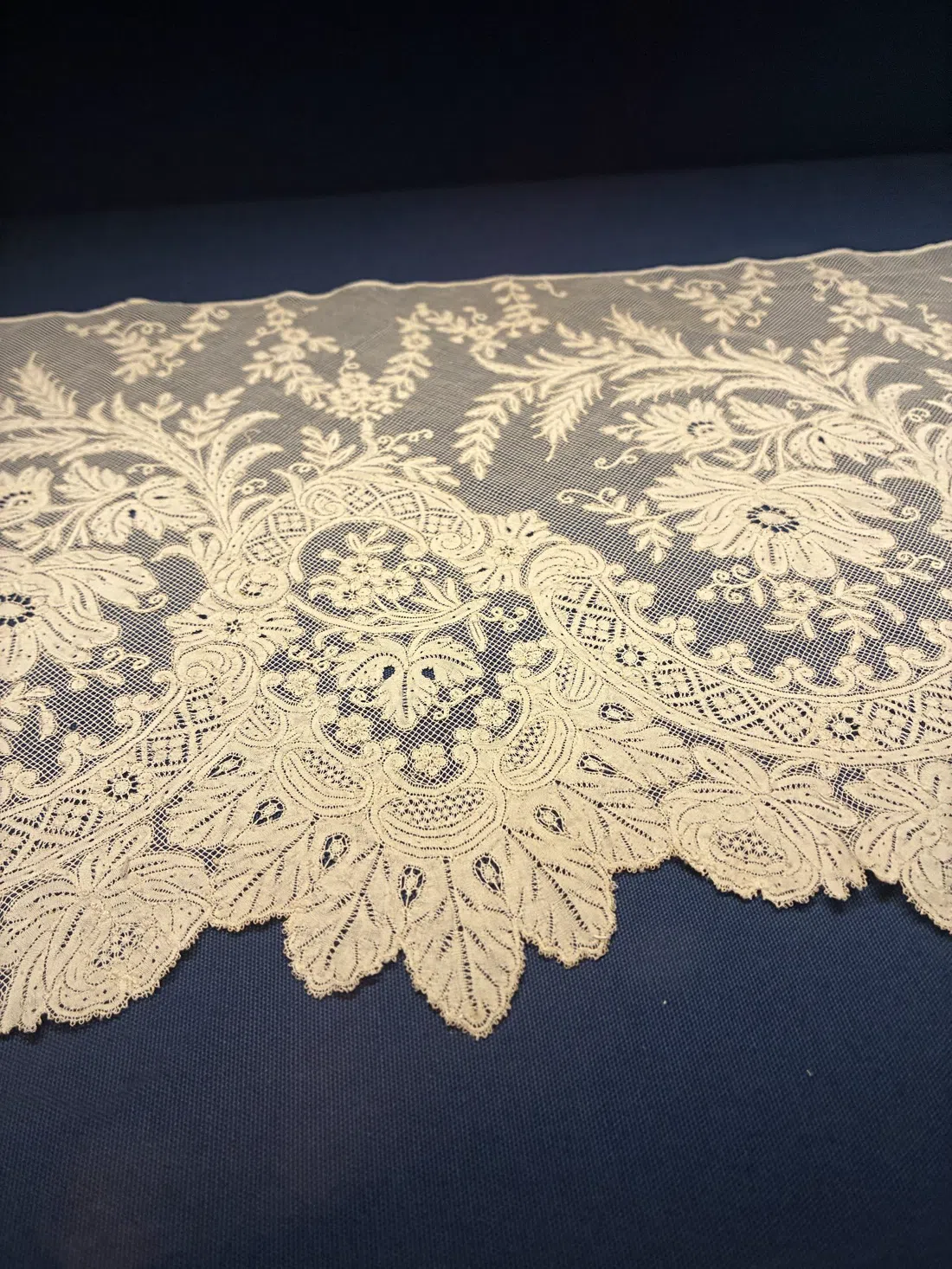
Beguines were lacemakers as much as they were anything else, and that trade didn't die with the last of them in 1927 — it moved a short walk northeast into the Sint-Anna quarter, to the Kantcentrum (Lace Centre & Museum). This is a working workshop as much as a museum: live bobbin-lace demonstrations run every afternoon from 14:00 to 17:00 and are included in the entry ticket, so there's no extra booking or surcharge to see the craft actually being made rather than just displayed behind glass. Groups are handled without friction here. Entry runs €6–8, and the one date to avoid is Sunday — it's closed then, along with public holidays, so build it into a Tuesday-to-Saturday itinerary alongside the Begijnhof rather than treating it as a spontaneous add-on.
A Second Sacred Anchor, Five Minutes Away
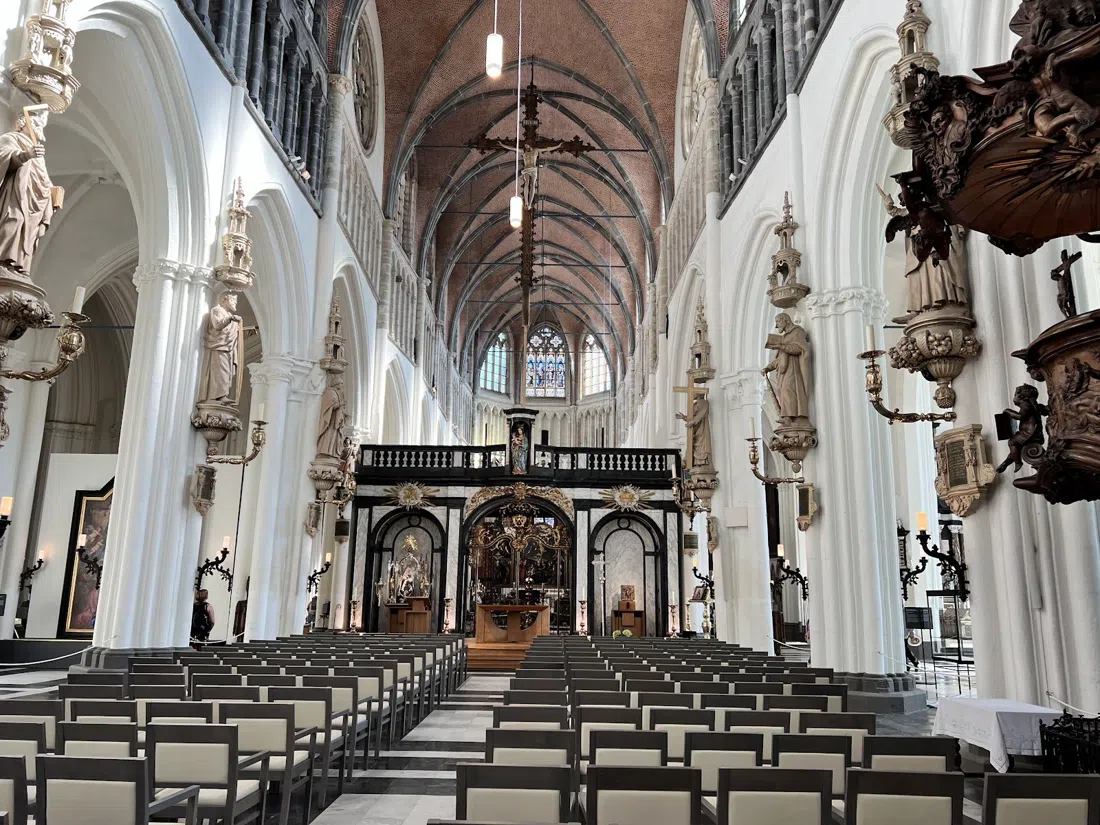
The Begijnhof isn't the only religious institution worth the walk. Five minutes north, the Church of Our Lady (Onze-Lieve-Vrouwekerk) gives the itinerary a second sacred stop without duplicating the first — its nave is free to enter, and the museum and chapel section, ticketed at €8–14, runs timed entry during busy periods to keep group flow manageable. It handles tour groups as a matter of course, Tuesday to Saturday 09:30–17:00 and Sunday 13:30–17:00, and pairs naturally with the Begijnhof as a single religious-heritage half-day rather than two separate trips.
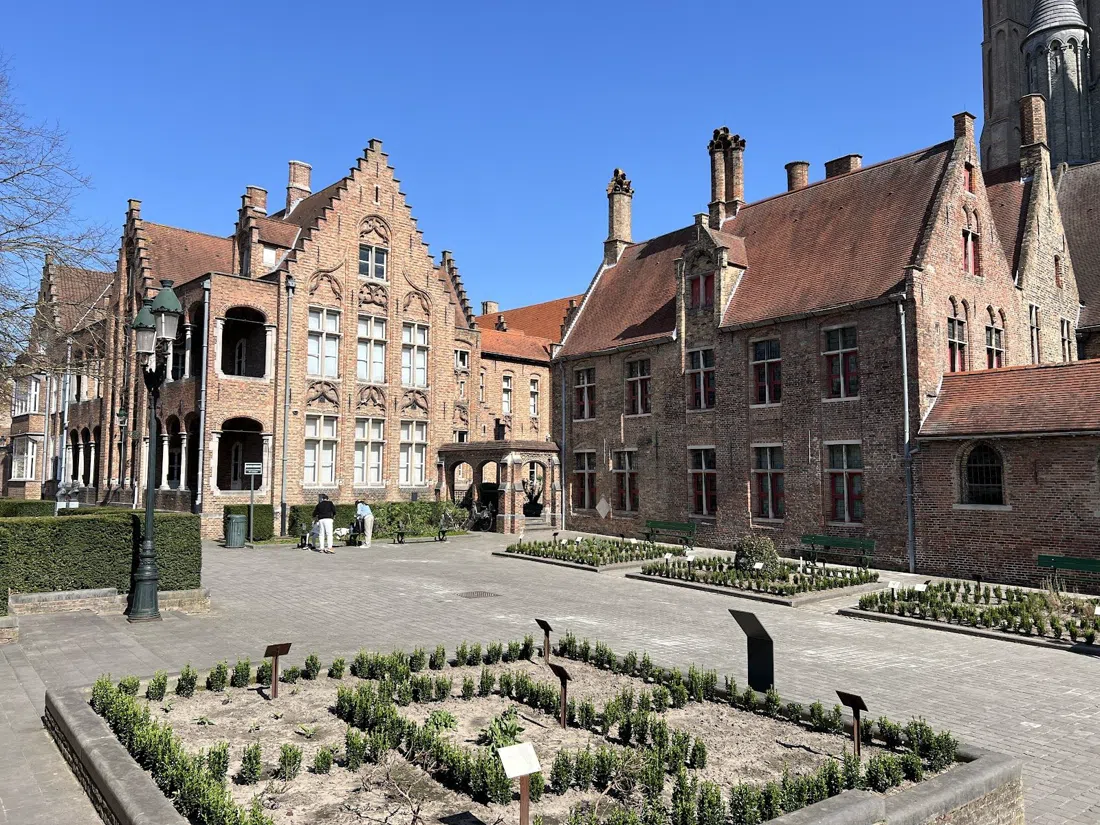
Right next door on the same street sits Museum Sint-Janshospitaal (Memling Museum), a former hospital run for centuries by another community of caregiving sisters — the closest historical parallel this city has to the Begijnhof's own women-led community, just organized around medicine instead of prayer. Group tickets and guided group visits are both available at €12 standard entry, and 2026 added a new wing, BRUSK, worth building extra time for rather than treating as a quick add-on to the older galleries.
Seeing It Slowly: Carriage, Canal, Guide
Three ways to see the area without walking it cold. The Bruges Horse-Drawn Carriage stand at Wijngaardplein sits right outside the Begijnhof gate, which makes its standard watering stop a genuinely useful scene-setting beat for a season-by-season visit — you get a fixed, elevated view of the gate itself before you've even gone in. Carriages seat up to five people, cost €55–70 per half hour paid in cash directly to the driver (card is not an option here), and groups needing more than one carriage can book multiples. Departures run from the Markt, with a Wednesday-morning variant leaving from the Burg instead — worth checking which applies before you plan around it.
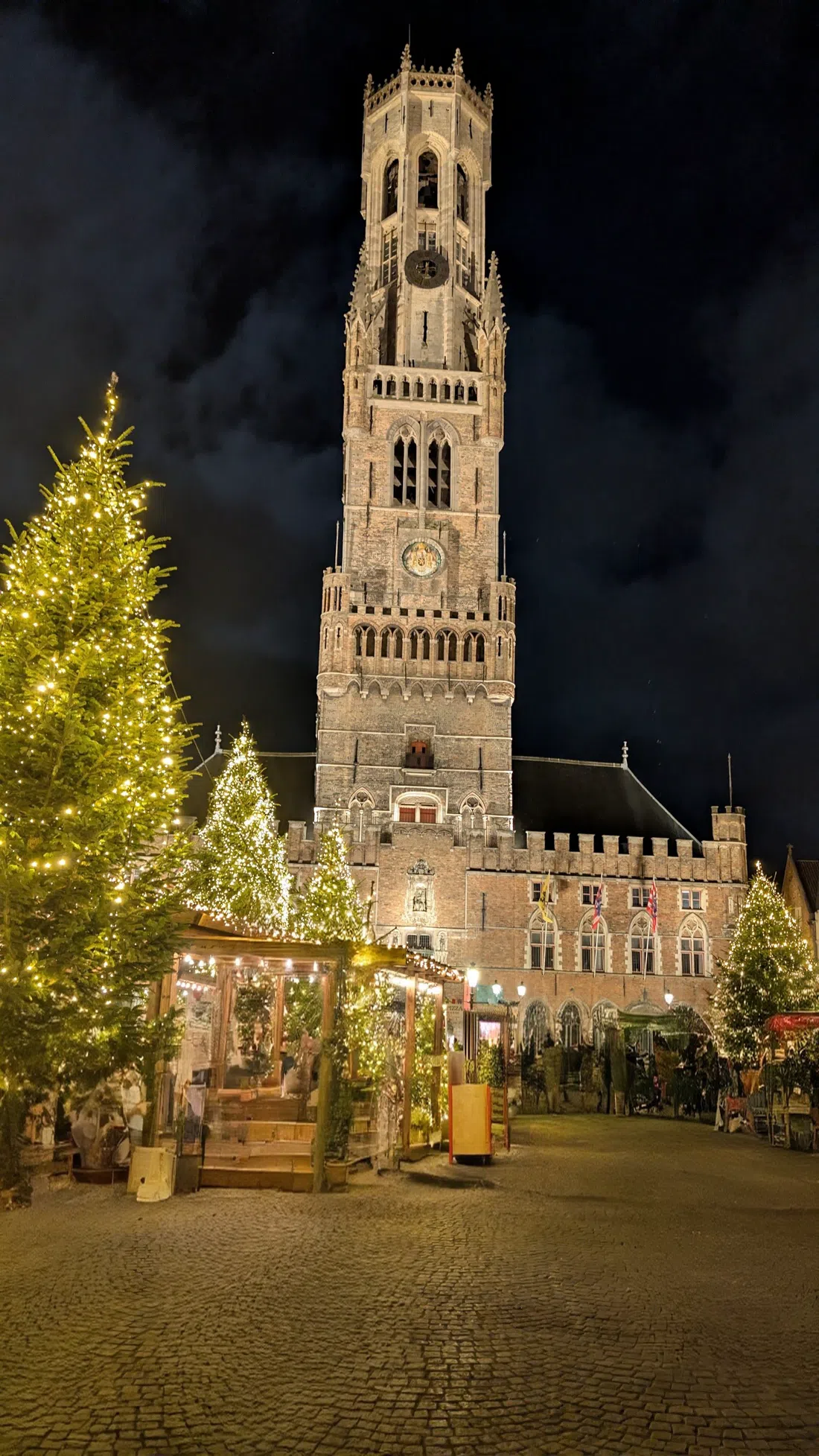
For water, the Bruges Canal Boat Tour dock at Katelijnestraat (Boten Stael) is the one to specifically seek out over the more heavily marketed docks elsewhere in the centre, because it's the route that actually passes the Begijnhof's waterline rather than skirting it. Boats seat 20–30 people, groups are taken with advance notice, and pricing is fixed city-wide across all five licensed docks — €15 for adults, €9 for children aged 4–11 — so there's no need to shop around on price, only on which dock's route you actually want.
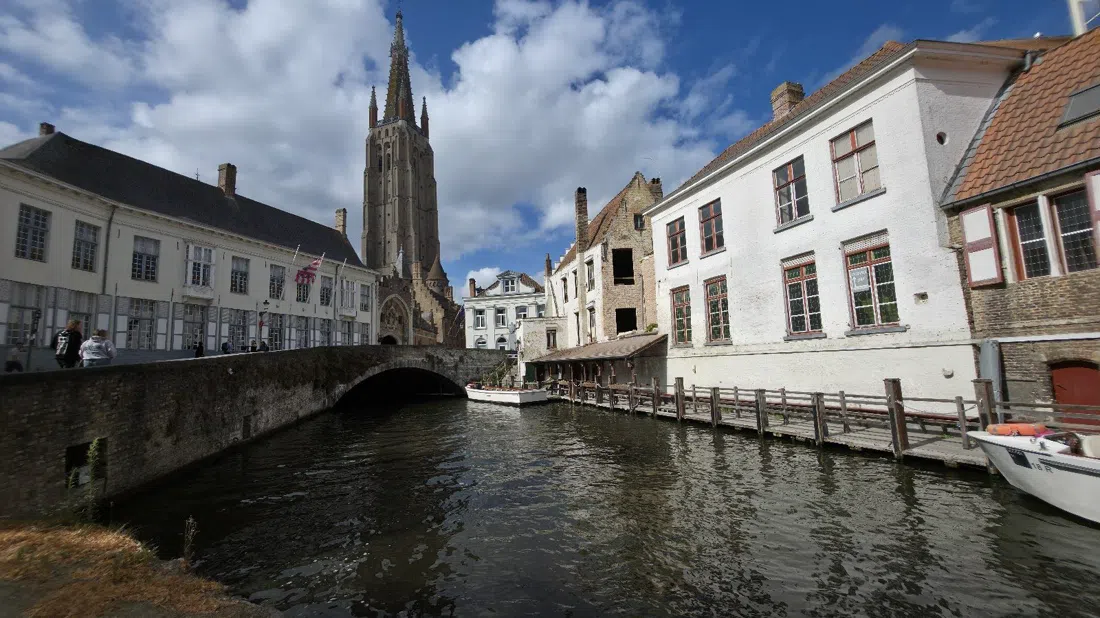
And for the history itself, told properly rather than skimmed from a plaque, the Koninklijke Gidsenbond van Brugge en West-Vlaanderen (Royal Guides Association) is the credible route in. Founded in 1926, it's the city's oldest guide body, running over 230 licensed multilingual guides built specifically for group work — thematic walks that can go deep on the beguine story rather than reciting the same three facts every operator repeats. Book roughly three days ahead; a two-hour group walk runs from about €90–140 in guide fees, entries excluded.
Where to Sit Down Afterwards
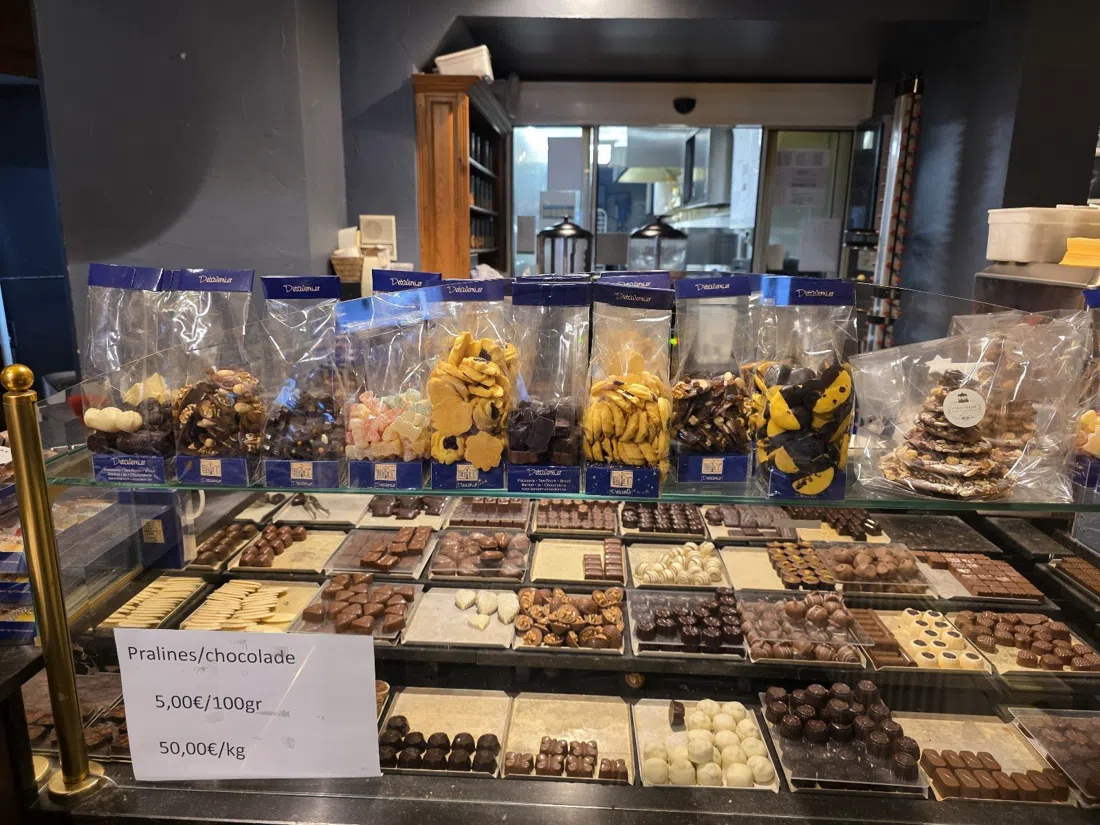
A courtyard built around silence eventually makes you want tea. Carpe Diem Bakery & Tea-Room, a short walk from Wijngaardplein, is the obvious stop — no formal booking system, but small groups of up to 10–12 can usually be seated with a bit of notice. It runs Monday to Saturday, 07:00–19:00, closed Sunday, and prices sit firmly in budget territory.
For something more substantial, 't Minnewater sits exactly between the Begijnhof gate and the lake, which makes it the natural lunch or dinner anchor for this entire walk rather than a detour from it. It takes groups and has a function-friendly dining room, though parties over six should book ahead. Mains run roughly €20–30, and the one day to plan around is Wednesday, when it's closed.
For anyone wanting to root the visit overnight rather than day-trip it, Hotel Egmond sits right at the park's edge, a minute's walk from the Begijnhof gate. It's small — around 20 rooms — but can hold small group bookings and has its own garden meeting and event space, at roughly €150–250 a night. Waking up within sight of the poplars and walking into an empty courtyard before the day's first tour group arrives is, honestly, the best version of this entire itinerary.
Start planning where to stay with Bruges hotel search, or step back to the wider Bruges guide for everything else the city offers beyond this walk.
Practical Info
Transport: everything on this walk sits within a 10–15 minute walk of the Begijnhof gate — Kantcentrum is the outlier, a short walk northeast into the Sint-Anna quarter, easily reached on foot or by the city's local bus network. No car is useful inside the centre; Bruges' historic core is largely pedestrian-first.
Cash: carry cash specifically for the horse-drawn carriage, which is paid directly to the driver and does not take cards. Most museums and restaurants on this route take cards without issue.
Timing: arrive at the Begijnhof at gate-opening (06:30) for genuine quiet, especially June through August. Kantcentrum's demonstrations only run in the afternoon (14:00–17:00), so a single day covering both means splitting morning courtyard time from afternoon lace-workshop time. Check Church of Our Lady's Sunday-shifted hours (13:30 start) before building it into a morning plan.
Budget: a full day covering the Begijnhof (free), Begijnhuisje Museum (€2–4), Kantcentrum (€6–8), Church of Our Lady's museum section (€8–14) and a canal boat (€15) runs roughly €31–41 per adult before food, carriage rides or a guide fee — modest for a day that covers three centuries of the same community's history in roughly two kilometres of walking.