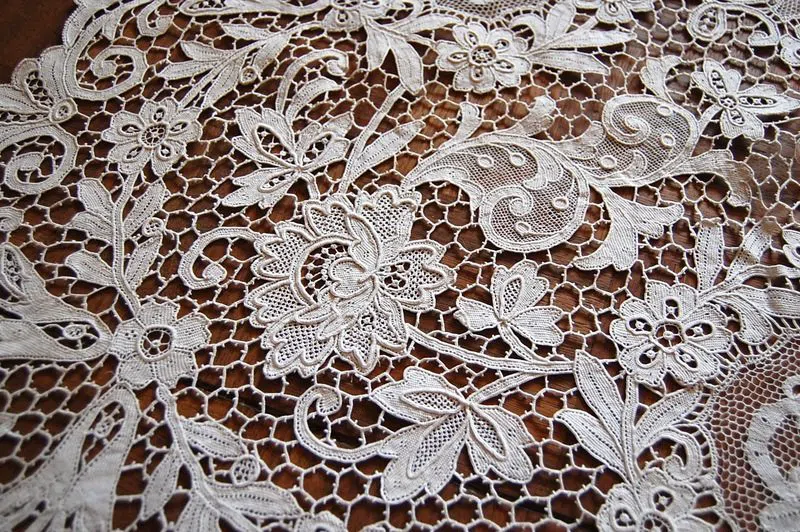
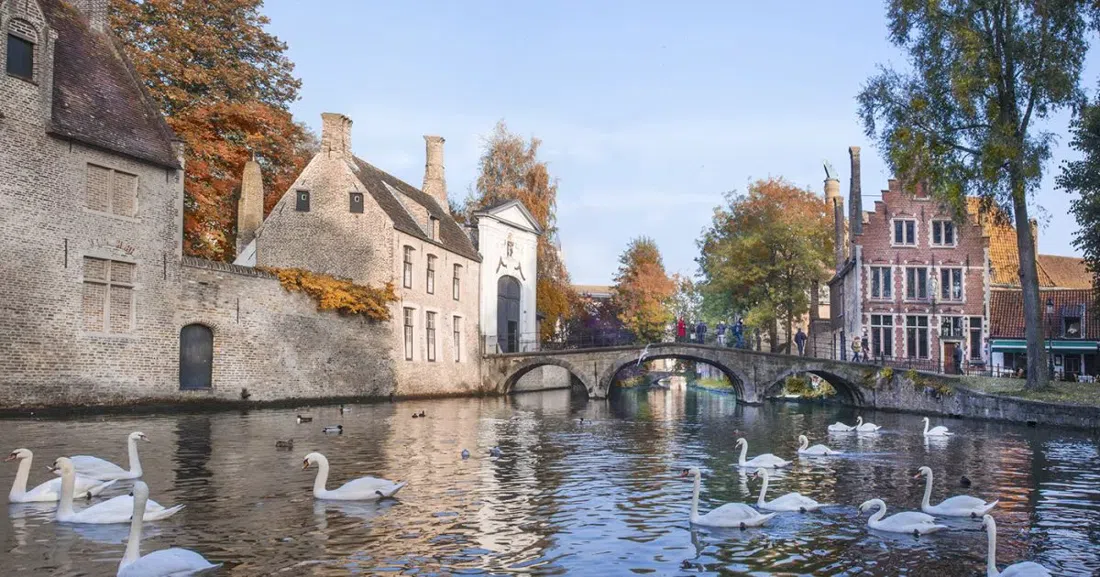
Every photograph of the Beguinage shows the same thing: white gables, a green lawn, poplar trees leaning over a quiet canal. What it doesn't show is what the women who lived behind those doors did with their days. For roughly four centuries the answer was bobbin lace: a pillow on the knee, dozens of wooden bobbins clicking against each other, a pricked-paper pattern pinned in front of them, hour after hour, for income rather than decoration. This walk starts where that lace was made, follows it to where it's still being taught, and ends in the shops where you can tell the real thing from the imported stuff.
Inside the Beguinage's One Furnished House
The Princely Beguinage Ten Wijngaerde (Wijngaardplein, at the southern edge of the Minnewater park) costs nothing to enter and the courtyard is open all day. This is the shot everyone has already seen before they arrive. Don't stop at the lawn. One of the houses on the courtyard has been kept as a small furnished museum, entry a few euros, and it's the only place inside the walls where you actually see how a beguine lived and worked, not just where she prayed. There's a lace pillow set up at a window for the light, a narrow kitchen, a single bed, the kind of modest domestic setup that housed a woman supporting herself for decades on piecework.
It matters to say plainly what a beguine was, because the word gets flattened into "nun" in most guidebook copy. Beguines took no permanent vows and could leave to marry; they lived in community but not under an order. Lacemaking was one of the few respectable ways a woman without a dowry or a husband could earn a living in this city, and the Beguinage's beguines did it in volume, feeding a Bruges lace trade that was, by the 17th and 18th centuries, genuinely industrial in scale, even if every piece was still made one bobbin-cross at a time.
The site's one hard rule, and the one that trips up group visitors most: this is a request for quiet, not a suggestion. Benedictine sisters live here today, and loud group commentary inside the walls isn't welcome. If you're leading a group, brief them on this before you're through the gate. It's the difference between the Beguinage as it should be experienced and the Beguinage as a photo op with a running lecture over it.
Kantcentrum Still Teaches the Stitch
A ten-minute walk northeast, past the canal, brings you into St Anna and to Kantcentrum (Balstraat 16), which is the reason this whole story isn't just archival. This is a working lace school housed in a former convent lace school, and it runs daily demonstrations from 2pm to 5pm, Monday to Saturday. Actual lacemakers at actual pillows, not a video loop. The museum alone runs roughly €6-8 and is worth the visit on its own, tracing how Bruges lace differs from Binche, Chantilly, or Honiton work in pattern and technique.
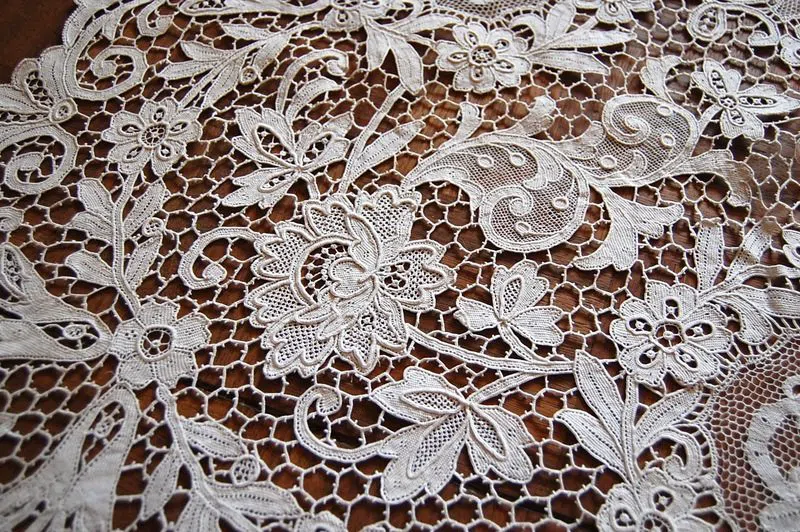
But the reason to build a trip around Kantcentrum rather than just tick it off is the 2-hour taster workshop, roughly €10-15 per person, where you're handed a pillow, a set of bobbins, and are walked through your first crossing stitches by someone who does this for a living. It's genuinely difficult in a way that's clarifying: five minutes in, the patience the Beguinage's lacemakers needed stops being an abstract historical fact and becomes something in your own hands. School and group bookings are split into groups of ten per teacher, so if you're traveling with a larger party, contact the centre ahead rather than turning up expecting a slot; they're not set up for walk-in groups at that scale.
This is also the one stop on this route genuinely worth planning your day around, since the demonstration window is fixed (2-5pm) and the workshop needs advance contact; everything else here can flex around it.
Two Museums That Frame the Story
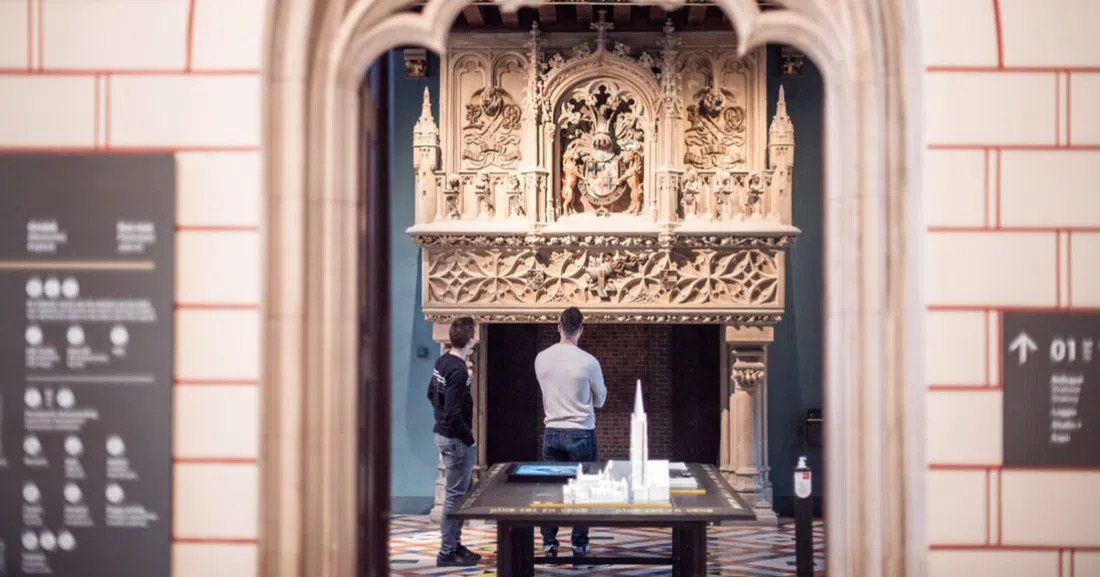
Two further museums do the historical heavy lifting that Kantcentrum's live demonstrations don't have room for. The Gruuthusemuseum (Dijver, in a restored medieval palace facing the Dijver canal) holds the single most important lace collection in the city by volume and age: the counterweight to Kantcentrum's living craft, proof of how far back and how far the trade actually spread through Bruges households before it became a tourist good. Standard entry is €15, with reductions to €13 under 26 and €7 under 18, free under 13. Groups up to 20 are welcome, and from 15 paying visitors a group rate applies with one free guide, but note groups must start their visit by 3pm, so this isn't a stop to leave for late afternoon.
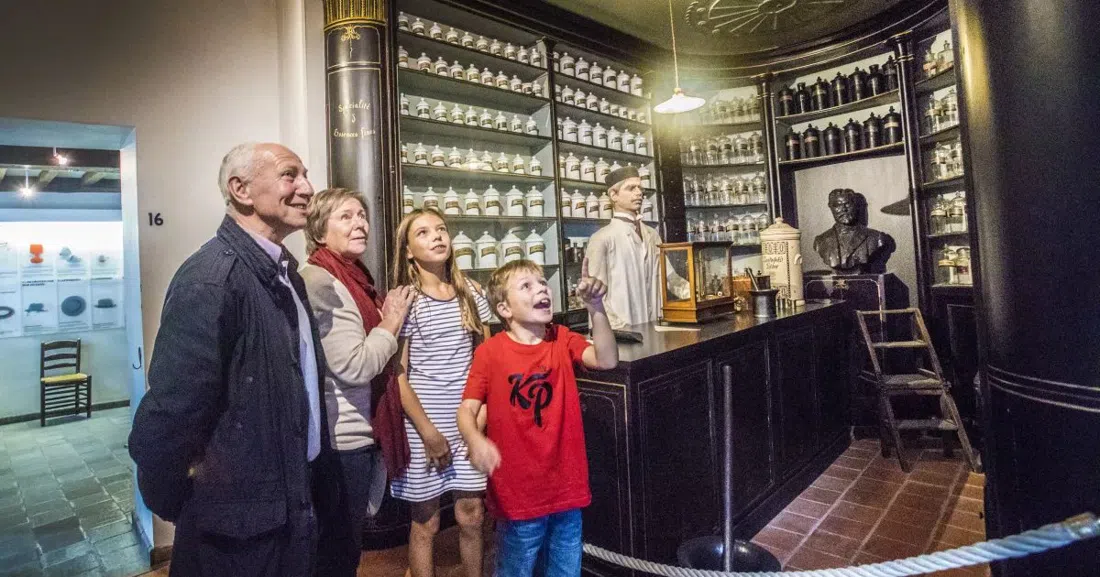
The Volkskundemuseum (Balstraat 43, a few doors from Kantcentrum on the same street) does something different and, for this particular story, arguably more useful: it shows the domestic, working-class world the lacemakers actually lived in, not just the finished lace they produced. Set across a row of restored 17th-century almshouses, it recreates a cobbler's shop, a milliner's, a period kitchen and living room: the material context around the pillow-and-bobbins work, rather than the work itself. Entry is €8 adult, reduced to €7 or €4, free under 13, with group pricing available. Pairing this with Kantcentrum next door turns a lace museum visit into a proper sense of the neighbourhood's working life, rather than an isolated craft exhibit.
Kantwerkstersplein, Where the Workers Actually Lived
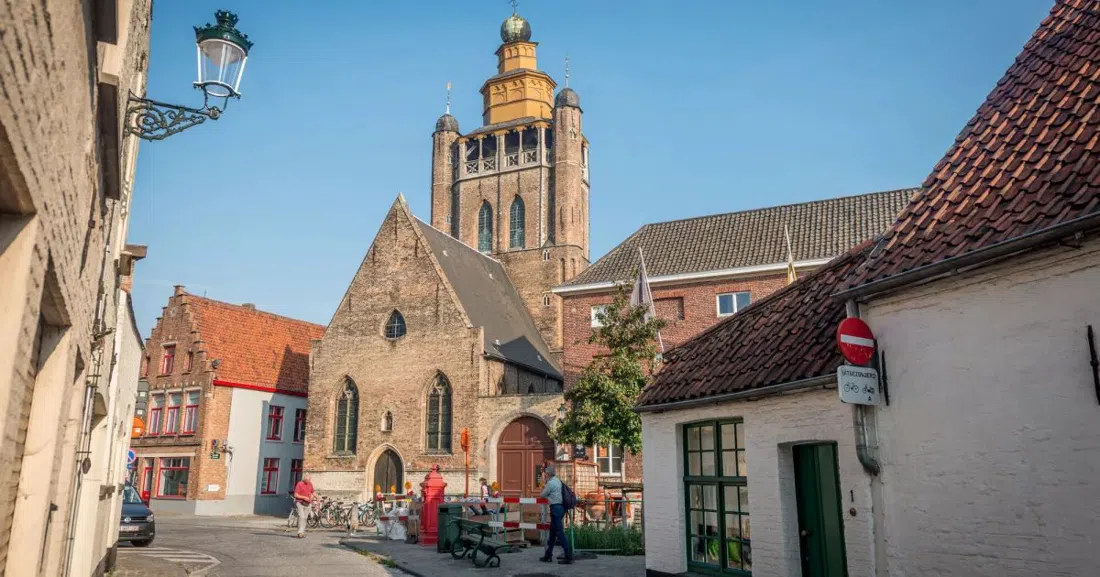
Between the two museums, and easy to walk straight past if you're not looking for it, is Kantwerkstersplein (Lace Makers' Square), a small, free public square that any size of group can gather in without booking anything. There's no ticket, no opening hours, nothing to manage. It's simply the literal ground where the industry's workers lived, and standing in it after the museums gives the whole story a location rather than a glass case.
Buying Lace on Balstraat Without Getting Fooled
St Anna's lace shops are worth separating from each other, because they suit different visitors and not all of what's sold as "Bruges lace" in this city actually is.
't Apostelientje (Balstraat, steps from Kantcentrum) is a small shop floor, better suited to pairs or small groups browsing than a coach party; there simply isn't room. It's a reliable, still-trading reference point (reviewed as recently as April 2026) for genuinely handmade, not imported, Bruges lace, with prices running from modest table linens up to museum-grade antique pieces, so the range covers a serious collector and a casual buyer equally well.
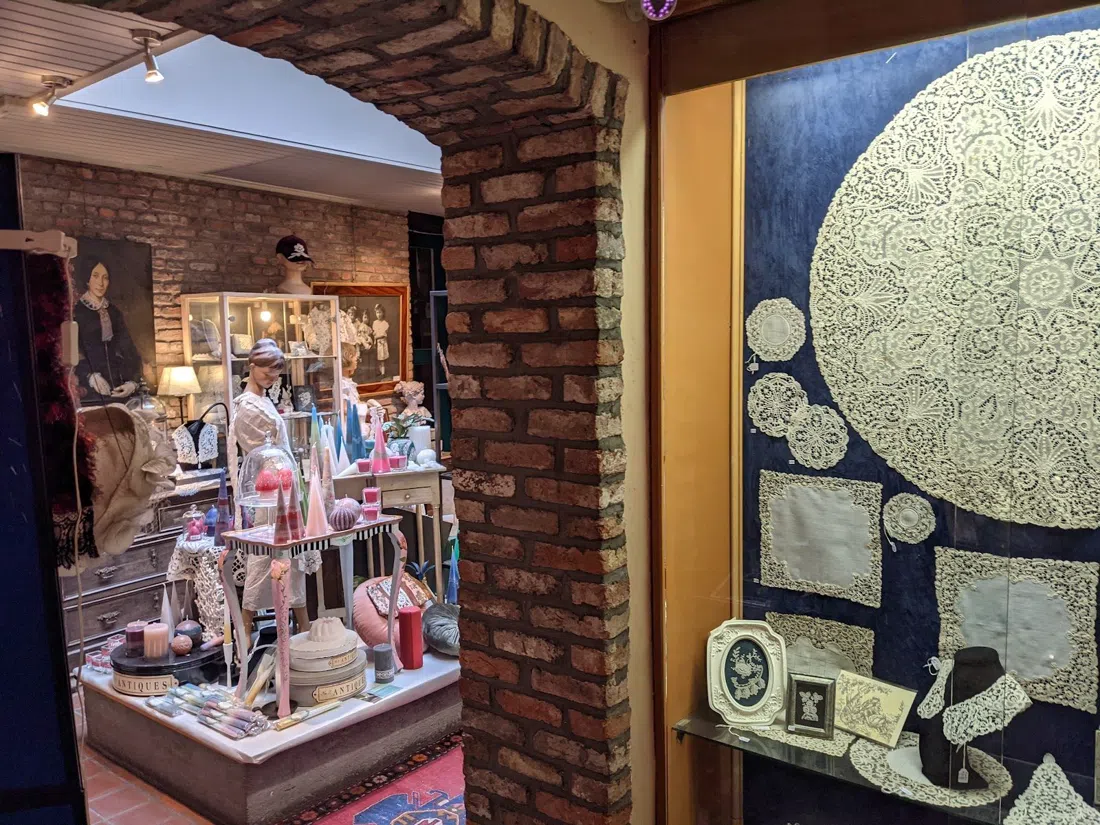
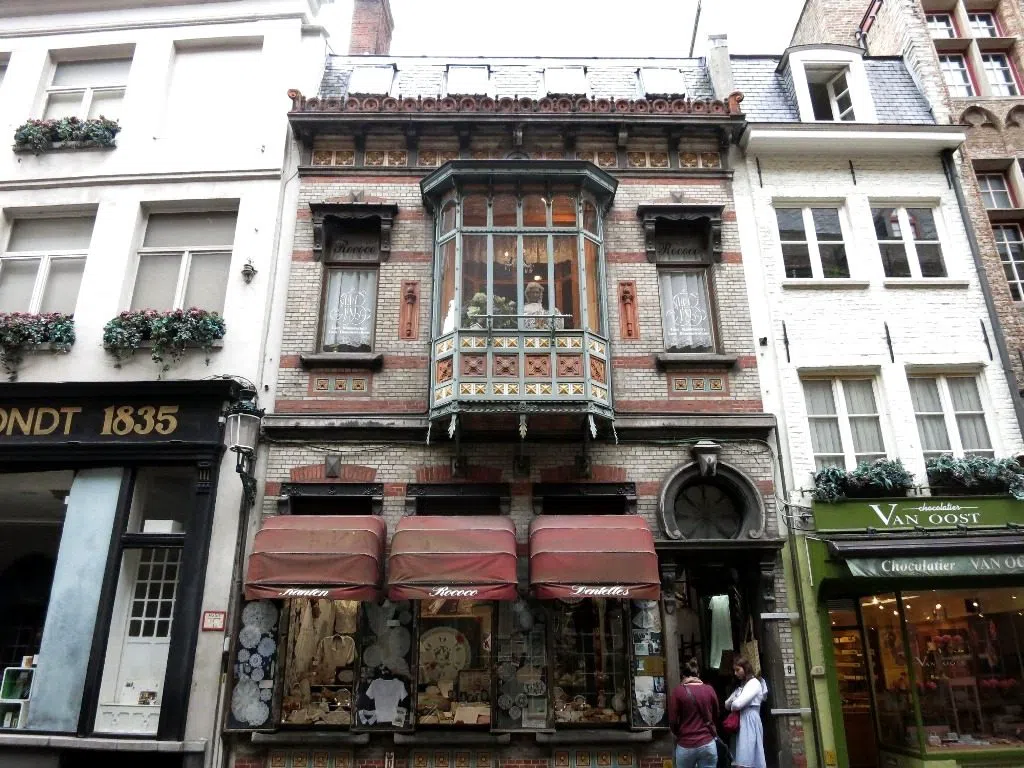
Rococo is run by Mieke Brack, a working lacemaker who is refreshingly blunt about separating Belgian-made pieces from imported stock, a rarer honesty than you'd expect on a street this touristy. She's happy to talk small groups through pieces and technique informally, though there's no formal group tour to book. Prices span an enormous range, from around €3 up to several hundred euros, so it's a shop you can walk into with any budget and leave with something real.
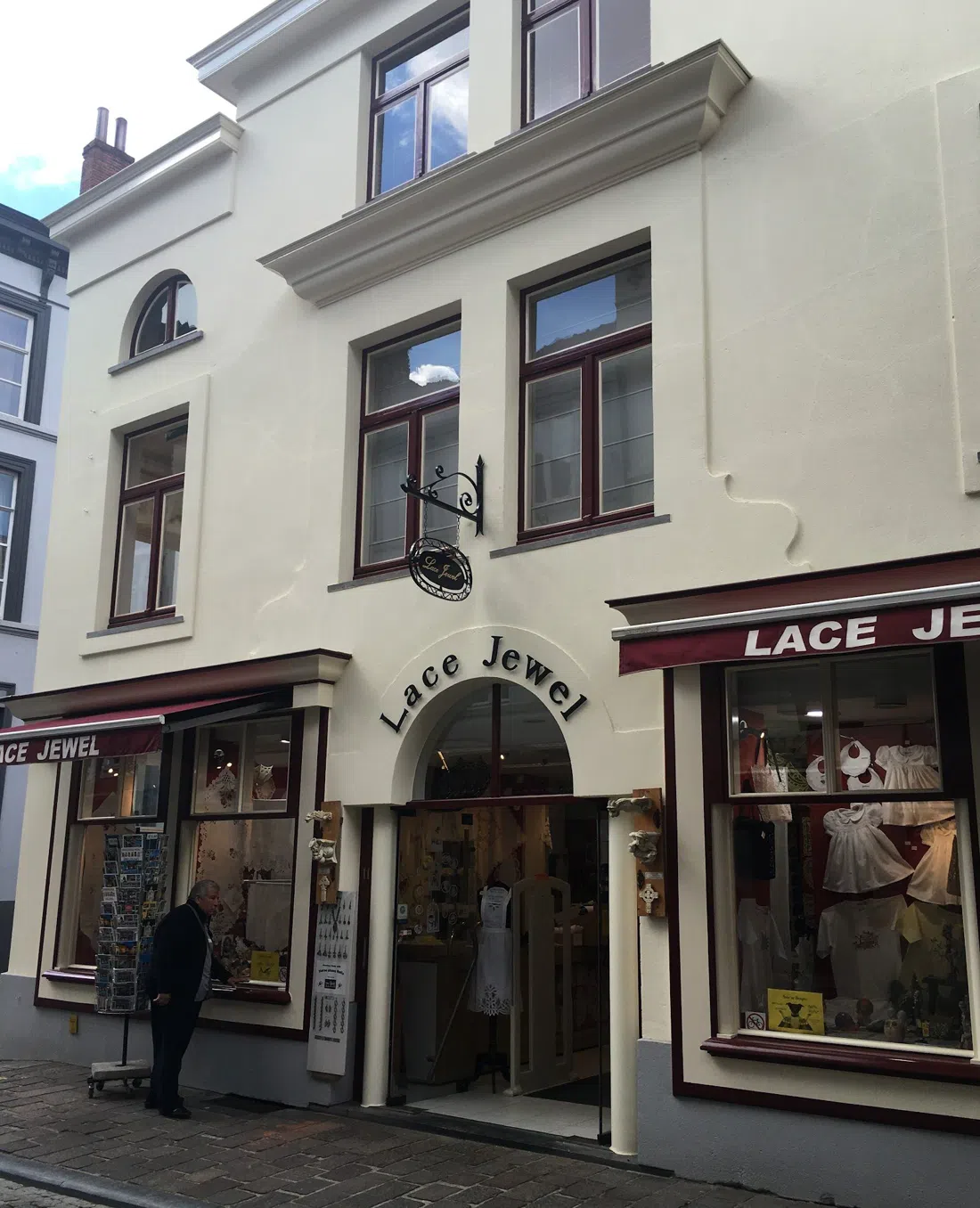
Lace Jewel combines a sales floor with an actual mini-museum and hosts casual small-group demonstrations for shop visitors, which makes it good value as a single stop that does double duty: you get the sales pitch and a bit of the craft story in the same fifteen minutes. Prices run roughly € to €€€.
The honest advice across all three: ask, plainly, whether a piece is handmade in Belgium or machine-made and imported. None of these three shops will dodge the question, which is precisely why they're worth your money over the anonymous lace stalls elsewhere in the centre.
Getting There, Timing It, and What to Budget
The whole route (Beguinage, Kantcentrum, the two museums, Kantwerkstersplein, and the three shops) sits within a compact fifteen-minute walking radius around St Anna and the Minnewater end of the centre, so there's no need for transport once you're in Bruges; the historic core is closed to most traffic anyway and everything here is walkable from a hotel in the centre. If you're arranging where to stay, a Bruges hotel search for something inside the ring canal will put you within twenty minutes on foot of every stop on this list.
Build the day around Kantcentrum's fixed windows: demonstrations run 2-5pm Monday to Saturday, and the 2-hour taster workshop needs advance contact, especially for groups. Gruuthusemuseum group visits must start by 3pm, so do the Beguinage and Kantcentrum first, then Gruuthusemuseum, then finish at Volkskundemuseum, Kantwerkstersplein, and the shops in the late afternoon when the light in St Anna is better for browsing anyway. The Beguinage courtyard and Kantwerkstersplein are free at any hour during daylight; everything else has a modest entry fee, so budget roughly €40-60 per person across both museums, the Kantcentrum museum and workshop, and the beguine house, before you buy anything from the shops. Belgium runs on euros and cards are accepted everywhere on this route, though it's worth carrying a little cash for the smaller lace shops, where a card minimum is common. For the full run of what else the city offers beyond this trail, the Bruges guide covers the rest.
Go in low season if you want the demonstrations to yourself. August afternoons at Kantcentrum draw a real crowd around the working lacemakers, and the Beguinage's quiet request is much easier to honour with fewer people trying to whisper at once.