The Bruges issue
Bruges' Hidden Godshuizen: The Medieval Almshouses Still Lived In Today
A door-by-door guide to the thirteen white-walled charity courtyards behind Bruges' unmarked gates, which ones welcome a quiet visitor, which are for viewing only, and how to tell the difference before you knock.
By Marit HendriksSlow days through the canals
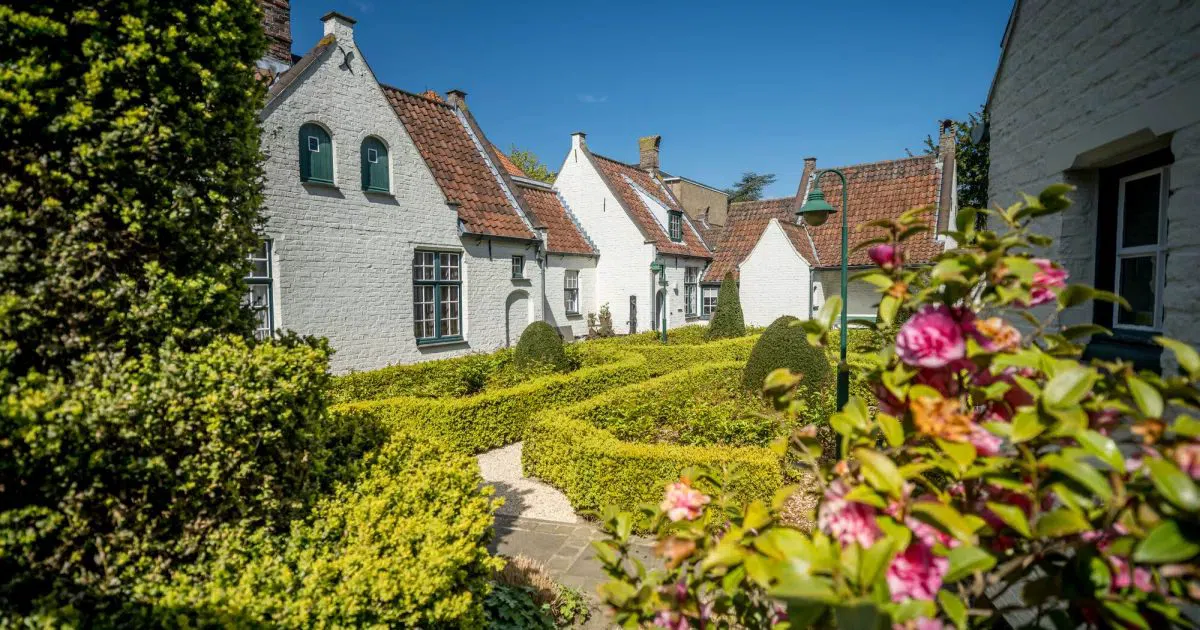
Behind Bruges' postcard canals sits a second city: low brick walls, hushed courtyards, and doors that give away nothing about what's behind them. These are the godshuizen — almshouses founded from the 14th century onward by guilds, merchants, and widows to house the city's elderly poor — and a startling number of them are still doing that exact job in 2026. Walk the wrong street at the wrong pace and you'll miss all thirteen described here; slow down, and Bruges opens into a city most visitors never notice is there.
Understanding the Godshuis: A City Within the City
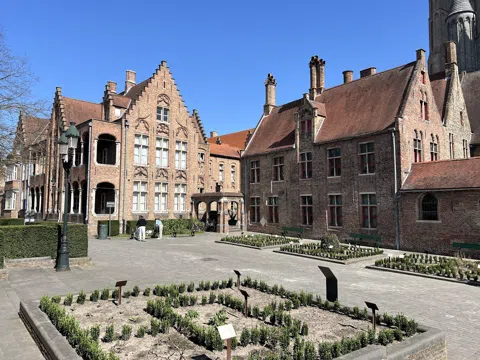
A godshuis (plural godshuizen) is not a museum piece. Each one is a working almshouse: a row or square of small whitewashed cottages built around a shared garden, funded centuries ago by a guild, a widow, or a charitable brotherhood, and still housing elderly residents today — mostly women, mostly local, mostly living exactly as their charters intended. Bruges once had around fifty of these worker and widow courtyards; a little over a dozen are covered here, and every one of them is a private home, not an attraction. That distinction decides everything else in this guide: whether you can step inside, whether a group is welcome, and whether you should even slow your footsteps as you pass. None of them charge admission — the only ask, where you can enter at all, is quiet.
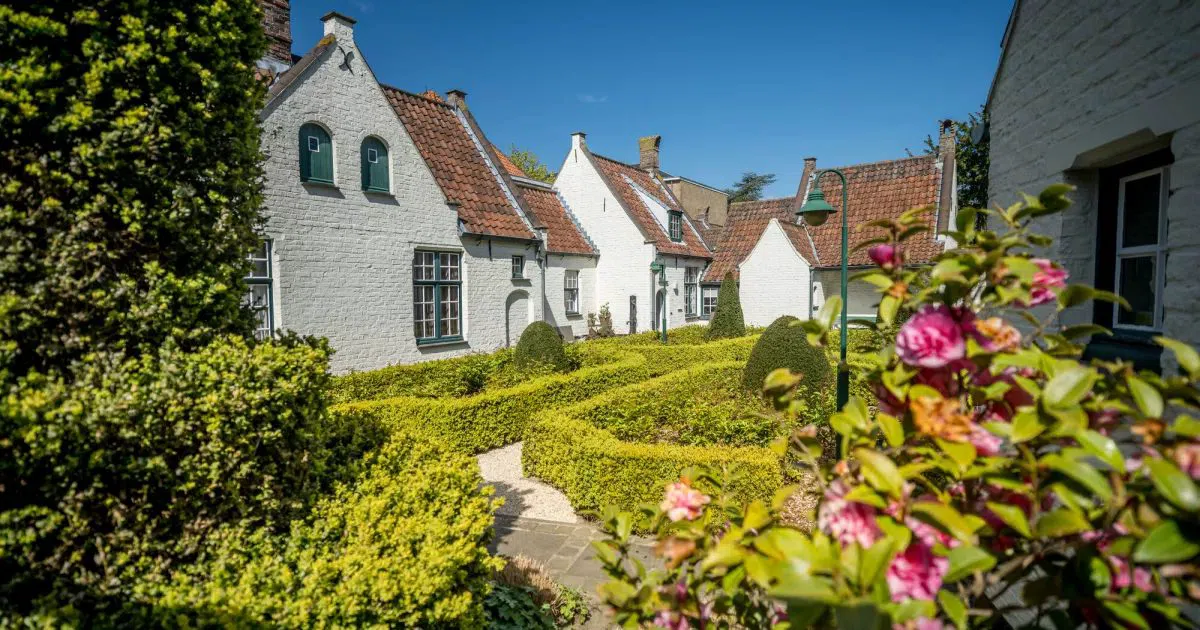
Most were founded between the 13th and 17th centuries by guilds looking after their own aging members, or by individual widows and merchants settling a debt of conscience. Administration of most has since passed to the city's public social welfare body, but the buildings and the residents' right to live in them haven't changed. Visually, they're easy to recognise once you know what you're looking for: a single door or low gate in an otherwise blank wall, whitewashed cottages arranged around a shared garden or a narrow lane, sometimes a small chapel at one end, almost never a sign. That's what makes them so easy to walk past — nothing about the street-facing wall says "come in," because for the people who live there, it isn't an invitation, it's a front door.
For everything else Bruges has to offer beyond these courtyards, the Bruges guide covers the rest of the city.
Plan your Bruges trip
Live prices from our booking partners.
Free cancellation on many rooms. We may earn a commission when you book.
Nieuwe Gentweg and Boeveriestraat: The Classic Godshuizen Walk
This stretch, running south from the Begijnhof toward the old city wall, holds the highest concentration of godshuizen in Bruges and is the natural place to start.
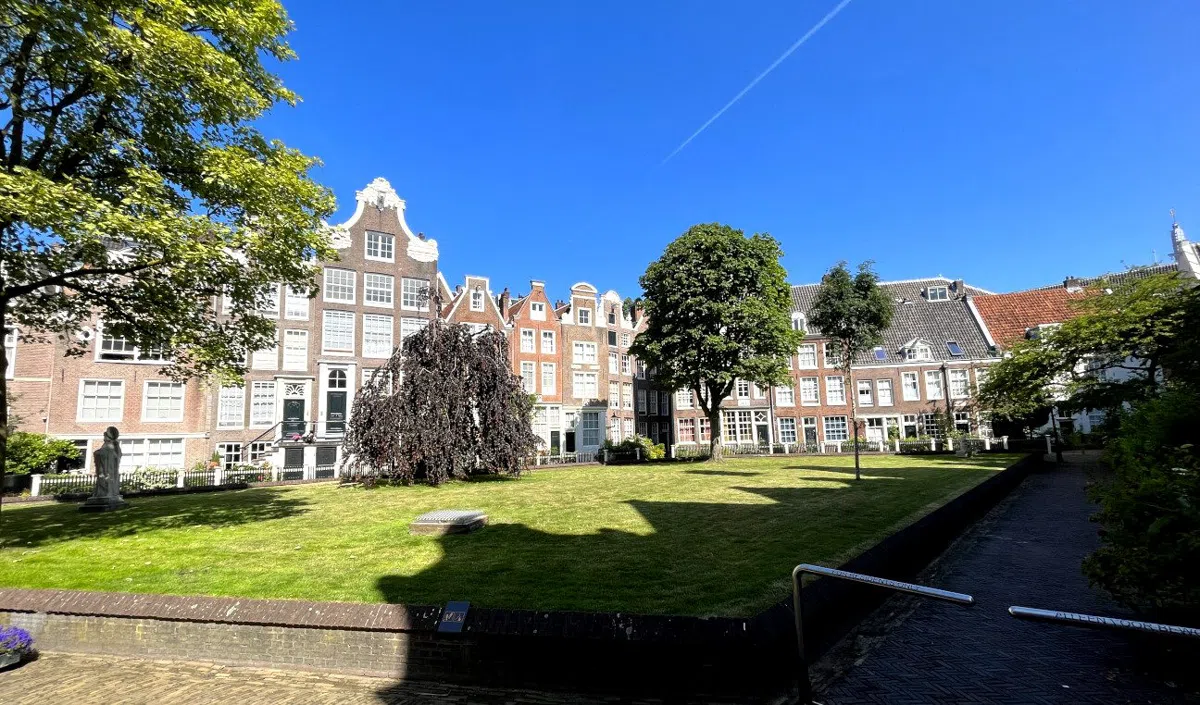
Godshuis De Meulenaere & Sint-Jozef (Nieuwe Gentweg) is the single most photographed godshuis pairing in the city, and the best introduction to the whole idea: an open gate lets you look straight onto a public footpath running between two facing rows of almshouses. It's also still genuinely residential — treat it as someone's front garden, not a courtyard built for visitors. Small, quiet groups of two to six are fine here as long as everyone keeps their voice down; this is not a stop for a guided coach party. Free, though a donation box sits by the gate.
A few doors along, Godshuis De Vos (Boeveriestraat) is the opposite experience and, in some ways, the more important stop for understanding the theme: you view it only from the street wall, because there's no public access at all. Most people walk straight past the low brick wall without realising there's a full almshouse courtyard sitting behind it — which is exactly the point of this article. It doesn't suit groups of any size; there's nothing to gather around beyond a wall. Free, viewed from the street.
Round the corner, Rooms Convent (Boeveriestraat) is Bruges' oldest still-inhabited almshouse, founded in 1330, and the purest "unmarked door" moment in the city — the gate gives no hint of what's behind it until you're through it. Small, quiet groups are welcome via the public alley; it isn't a tour-bus stop, and treat the alley as you would any resident's shared entrance. Free.
Godshuis Spanoghe (same street as Rooms Convent) sits in its neighbour's shadow and is often missed entirely because of it, which makes it a natural two-for-one stop — see one, then the other, in the same five minutes. Small groups only. Free.
A short walk further is Godshuis Sint-Trudo (Boeveriestraat), monument-protected since 1998 and still home to twelve elderly residents. Its double-courtyard layout is unusual among Bruges godshuizen — most are a single row or square — and small, quiet groups are fine along the connecting courtyard paths. Free.
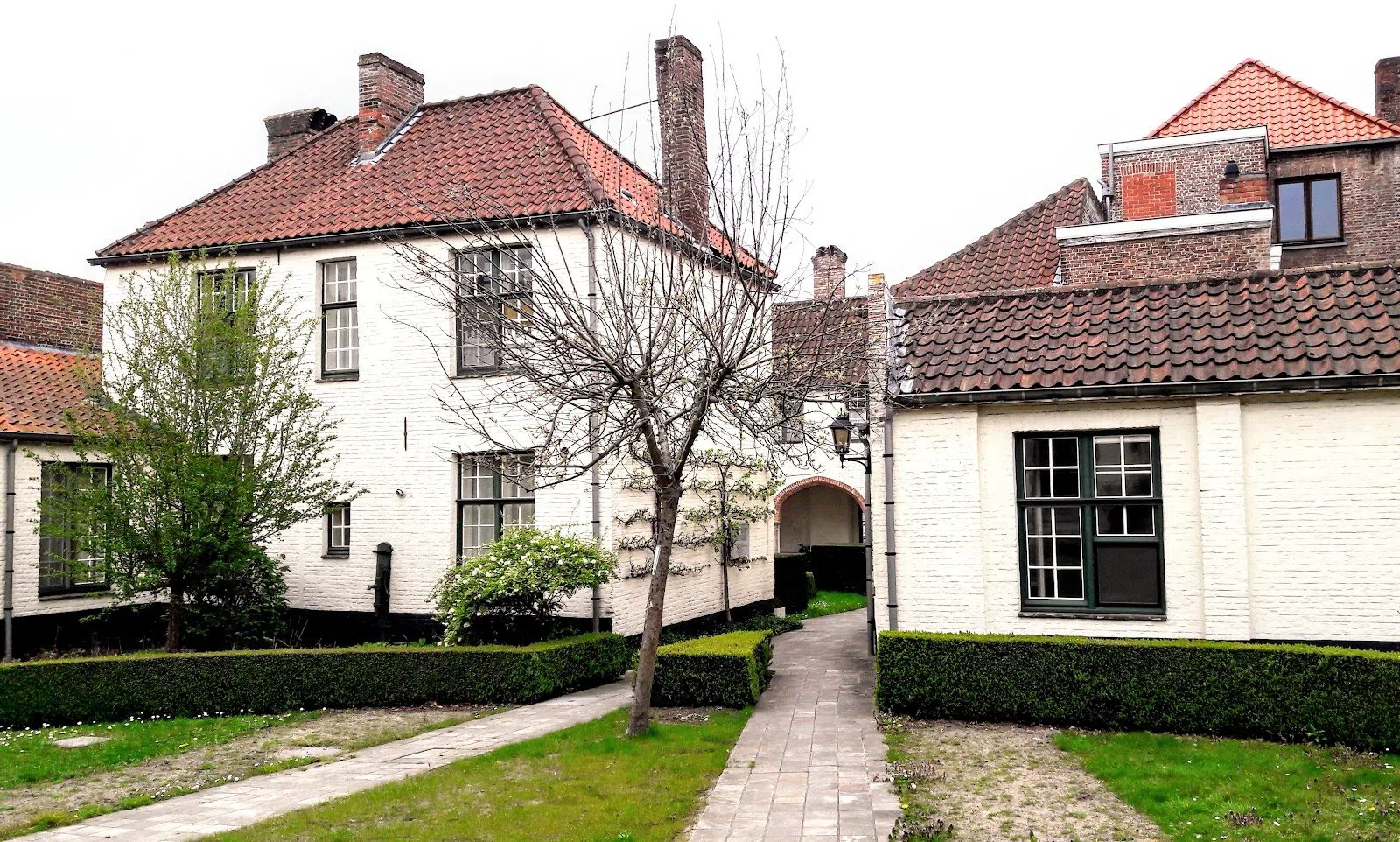
Together these five make a single unhurried loop of maybe twenty minutes on foot, assuming you stop to actually look rather than photograph and move on.
The Widows' Charities: Pelikaan and a Quieter Cluster
Not every godshuis was for mixed poor relief — some were founded specifically for widows, and two of the clearest examples sit apart from the Nieuwe Gentweg cluster.
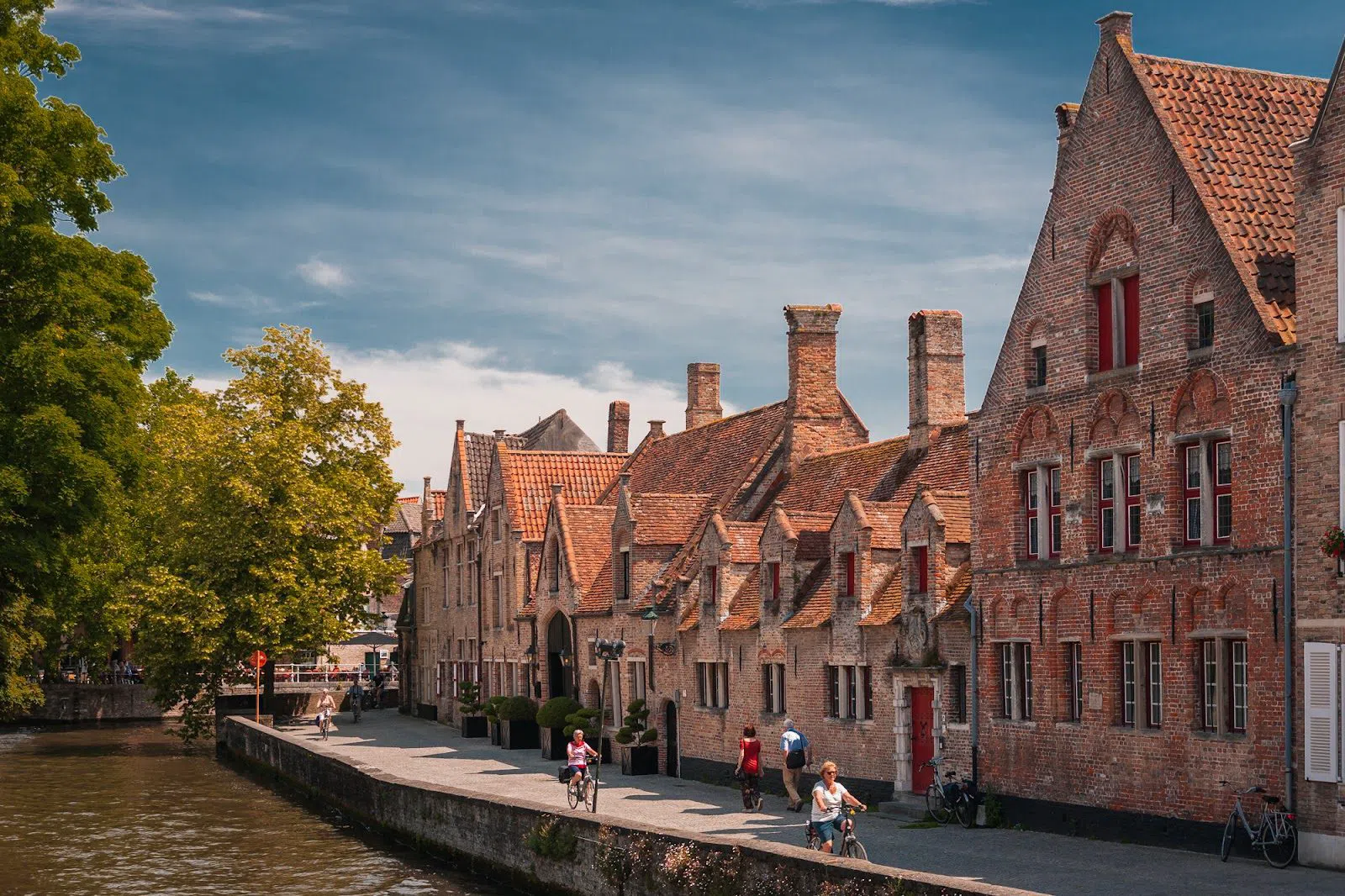
Godshuis De Pelikaan (on one of Bruges' busiest canal walks) was founded for seven widows over fifty, and its pelican emblem — a medieval charity symbol representing self-sacrifice — makes it one of the most visually distinct godshuizen in the city, despite the crowds passing a few metres away. It's exterior and gateway viewing only for groups of any size; this is a private residence, not a walk-through courtyard, whatever the foot traffic outside might suggest. Free.
For something genuinely overlooked, Elisabeth Zorghe, Paruitte & De Schippers (outside the main tourist loop) rewards the walk with wider garden paths than most godshuizen offer — though visitors are still asked to stay quiet. It's a good option for small groups who've found the Nieuwe Gentweg row too tight or too busy. Free.
The Last Workers' Courtyards
Where the almshouses above were mostly for widows and the general poor, Bruges once had roughly fifty separate courtyards built specifically for workers' guilds. Only two survive.
't Kattepoortje & Wevershof is the purest "unmarked door" story in the entire city: a narrow entrance passage, easy to miss even when you're looking for it, opening onto what's left of the workers'-courtyard tradition. It suits solo visitors or pairs — the passage genuinely isn't practical for a group of any size, so don't try. Free.
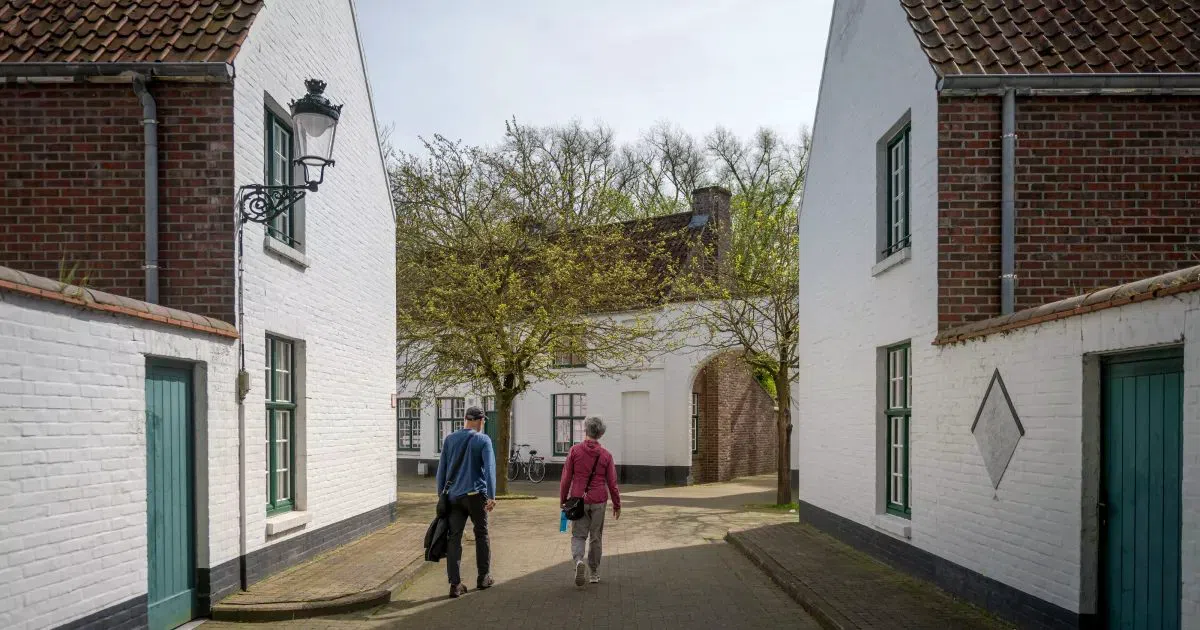
De Vette Vispoort & Goderickx Convent carries the deepest history of anything in this guide: it's one of the very few godshuizen surviving from within Bruges' original 12th-century wall line, predating the city's later medieval expansion. The alley here is narrow too, so it's best for individuals or pairs rather than groups. Free.
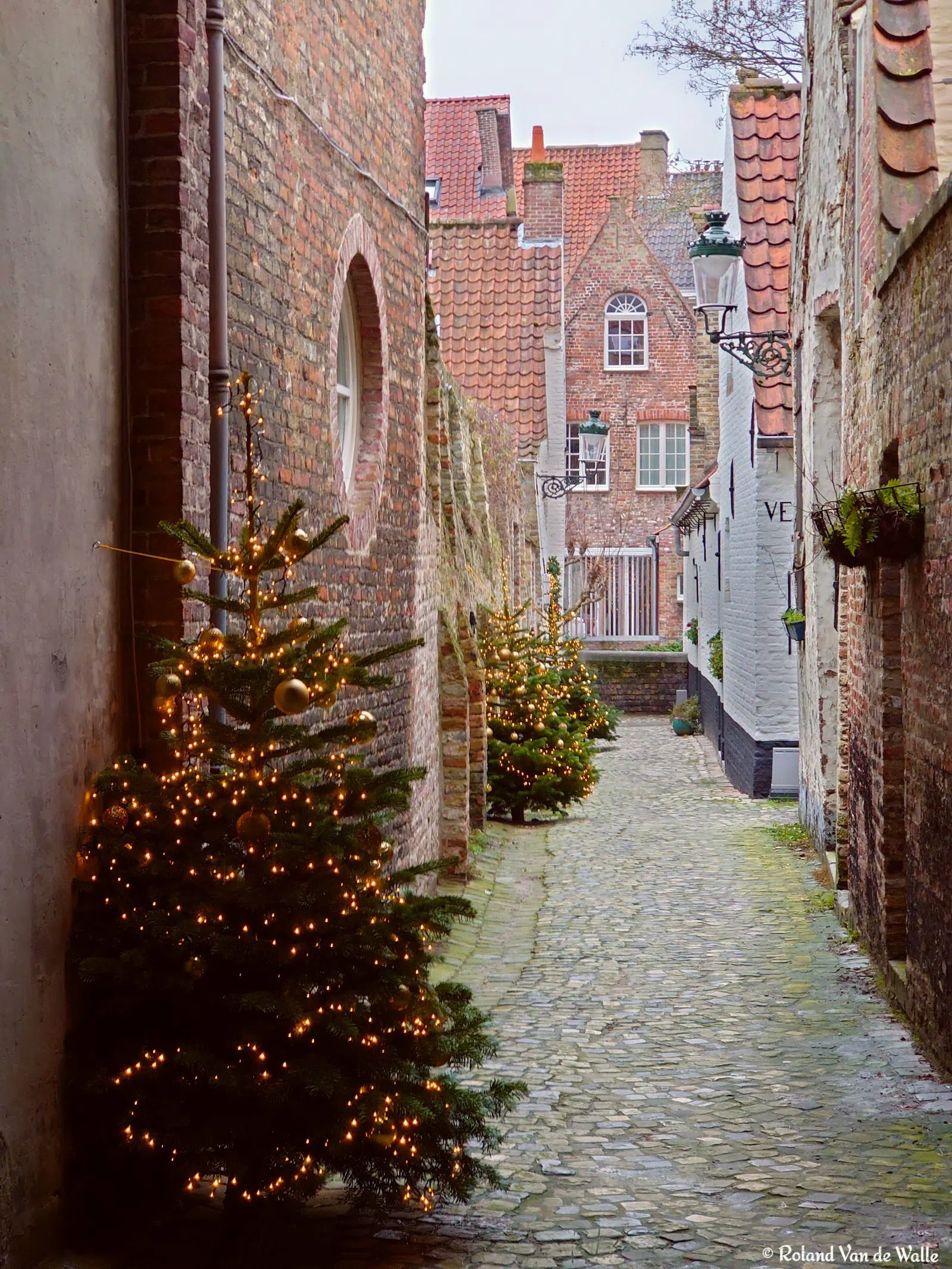
Two Facades Worth the Detour
Two further godshuizen won't headline anyone's Bruges itinerary, but both are worth a short detour if you're already walking the quieter streets.
Godshuis Van Volden & De Moor has one of the longest unbroken almshouse facades in the city — a street-facing terrace rather than an enclosed secret courtyard, which makes it the best spot in this guide for a single wide photograph capturing the "city within a city" idea. Small groups are tolerated along the public row, though it's a terrace people live behind, not a stage set. Free.
Godshuis Van Campen-Sucx is nearly 600 years old and rarely mentioned in mainstream guides, making it a genuine off-the-radar find for readers who've already covered the well-known names above. Visitor traffic is low and small groups are fine. Free.
The Chapel That Still Rings: Onze-Lieve-Vrouw van Blindekens
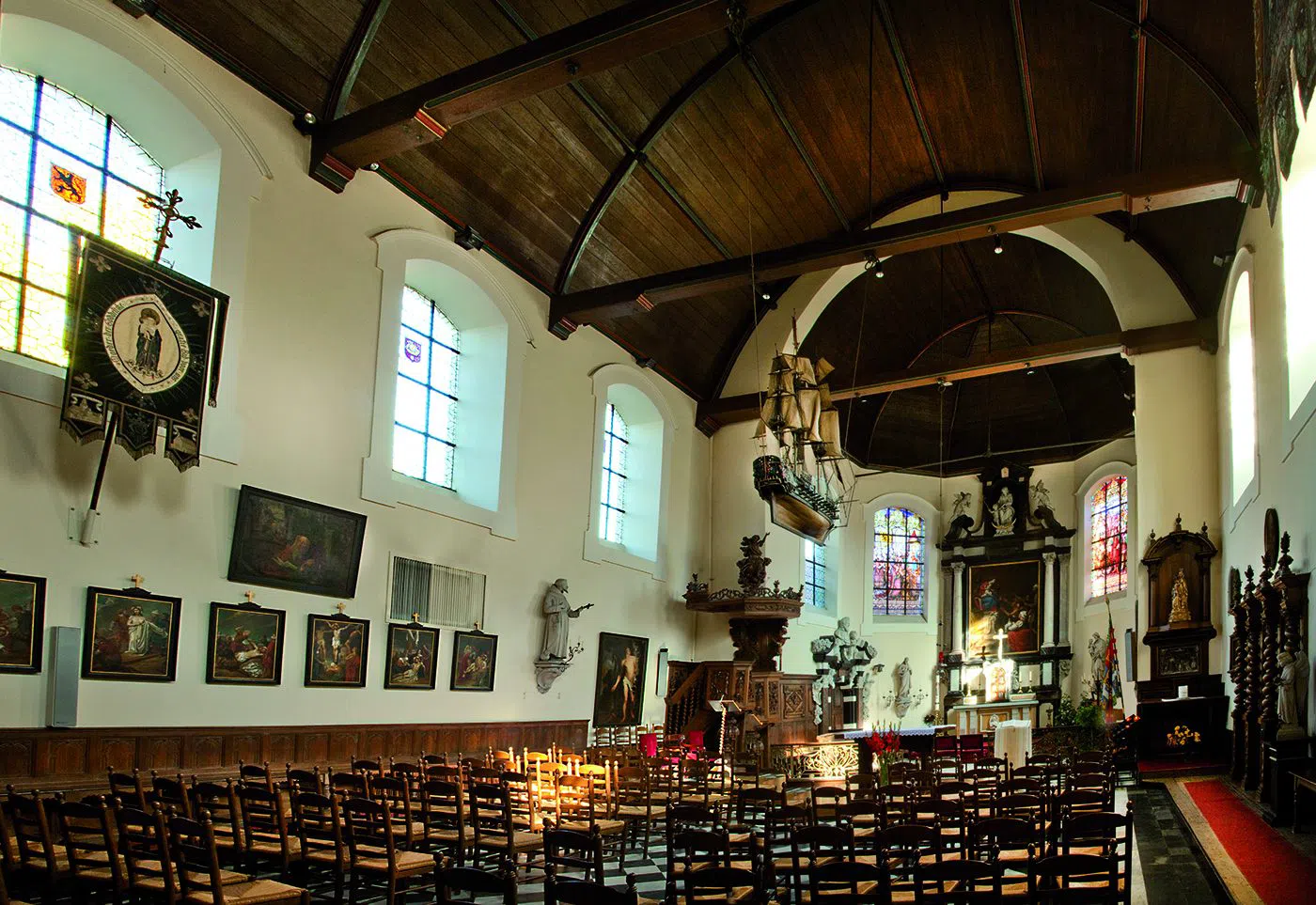
Most godshuizen in this guide are purely residential — look, don't linger. Onze-Lieve-Vrouw van Blindekens (godshuis and chapel) is the exception: a working devotional chapel still tied to its original almshouse charity, open daily from 09:30 to 18:00, and welcoming visitors including small groups. Inside is a 1650 altar painting, and the chapel still hosts a yearly candle-procession tradition observed to this day — a rare case of a godshuis charity's religious life continuing exactly as founded, rather than fading into a quiet residential row. Free.
Finishing Along the Potterierei: Heilige Moeder Anna
For a closing stop away from the crowds, Godshuis Heilige Moeder Anna sits along the quieter Potterierei canal, with a canal-facing path that welcomes small groups. It's proof the godshuis tradition didn't stop in the medieval period — this one continued the pattern into the 20th century — and makes a calm final stop after a day spent looking at 14th- and 15th-century courtyards. Free.
Planning the Visit: Transport, Cash, Timing, Budget
Getting there. Every godshuis in this guide is within Bruges' compact historic centre, reachable on foot from the Markt in twenty to thirty minutes at most. There's no reason to take transport between them; a bicycle is the one upgrade worth considering if you're covering all three clusters (Nieuwe Gentweg, the workers' courtyards, and Potterierei) in a single day, since they sit at different edges of the centre.
Cash and cost. Every godshuis listed here is free. Where a donation box exists — mainly at the more visited courtyards like De Meulenaere & Sint-Jozef — a couple of euros is the right gesture, not an expectation. Bring small coins; there's no card reader on a donation box.
Timing. Mornings, before 10:00, are quietest — residents are up but the day's tour groups haven't arrived, and Onze-Lieve-Vrouw van Blindekens opens at 09:30 if you want to combine the chapel with the courtyards nearby. Avoid weekend afternoons in July and August, when even the quiet clusters see foot traffic. Evenings don't work for most of these — the interiors close with residents' own routines, and it's not the time to be peering into someone's garden.
Photography and noise. A camera is fine at every entry-level courtyard in this guide; a tripod, a drone, or a loud conversation isn't, anywhere. Residents' windows look directly onto these gardens, and several of the godshuizen included here have had informal photography restrictions tighten in recent years as visitor numbers to Bruges have grown — treat every shot as taken in someone's garden, because it is one.
Which suits groups, and which doesn't. Read this straight, because the door policy is the most practical fact in this whole guide. Fine for small groups of two to six: De Meulenaere & Sint-Jozef, Rooms Convent, Spanoghe, Sint-Trudo, the Elisabeth Zorghe cluster, Van Volden & De Moor, Van Campen-Sucx, Onze-Lieve-Vrouw van Blindekens, and Heilige Moeder Anna. View-only, no entry, any group size: De Vos and De Pelikaan — both are worth seeing precisely because you can't go in. Best kept to solo visitors or pairs, not groups at all: 't Kattepoortje & Wevershof and De Vette Vispoort & Goderickx Convent, purely because their entrance passages are too narrow to share. None of this is arbitrary gatekeeping — it's the same logic that applies to walking past any stranger's front garden, applied consistently across thirteen addresses.
Where to stay. Basing yourself near the historic centre puts every godshuis in this guide within an easy morning's walk; start with the Bruges hotel search if you haven't booked yet.
Before you go
What is a godshuis in Bruges?
A godshuis (plural godshuizen) is a medieval almshouse, a row or courtyard of small whitewashed cottages built by a guild, widow, or charitable brotherhood to house the elderly poor. Bruges once had around fifty of these worker and widow courtyards, and many are still lived in today by elderly residents, mostly through the city's public social welfare body rather than the original charity itself.
Can you go inside the godshuizen in Bruges?
It depends on the individual courtyard. Some, like Rooms Convent and Godshuis De Meulenaere & Sint-Jozef, have a public gate or footpath you can walk along quietly. Others, like Godshuis De Vos and Godshuis De Pelikaan, are view-only from the street wall or gate, there's no public entry at all. None of them are museums, so treat every visit as walking past someone's home.
Are the godshuizen in Bruges free to visit?
Yes. Every godshuis in this guide is free, whether you're viewing from the street or walking through a public courtyard path. A few, like Godshuis De Meulenaere & Sint-Jozef, have a donation box by the gate, a couple of euros is a fair gesture, not an entry fee.
Which Bruges godshuizen are best for groups?
De Meulenaere & Sint-Jozef, Rooms Convent, Spanoghe, Sint-Trudo, the Elisabeth Zorghe cluster, Van Volden & De Moor, Van Campen-Sucx, Onze-Lieve-Vrouw van Blindekens, and Heilige Moeder Anna all tolerate small, quiet groups of two to six. 't Kattepoortje & Wevershof and De Vette Vispoort & Goderickx Convent have entrance passages too narrow for groups and suit solo visitors or pairs instead.
What is the oldest godshuis in Bruges?
Rooms Convent, founded in 1330, is the oldest still-inhabited almshouse covered in this guide. It's reached via a public alley and remains one of the purest examples of a godshuis gate giving no hint of the courtyard behind it.