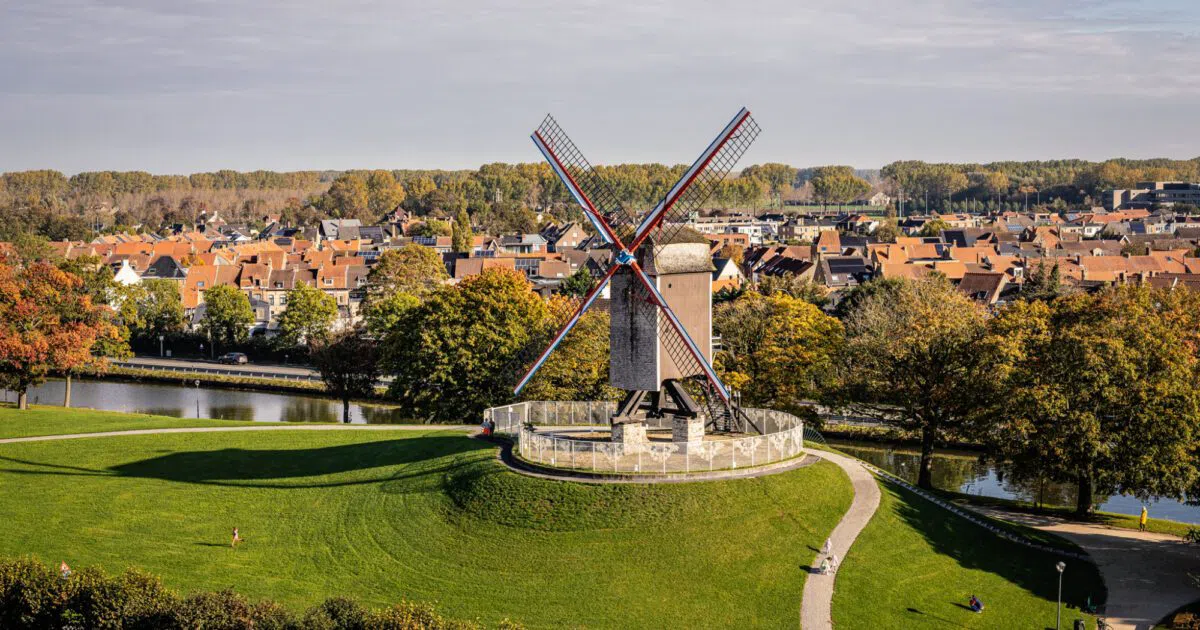
Four windmills still stand along Bruges' eastern ramparts, spaced across a low grass mound above the old moat like ships anchored in a row. Only one of them still turns for a living; the other three are quiet survivors of a skyline that once counted more than twenty working mills around the city walls. Together they give the Kruisvest its rhythm — walk, mill, walk, mill — a loop that takes a visitor from a medieval gate to a working grindstone in under half an hour, with a poet's house and a brewery tucked into the gaps.
Starting point: Kruispoort and the rampart spine
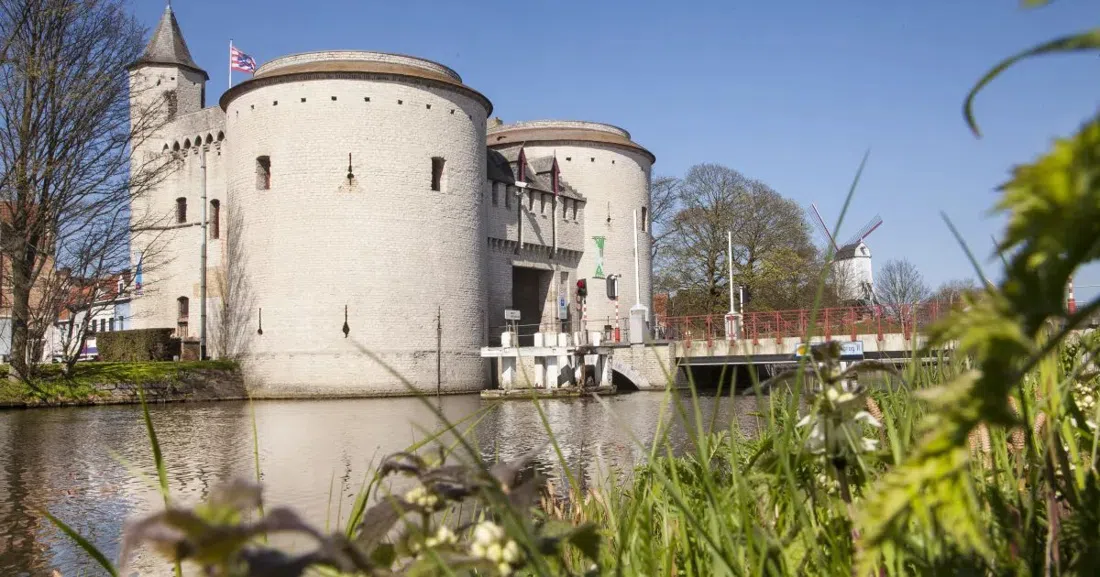
Kruispoort [medieval gate], on the eastern edge of the old city, is where this walk should begin and end. It's a genuine city gate, not a reconstruction for tourists — Charles V rode through it, so did Napoleon, and so did the German army twice in the twentieth century. There's no ticket, no group cap and no opening hours to plan around; it's a public thoroughfare that happens to be seven centuries old, and it sits directly on the Kruisvest Rampart Walk, the green path that strings all four mills together.
The Kruisvest itself is free, unrestricted in group size and — unusually for central Bruges in summer — genuinely uncrowded. It runs along the top of the old earthwork defences, grass underfoot, water and trees on one side and the backs of townhouses on the other. Guided walking and cycling groups use it constantly, but it never feels programmed the way the Markt or Rozenhoedkaai can by mid-morning. Budget 20 to 30 minutes for the full stretch at a slow pace with stops; it's flat, buggy-friendly, and there's no reason to rush it.
From Kruispoort, head north along the ramparts and the first mill appears within a few minutes.
Sint-Janshuismolen: the one that still grinds
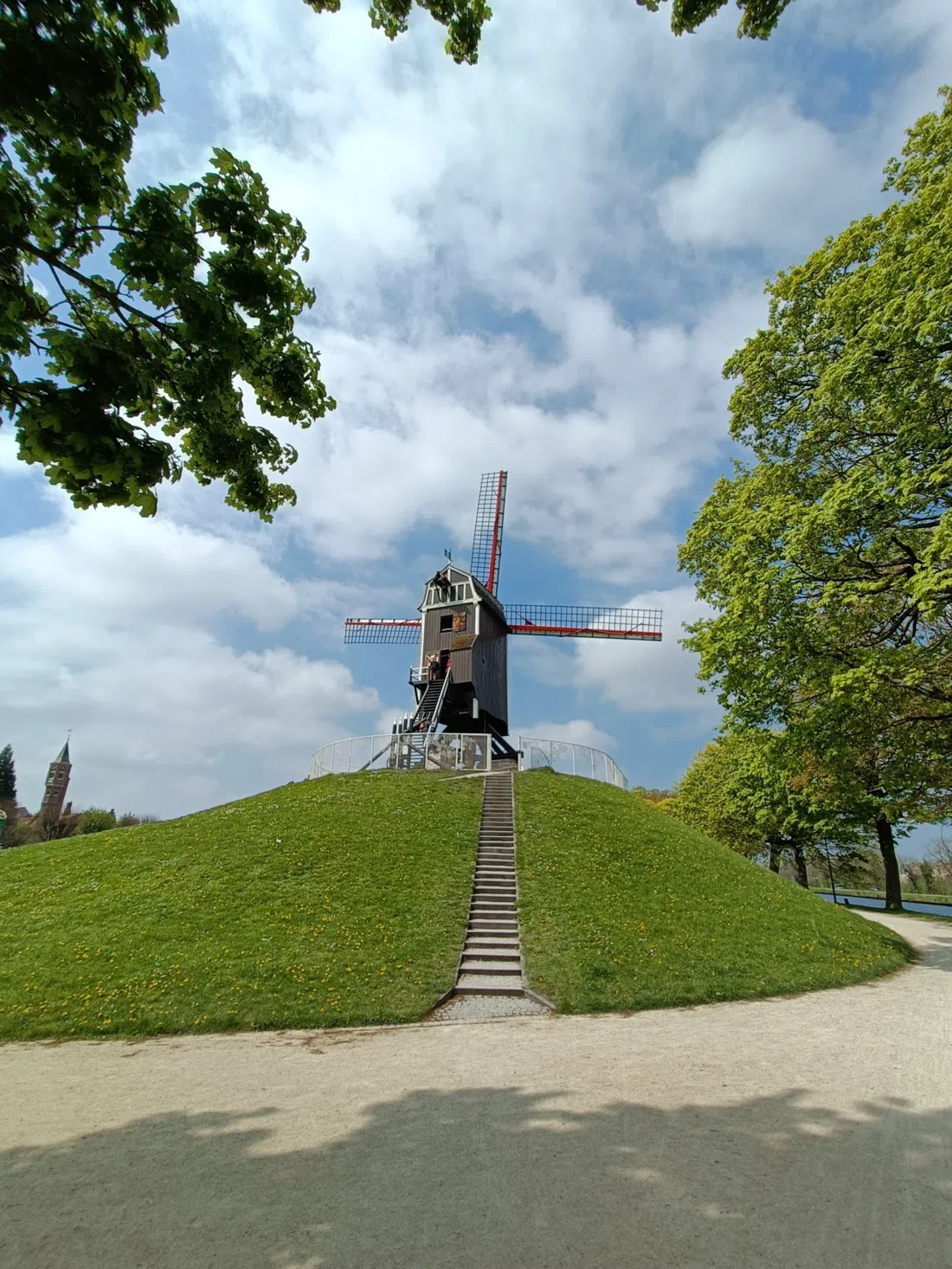
Sint-Janshuismolen [working windmill], on the ramparts just north of Kruispoort, is the only one of the four that still does what a windmill is built to do. It's a genuinely working grain mill, recognised as part of Flanders' living UNESCO-linked milling craft, and on the days it's open you can watch the sails turn and the stones do their job rather than look at a static shell.
It opens April through November, closed Mondays, plus second Sundays through the winter months for those who want a cold-weather look. Entry is €5 standard, €4 for visitors 18–25, €2 for 13–17, and free under 13 — modest prices for the only living demonstration among the four. On Mill Day, the last Sunday of April, entry is free for everyone, and it's worth timing a visit around it if the dates line up, since that's when the miller's craft is most visibly on show.
Groups are welcome here in a way the other three mills, being unstaffed, can't offer: above a minimum group size, Sint-Janshuismolen provides a reduced group rate and a free guide, arranged in advance through [email protected]. That makes it the natural anchor for any group itinerary on this walk — book the guide first, then build the rest of the route around the time slot.
Three silent sentinels: Koeleweimolen, Bonne-Chièremolen and De Nieuwe Papegaai
Walking on from Sint-Janshuismolen, the parkland setting continues past three more mills that don't grind anything anymore but complete the skyline that gives this stretch of rampart its name. None of the three charges admission — all are free to view from the outside, and none has a group-size restriction, which makes them the easiest stops on the entire route to build a tour around.
Koeleweimolen [historic windmill], a short walk north of Sint-Janshuismolen, sits in open parkland and is freely accessible, pushchair- and pet-friendly, with no barriers between the path and the mill itself. It was relocated to the ramparts in 1996, so it's a later arrival to this exact spot than its neighbours, but it's an authentic mill nonetheless — just one that was moved here to complete the set rather than built in place. Pair it directly with Sint-Janshuismolen; they're close enough that most visitors treat them as one stop.
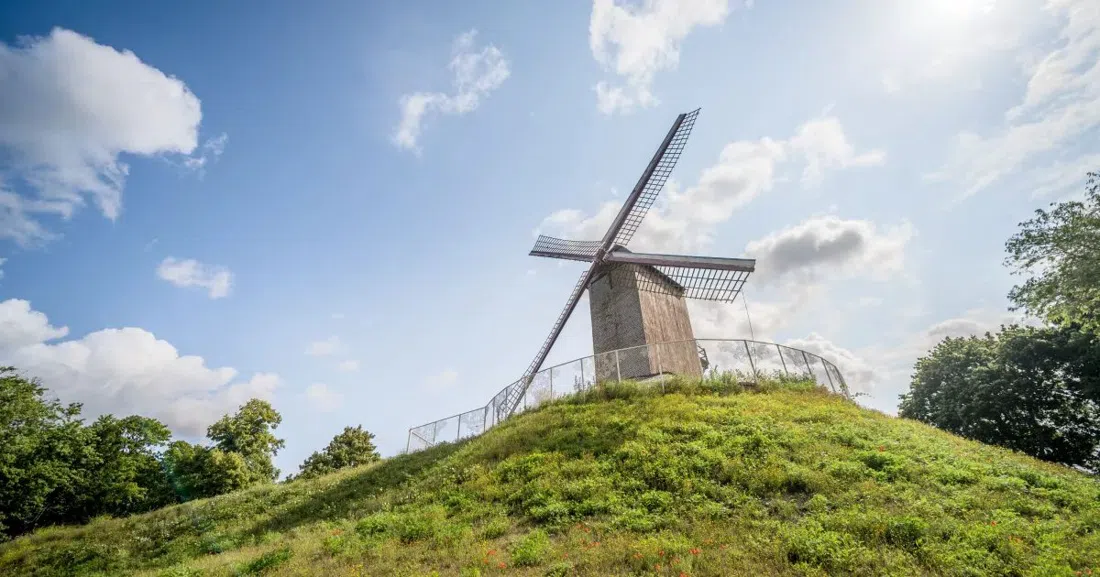
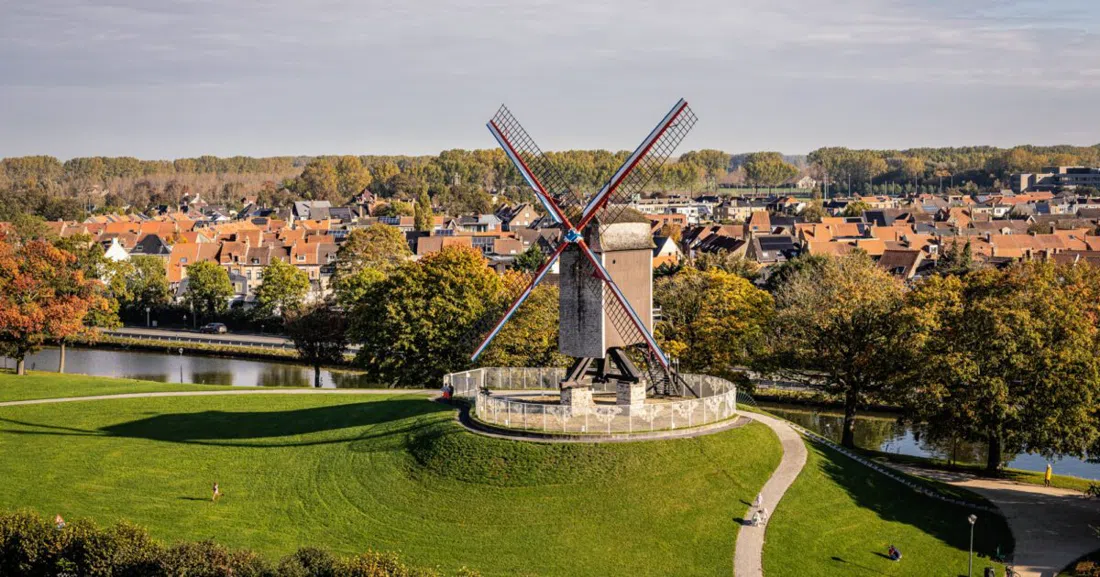
Bonne-Chièremolen [historic windmill], further along the mound, has the most striking silhouette of the four thanks to its perch on the highest point of the earthwork. It was built in 1888 in Olsene, a village well outside Bruges, and moved to its current position in 1911. Photographers tend to linger here longer than anywhere else on the walk — late afternoon light against the sails, with the water and city rooftops behind, is the shot most people came for.
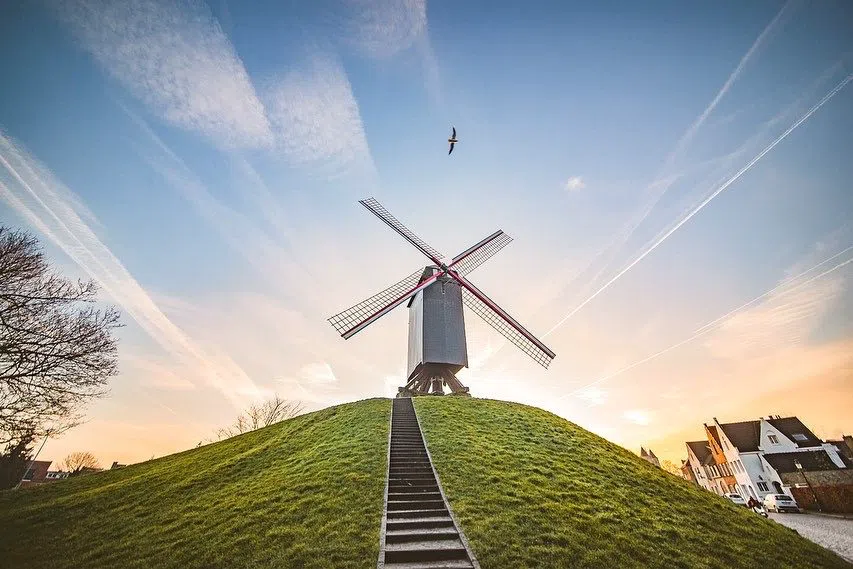
De Nieuwe Papegaai [historic windmill], the last of the four heading along the ramparts, is a rebuilt 1790 oil mill re-erected on this spot in 1970 to complete the run. It's an oil mill rather than a grain mill by original design, which is a detail worth knowing if a guide doesn't volunteer it — the four mills aren't four versions of the same machine, they represent different trades that once lined these walls. Its red paint reads especially well in wide shots that take in more than one mill at once, so it's worth the extra few minutes to find an angle that catches Bonne-Chièremolen or Sint-Janshuismolen in the same frame.
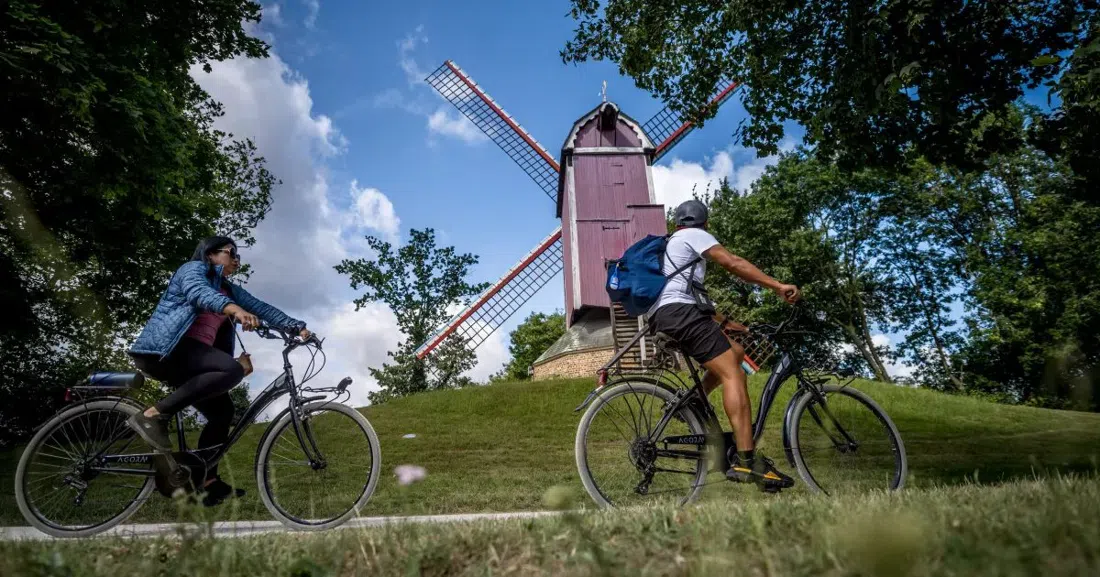
Because all three are exterior-only and unstaffed, they suit couples and solo walkers just as well as groups — there's no door, no ticket window and no reason to time a visit around opening hours. The only real planning decision is light: morning suits the mills nearest Kruispoort, and the golden hour before sunset suits Bonne-Chièremolen's ridge position best.
A literary detour: Gezellehuis
A few minutes off the rampart path sits Gezellehuis (Guido Gezelle House) [poet's birth house museum], the birthplace of the Flemish nature poet Guido Gezelle. It's a quiet counterpoint to the open-air mill walk — a small, indoor, curated stop rather than a free rampart view, and it rewards visitors who want at least one piece of Bruges' literary history alongside its industrial one.
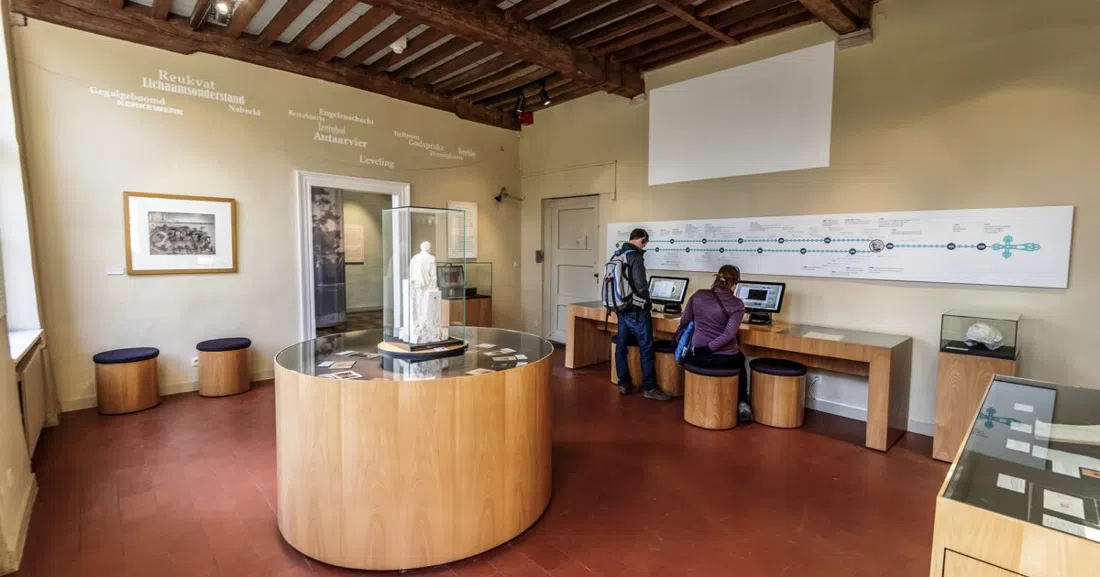
Admission is free, garden included, and it keeps the same seasonal rhythm as Sint-Janshuismolen: open April through November, closed Mondays, plus second Sundays in winter. Group visits are capped at 20 people including the guide (19 paying visitors plus one guide), with a reduced group rate available from 15 paying visitors and one guide included free. That cap matters for tour operators — anything larger than 20 will need to split into two visits, so it's worth checking numbers before adding this to a group itinerary. For couples or small groups, no such planning is needed; just factor in the short walk off the ramparts and back.
After the walk: Fort Lapin Brewery
Once the mills are behind you, Fort Lapin Brewery [craft brewery] is the natural place to stop. It's a casual, walk-in, informal spot — nothing that requires booking for small numbers — and it sits close enough to the ramparts that it functions as a genuine coda to the walk rather than a separate outing. Budget a few euros per beer for bottles and tastings; this isn't a destination restaurant, it's a place to sit down with something brewed a short walk from where you were just standing.
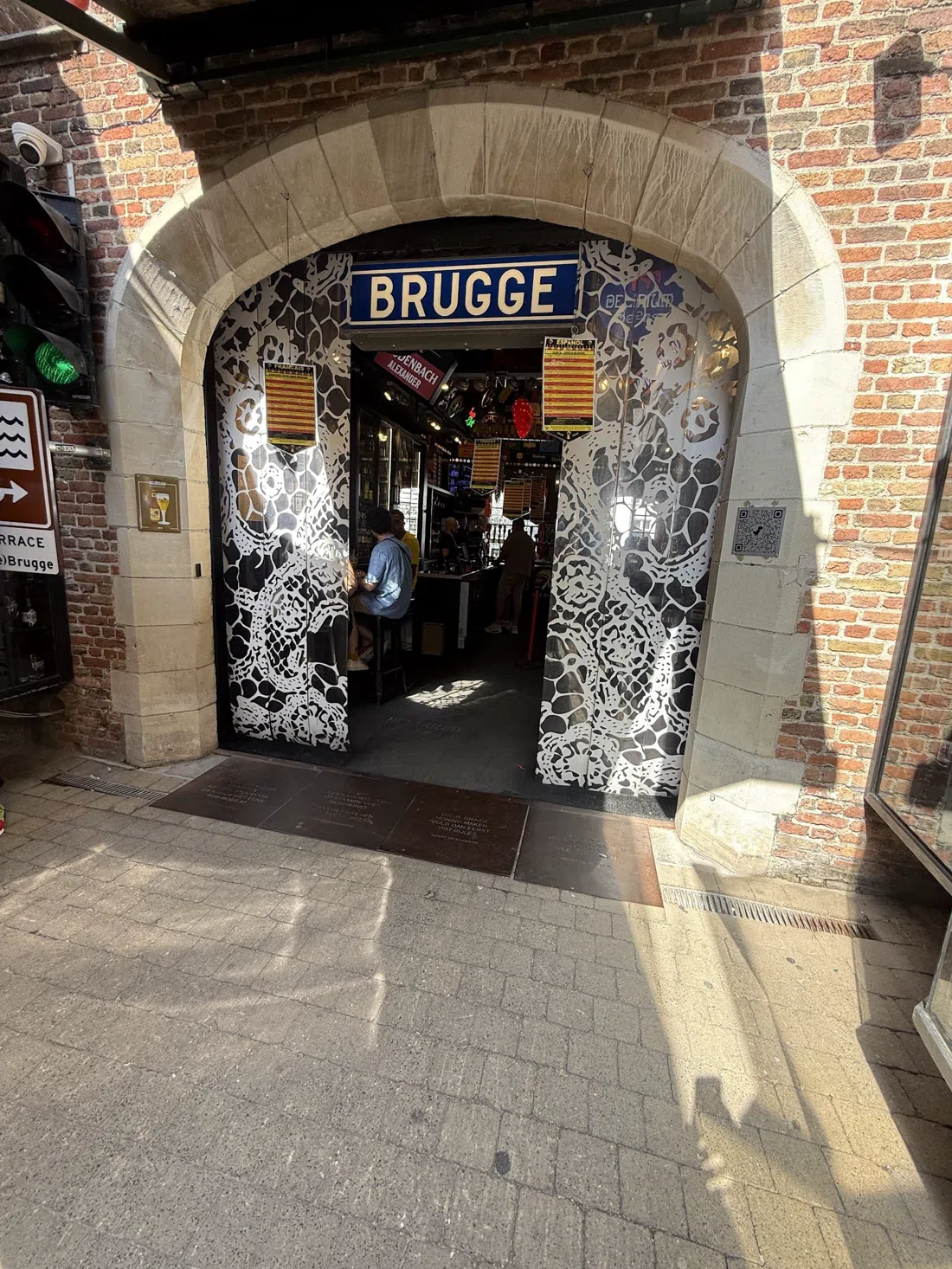
It's a sensible stop for groups too, in the loose sense that a walk-in brewery can be — there's no formal group booking system described here, so larger parties should expect to arrive, find space, and order rather than reserve ahead. For anyone stringing together a half-day of mills, gate, poet's house and beer, this is where the itinerary naturally ends.
For groups without their own itinerary: guided options
Two options exist for visitors who'd rather have someone else handle the route and the history.
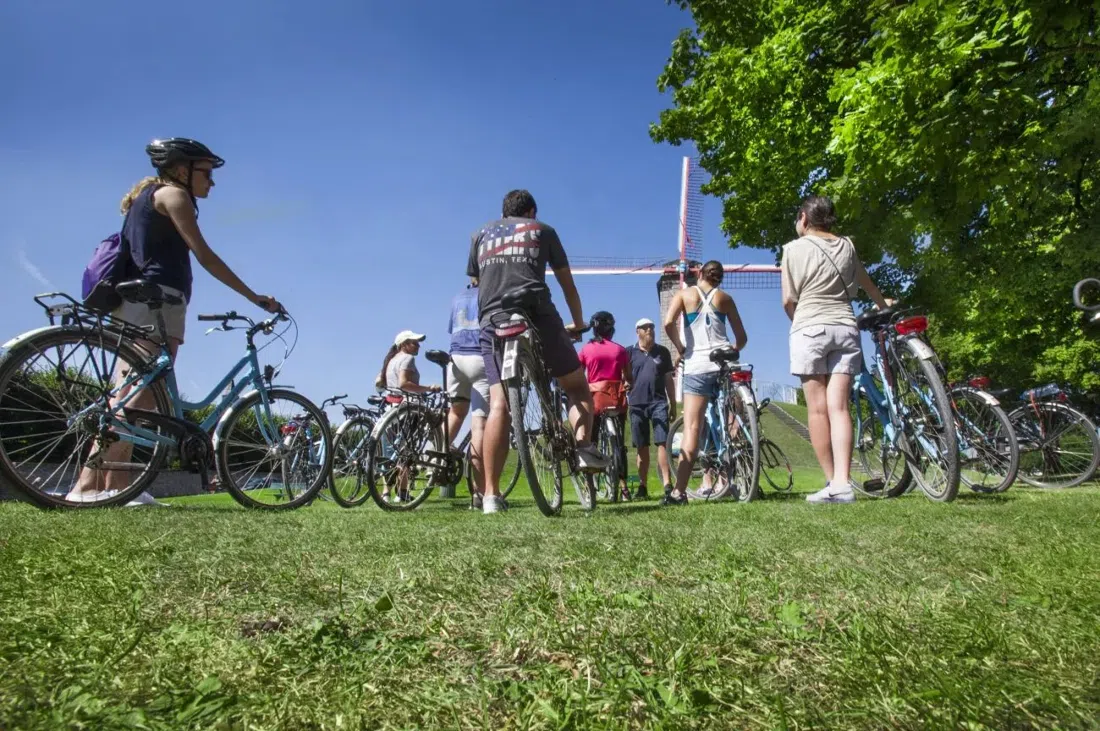
Quasimundo Bike Tours [guided bike tour] is Bruges' original bike-tour operator, and its city ride runs directly past the ramparts and the windmills as part of a wider circuit around Bruges. It's built for small groups, with bikes and guiding included in the price — roughly €35–40 per person for about 2.5 hours. This suits visitors who want the mills as one chapter in a longer story of the city rather than the whole point of the outing, and it removes any need to work out walking pace or timing for a group.
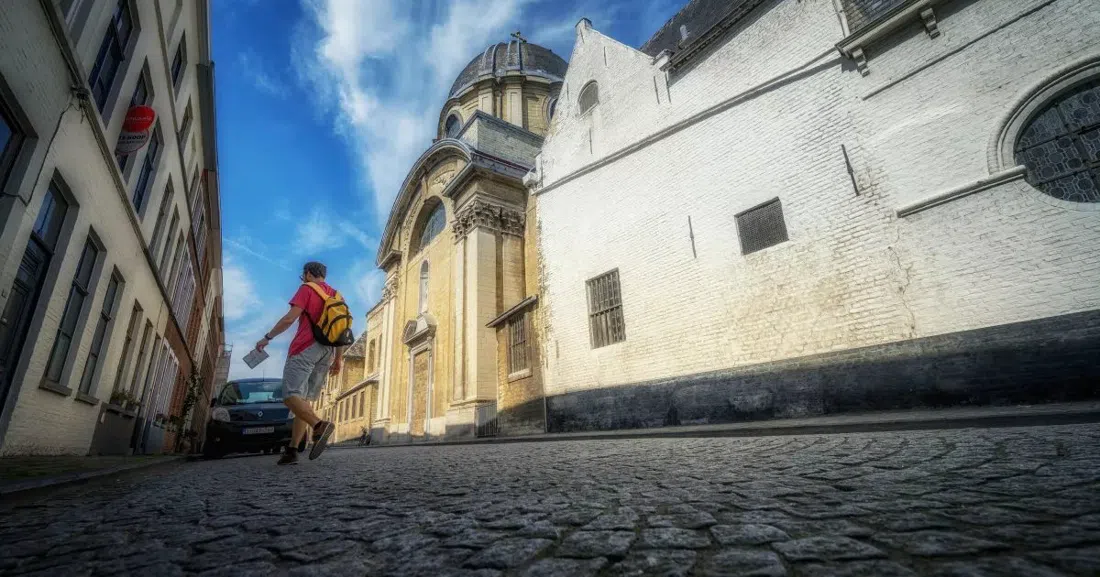
English Convent (Engels Klooster) [historic convent / guided tour], just off the rampart route behind an unassuming door, is a different kind of detour entirely — a baroque interior maintained by an active community of English Carmelite nuns. Small-group guided tours run at set times on most weekdays, so this needs more advance planning than anything else on this list; check times before building it into a fixed schedule. Standard entry is €35, with a reduced rate of €25 for seniors, groups, visitors aged 7–18, and Bruges residents. It's a striking contrast to the open-air, free mill walk — an indoor, ticketed, quieter stop that suits visitors who want one substantial interior on the itinerary alongside all the exterior viewing.
Neither of these is a casual walk-up in the way the mills themselves are. Quasimundo needs a booked slot on a bike; the English Convent needs a booked slot on a specific weekday tour time. Build them into a plan in advance rather than assuming either will simply be available on arrival.
Practical notes
Getting there: Kruispoort and the eastern ramparts sit a 15–20 minute walk from the Markt, or a short ride on local buses that stop near the gate. There's no need for a car, and parking near the ramparts is limited in any case — walking or cycling is the honest way to see this stretch.
Cash and cards: Sint-Janshuismolen and Gezellehuis both take card payment for their modest entry fees; Fort Lapin, being a small brewery, may prefer cash for a quick round, so carry a little just in case. The three exterior-only mills and the Kruisvest walk itself cost nothing, so this is one of the cheaper afternoons available in Bruges.
Timing: Plan for a half-day at an unhurried pace — 20 to 30 minutes for the rampart walk itself, plus time inside Sint-Janshuismolen when it's open, a detour to Gezellehuis, and a stop at Fort Lapin. Remember the seasonal pattern: Sint-Janshuismolen and Gezellehuis both close Mondays and run April to November with additional second-Sunday winter openings, so a Monday visit will mean exterior views only at every stop.
Budget: A solo or couple's visit can cost as little as €0–10 total if you skip the brewery and go on a free Mill Day; add the standard Sint-Janshuismolen ticket and a Fort Lapin beer or two and a realistic budget is under €20 per person. Add Quasimundo (€35–40pp) or the English Convent (€35pp, €25 reduced) only if either is a genuine priority rather than an add-on.
For a place to stay within easy reach of the eastern ramparts, start with Bruges hotel search, and for the rest of the city beyond this walk, the full Bruges guide covers what else is worth the time in 2026.