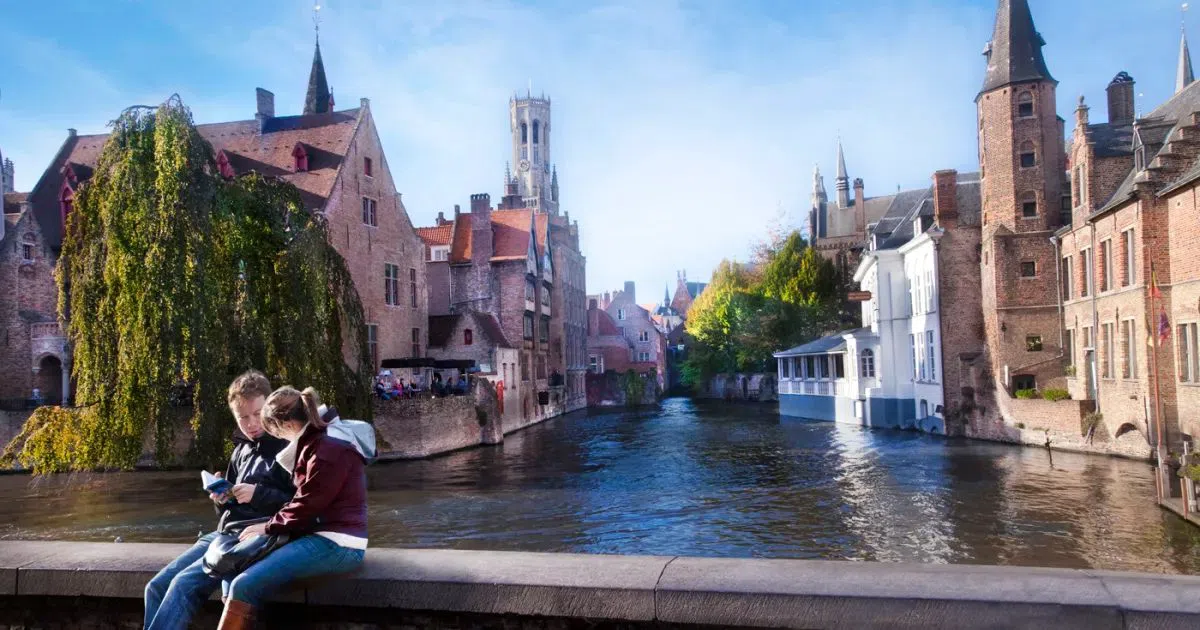
A private car pulls away from Brussels and a little over an hour later you are standing on a short stone quay in Bruges, back to a brick tower, looking at the row of stepped gables that every photograph of Flanders has already shown you. By mid-afternoon you are in front of an altarpiece begun in the 1420s, and the driver is parked two streets away with the engine off. Two medieval centres with a motorway between them: that is the proposition, and it works or fails on the order you do things in.
What the day actually buys you
The car is the least interesting part. Reckon on a bit over an hour from Brussels to Bruges and under an hour back down to Ghent. Both historic cores are walked rather than driven, because the streets inside the canals are for feet, so the vehicle only does the motorway legs and a drop-off at the edge of the centre. What you are paying for is sequencing: someone who knows that the quay you want is empty at 9.40am and shoulder-to-shoulder at 12.15, and who has already booked the two doors that will not let you in on spec.
Check one thing before you pay: whether admissions are included. On most private itineraries they are not, and the euro figures in this guide are what the door charges. A tower, an art museum, a boat and a brewery for two people adds up to a second bill on top of the car. Our wider Bruges guide has the rest of the city if you decide one day is not enough.
The Bruges core in three hours
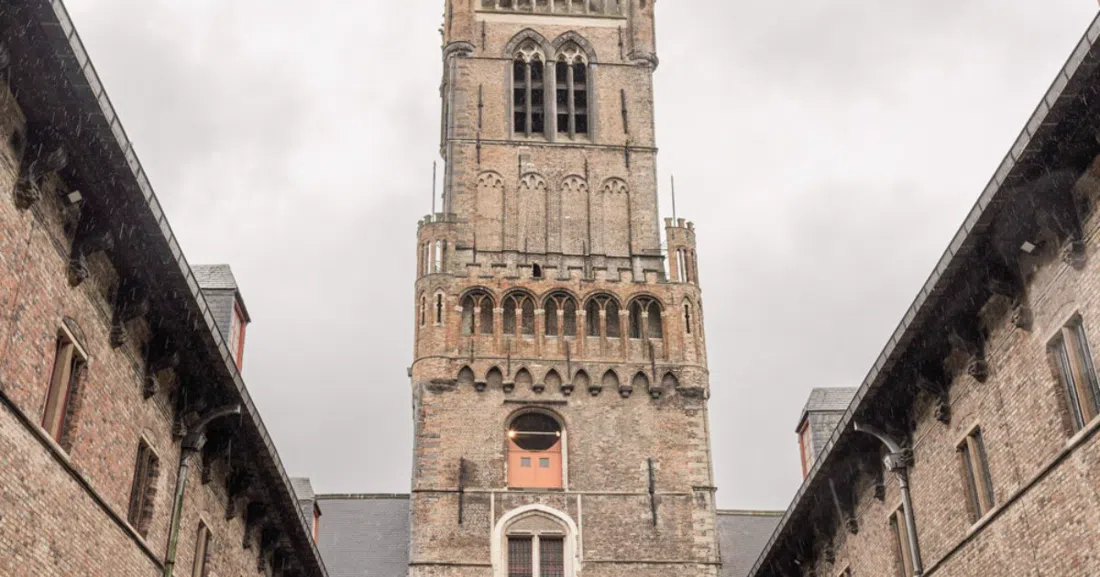
Start at the top. Belfort (Belfry of Bruges) rises over the Markt, and it is the one climb worth doing here and the anchor of any half-day: 366 steps, single-file and one-way, so a car-load of four to six is fine but a bigger party has to go up in waves. Adults €15-16, under-18s €13-14, under-7s free. Book a timed slot, because admission stops a full hour before closing, and note the maintenance closure from 19 to 22 October 2026, four days when the tower is not an option at all.
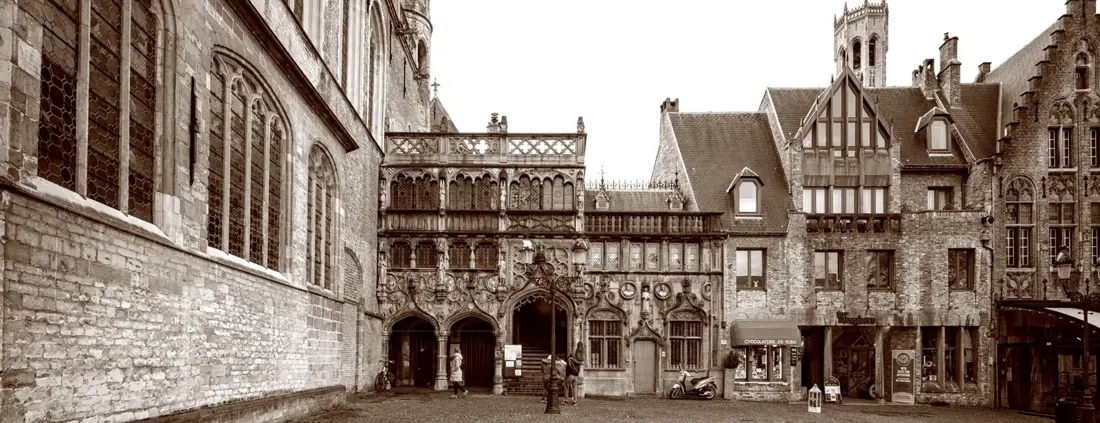
From the Markt it is two minutes to the Burg and the Basilica of the Holy Blood on its south side. Entry to the basilica is free and small groups fit easily, but it is a working church: a guide briefs outside, and voices stay low inside. The museum and treasury are €5, free under 12. Photographing the relic itself is not permitted, which catches people out.
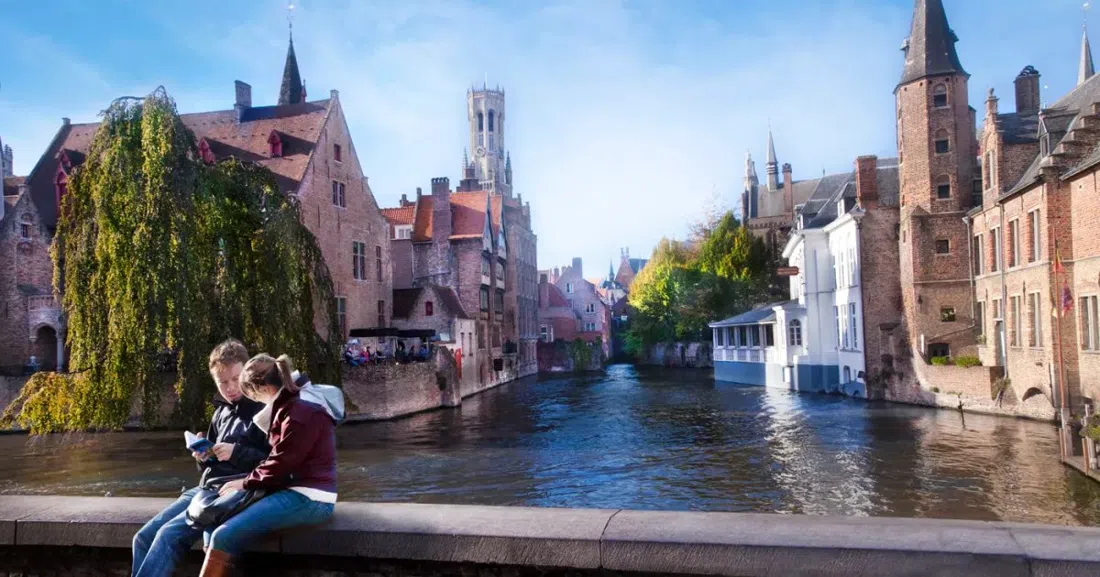
Three minutes further, where the Groenerei meets the Dijver, is Rozenhoedkaai (Rosary Quay): free, open, no door policy, and the most photographed spot in Flanders. The railing holds perhaps a dozen people. Before about 10.30am or after 6pm you get a clean frame; between 11am and 4pm you are queueing for a gap in someone else's shoulder.
Half an hour on the water
Bruges canal boat trips run from five city-regulated jetties in the centre, all within a few minutes' walk of the Burg. Thirty minutes, no stops, and the only way to see the gables and back walls from below. Fares are fixed by the City of Bruges through 31 December 2026: €15 adult, €9 for children 4-11, free under 4. Groups of 20 or more pay €12 a head and must book direct with one of the five companies; private boats are bookable the same way. Individuals cannot pre-book at all. You queue at a jetty, which is why doing this at 10am rather than 2pm matters.
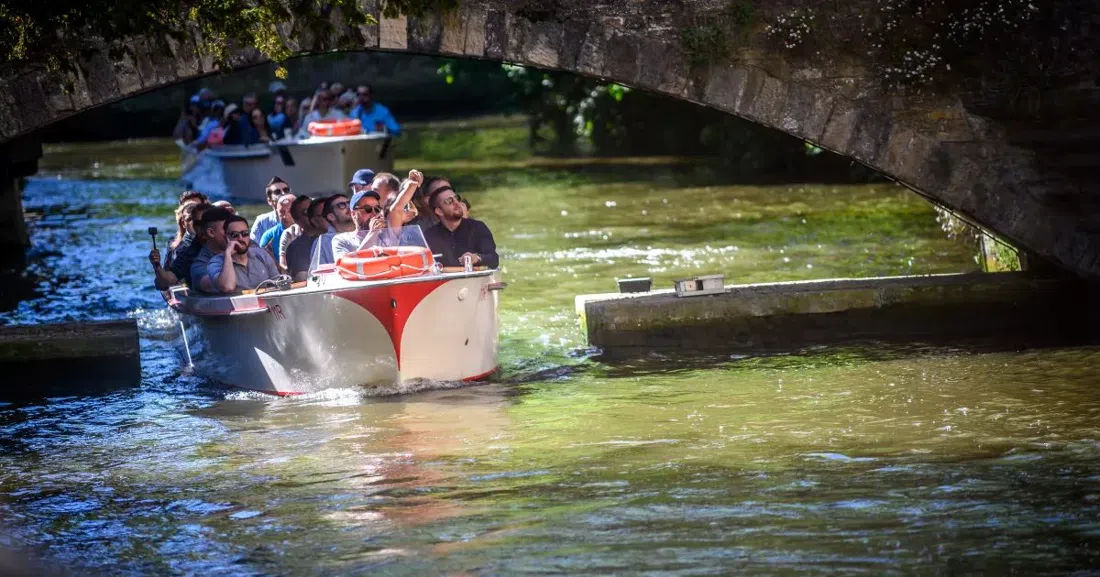
Two practical traps. The jetties take cash and Payconiq only, so bring notes. And from November to February a single jetty operates on rotation, so on a winter day the queue you find is the only queue there is.
The museums along the Dijver
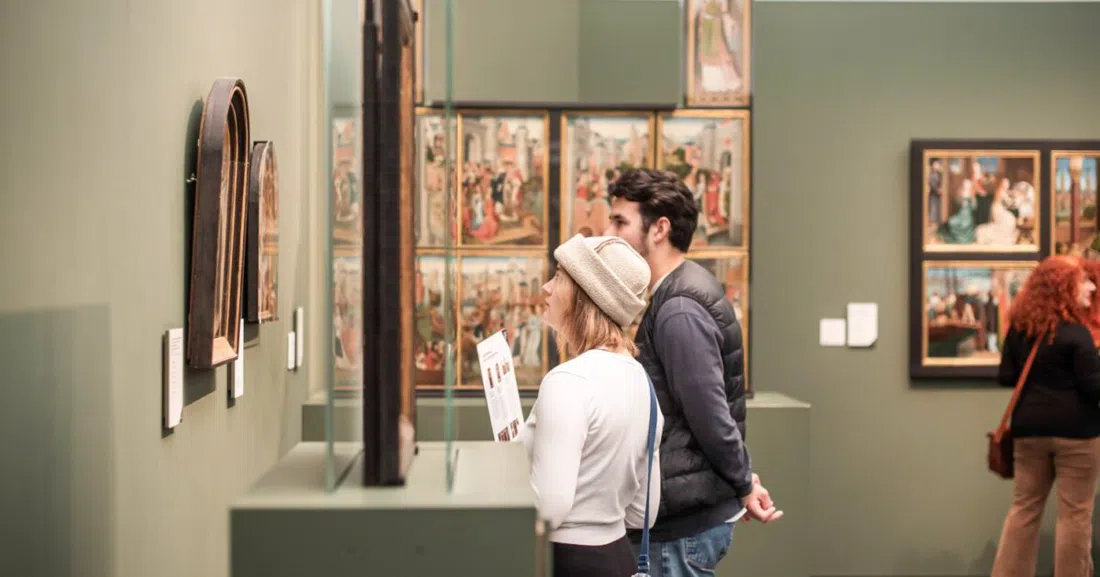
One art museum is the sensible ceiling for a two-city day, and there are three candidates within four minutes of each other. Groeningemuseum, on the Dijver, holds the Flemish Primitives in small rooms, so guides split parties and a summer slot booking is advised. Adults €15, under-26s €13, under-18s €7, free under 13. If you are planning ahead, the date that matters is 11 January 2027, when it closes for a four-year refurbishment; reopening is currently flagged for 2031. Until then, a day trip can still include it.
Next door, BRUSK opened on 8 May 2026 with Refik Anadol's first Belgian solo show. General admission is free, so a group can walk straight in; ticketed temporary exhibitions run on timed entry at €20 adult, €15 under-26, €10 under-18, free under 13. If you came to Bruges before, this is the thing that is new.

The third is the Museum of the Church of Our Lady, five minutes south on Mariastraat. The nave is free to walk; only the half behind the choir screen is ticketed, at €10 adult, €9 under-26, €5 under-18, free under 13, or €19 in combination with the Gruuthusemuseum. Inside is the only Michelangelo that left Italy in the sculptor's lifetime. The brick tower above it is 115.5m, the second-highest in the world.
Something to taste
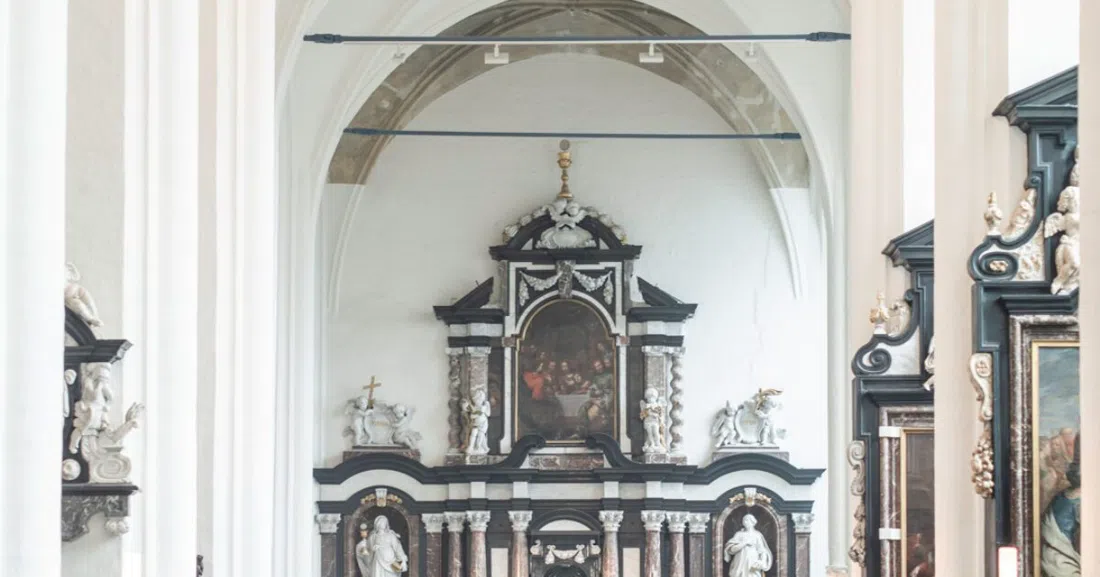
Brouwerij De Halve Maan, on Walplein a five-minute walk from the Church of Our Lady, is still family-run and still in the middle of the city, and it is the only place pouring unfiltered Brugse Zot and Straffe Hendrik. Tours are capped hard at 25 people. The classic tour is €16 including a beer, €8.50 for ages 7-15; the XL, with three beers, is €26 and runs weekends only. Groups of 21 or more are quoted €14 a head classic and €26 XL on request. Book ahead, because in season walk-ups are turned away. The tour includes 220 steep steps, which rules it out for some people entirely; the courtyard and the beer do not.
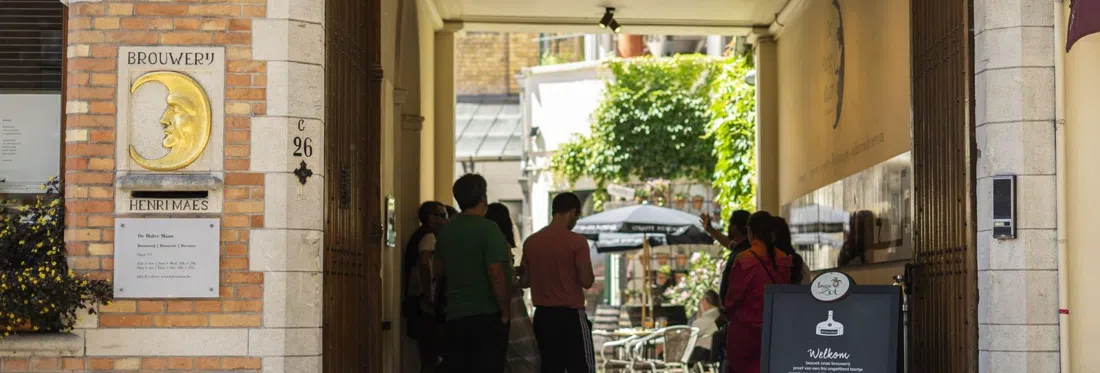
For a maker rather than a shop, The Chocolate Line on Simon Stevinplein, three minutes from the Markt, is Dominique Persoone's tree-to-bar workshop, where you can watch the beans being crushed. It gets crowded to the walls: a car-sized party fits, a coach does not, so go in shifts. A handful of bonbons is a few euro, boxes €15-40.
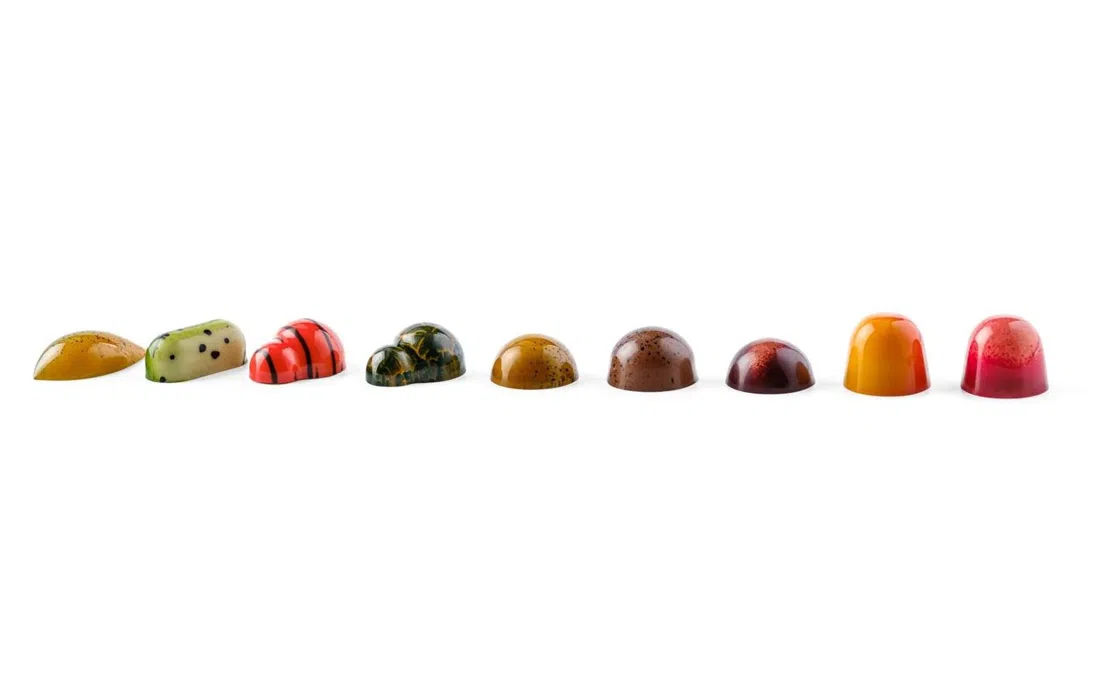
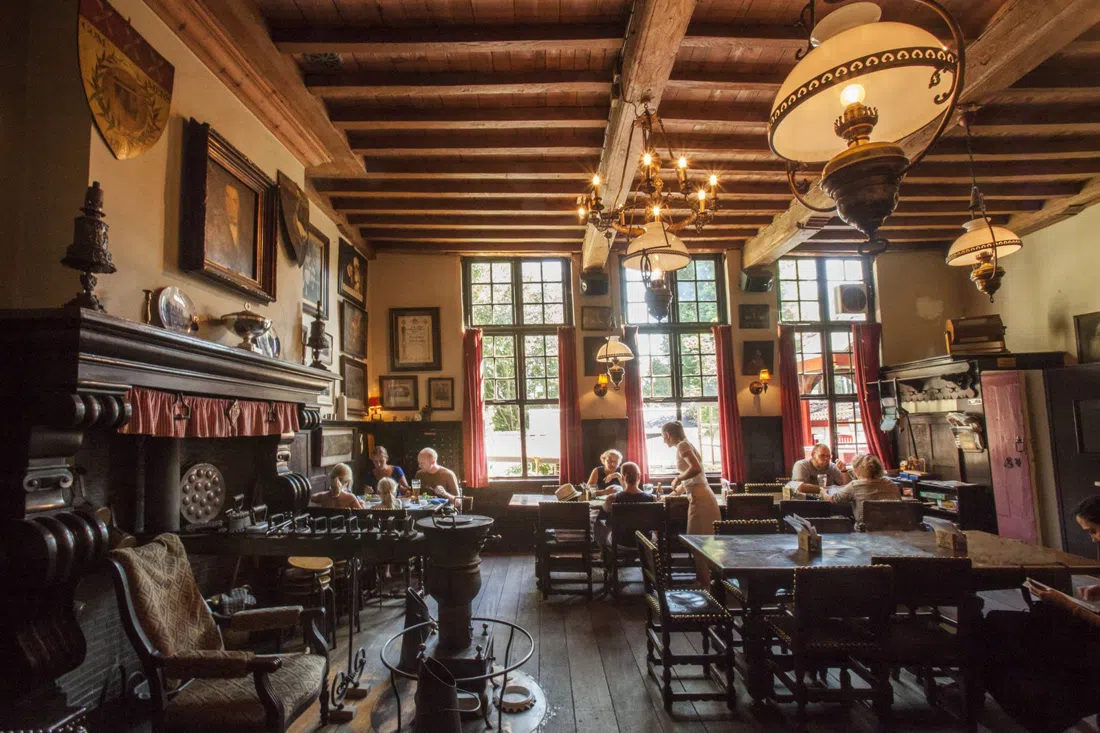
If the day stretches into the evening, Café Vlissinghe in the quiet north of the centre is the oldest continuously running café in the city and a real one, not a costume. Beers €4-6, walk-ins welcome, reservations only for parties of ten or more. The official site says daily 11am to 9pm, but some listings show Monday and Tuesday closed, so ring before you walk up there.
Where to go when the Markt is unbearable
At the south end of the centre, five minutes from the brewery, the Princely Beguinage Ten Wijngaerde (Begijnhof) and Minnewater are free and open roughly 6.30am to 6.30pm. This is the counterweight to the Markt, and the rule is plain: silence is part of the UNESCO listing, and a loud group is what the residents object to, so the briefing happens before the gate, not inside it. A small separate charge gets you into the furnished beguine's house museum by the entrance. On a July afternoon when the centre has stopped being pleasant, this is the correct move.
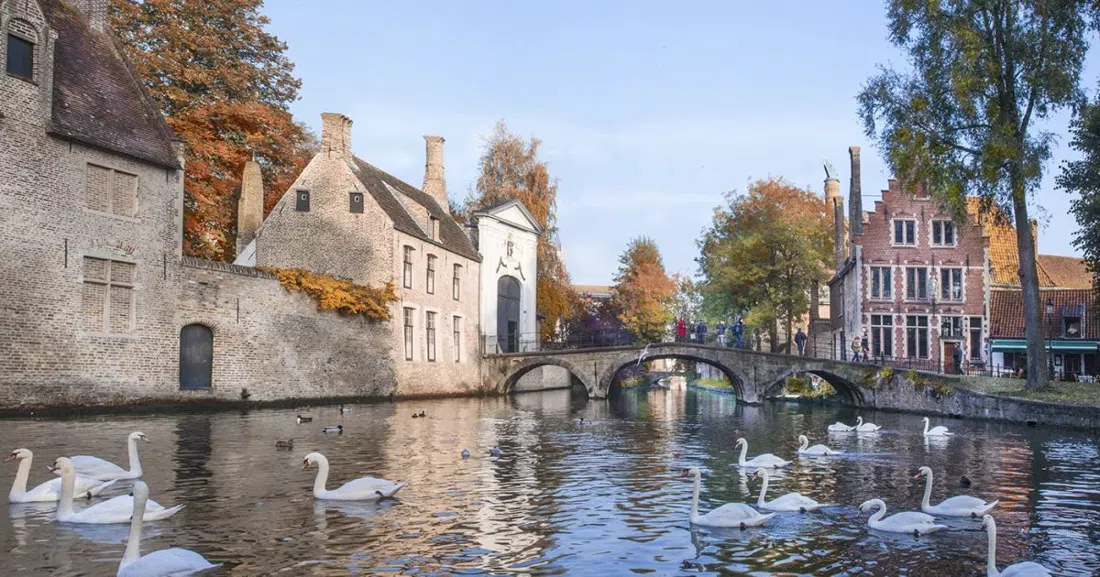
Giving Ghent half the day
Ghent needs one anchor, and it is St Bavo's Cathedral and the Mystic Lamb visitor centre on Sint-Baafsplein. Advance online booking is mandatory and slots are timed, so a group cannot turn up on spec. Last entry to the Mystic Lamb is 5pm, last augmented-reality tour 4pm. The cathedral itself is free; the panels-only ticket is €12.50 for about 25 minutes, and the standard or Master of Detail AR tour is €16 for about an hour. Know what you will see: the final restoration phase means the seven upper-register panels in the cathedral are colour photographic reproductions until spring 2027.
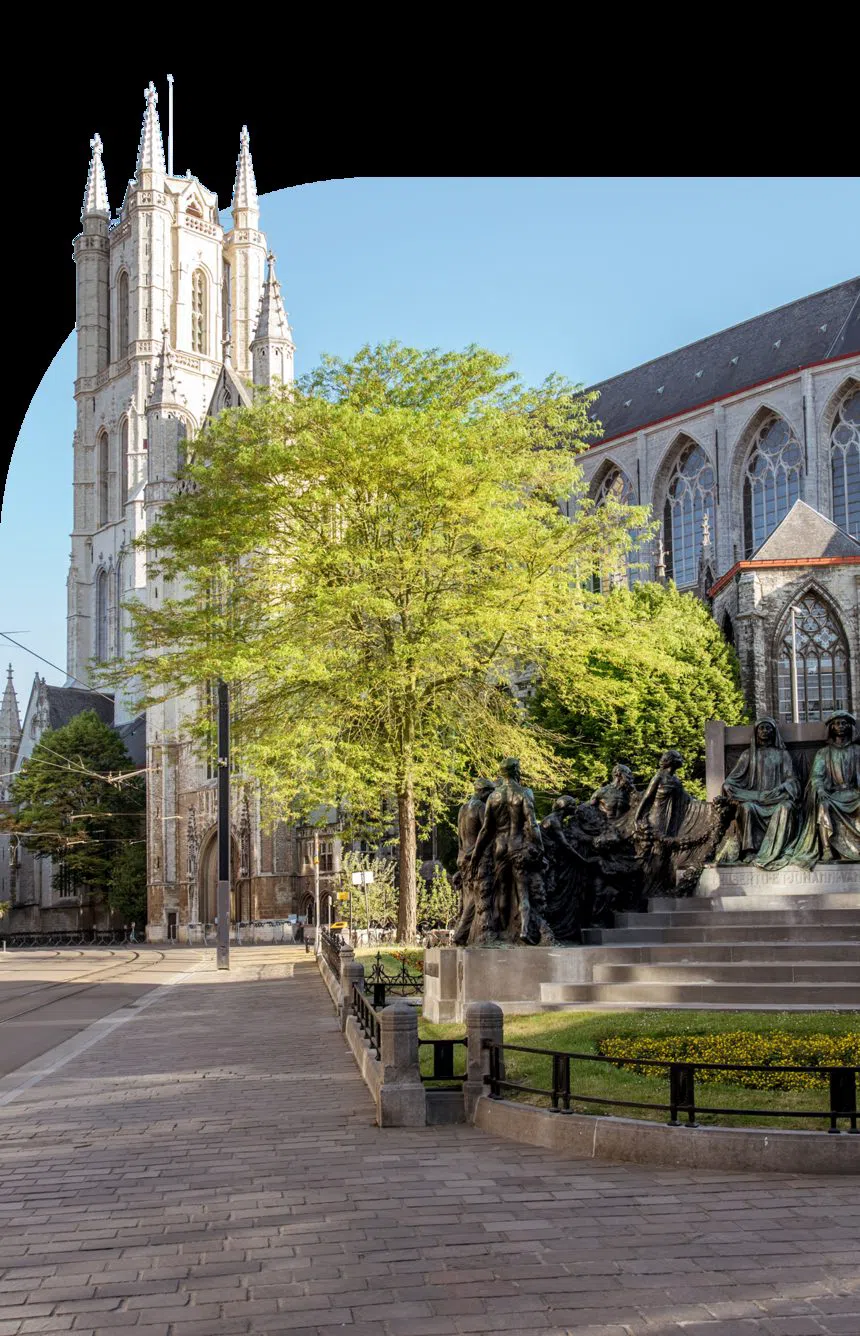
On the same square, the Belfry of Ghent (Belfort van Gent) is the easiest tower of the day because a lift covers most of the height, though you still take a steep stone spiral to reach it and wooden stairs at the top, and that spiral is the bottleneck for a bigger party. Open daily 10am-6pm, last tickets 5pm, extended to 8pm in July and August. About €13 adult, €6.50 for 19-25s, €2.60 for 13-18s, free under 12; CityCard holders skip the reservation.
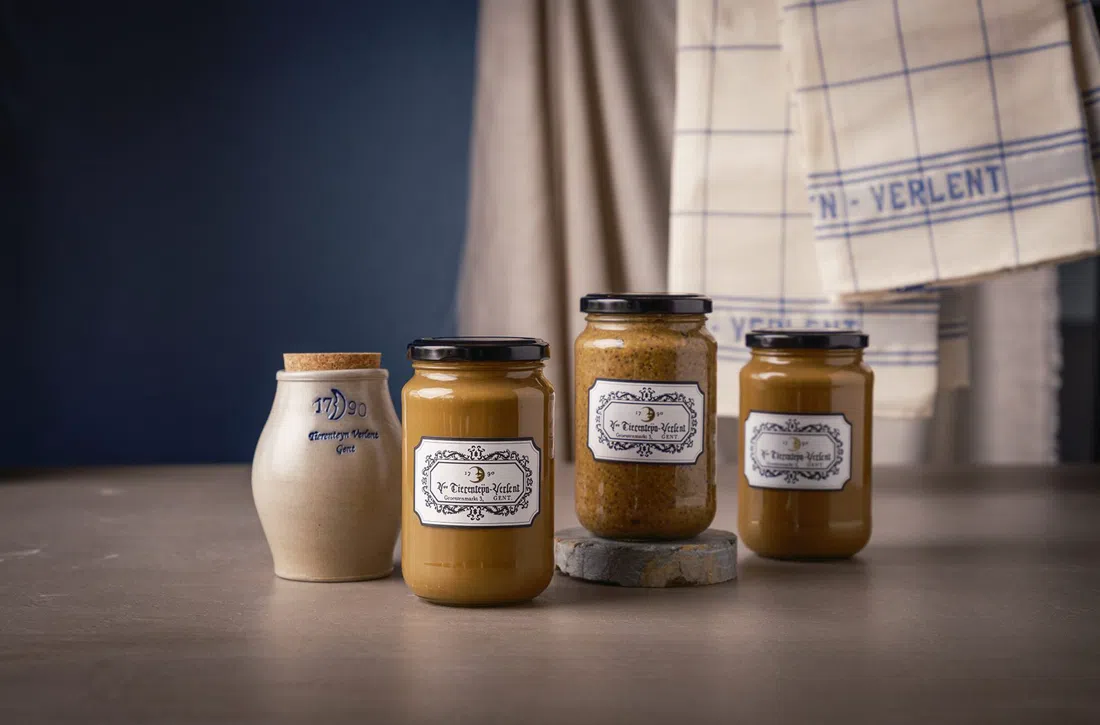
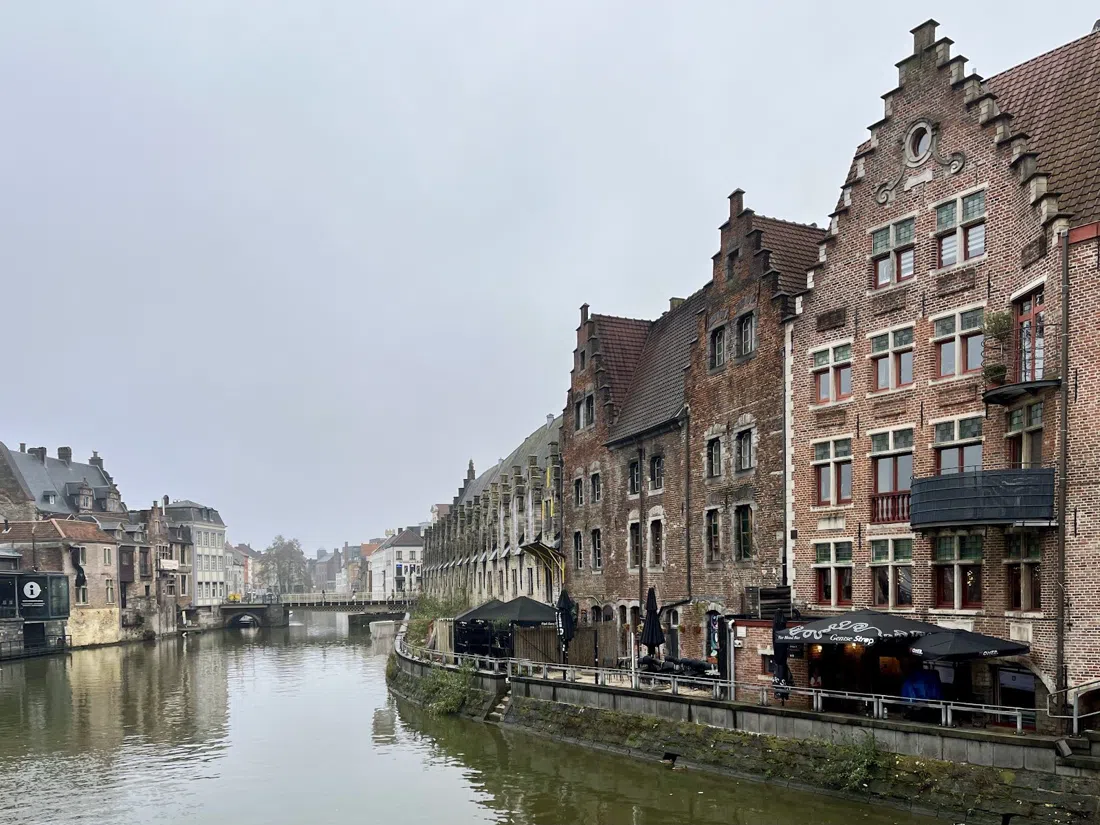
Five minutes west, Graslei and Korenlei face each other across the old port. Free, open at all hours, no restrictions; the terraces seat groups but fill from noon on any sunny day, drinks €4-8. Stand on St Michael's Bridge for the frame that holds all three towers at once. Thirty seconds from the water, on the Groentenmarkt, Tierenteyn-Verlent has been making mustard in the same house since 1790. The room holds a handful of people, so a group waits on the square while two go in. A filled pot costs a few euro and takes two minutes, and it is the stop that gives this half of the day something to taste.
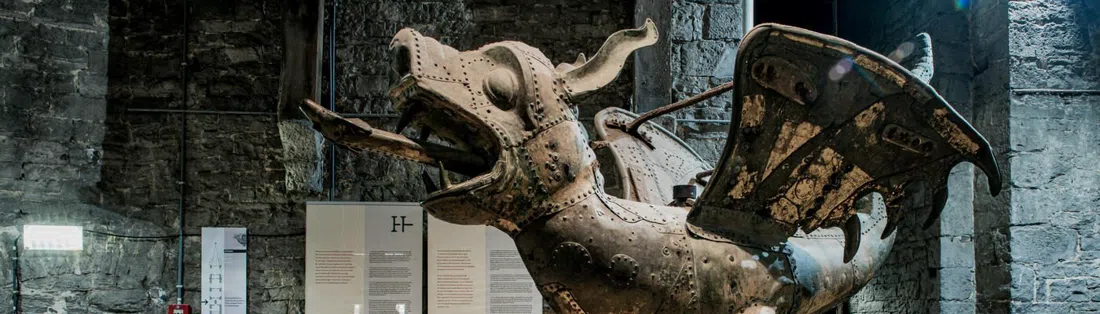
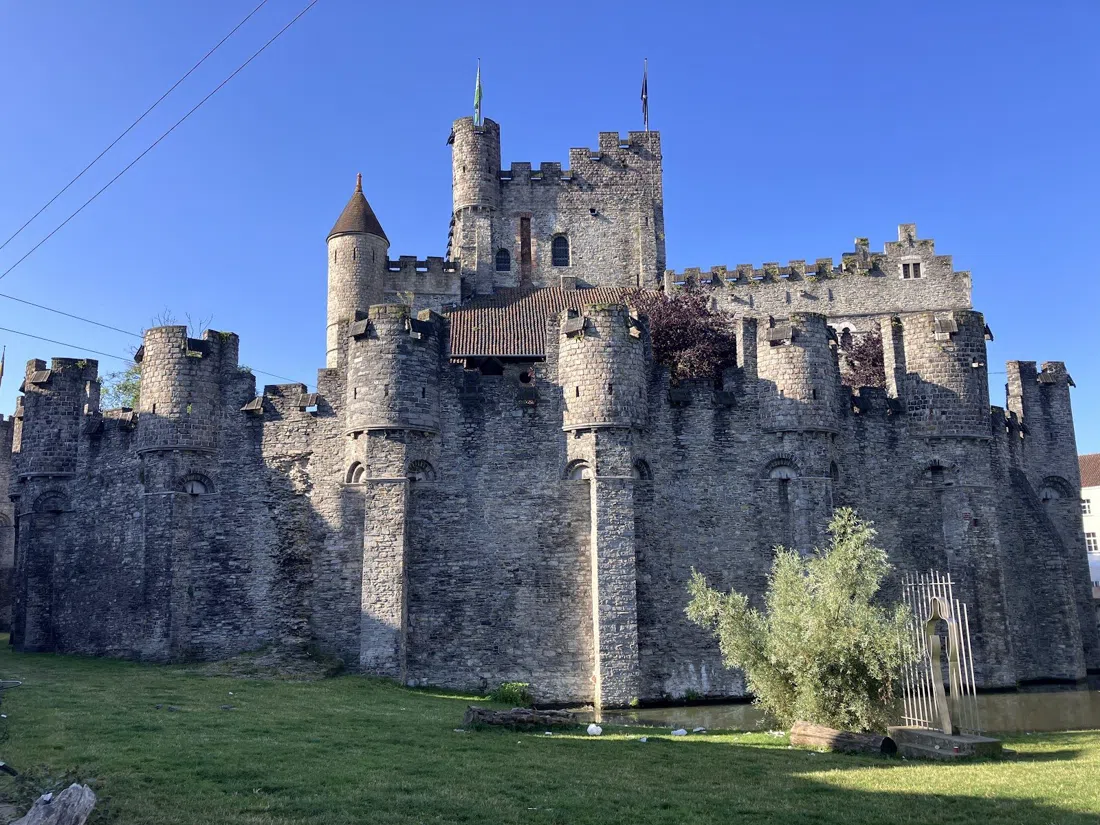
If there is time for one more door, Gravensteen (Castle of the Counts) is four minutes north on Sint-Veerleplein: a 12th-century water castle with ramparts you can walk. Open daily 10am-6pm, last admission 4.40pm, closed 24, 25 and 31 December and 1 January. About €15 adult, €7.50 for 19-25s, €3 for 13-18s, free at 12 and under, and included in the CityCard. The audio guide comes with the ticket and offers a 90-minute route or a short "Big Five" version, and the short one is what makes it viable on a compressed day.
Doors, stairs and group sizes
A private car-sized party of two to six clears almost every door here without negotiation. Above that, three things bite: the belfry stair takes you in waves, the brewery stops at 25 people per tour, and the mustard shop and chocolate workshop cannot hold a group at once. Two places have behavioural rules rather than size limits, the basilica and the beguinage, and both are the kind a guide should brief before you walk in. Stairs filter harder than numbers do: 366 steps in Bruges, 220 at the brewery, a steep spiral in Ghent. The canal boat, the quays, the church naves, the castle audio route and the free half of the contemporary art hall are all workable if climbing is out.
Tickets at the door or booked ahead
Three doors require advance booking: the Mystic Lamb (mandatory, timed), the belfry (timed slots strongly advised), and the brewery tour (capped, and refused to walk-ups in season). Two cannot be pre-booked as an individual at all: the canal boat, where you queue, and the terraces. The rest you can decide on the morning. A guided private option for this pairing exists and runs seven days a week, Monday to Sunday, which is more flexibility than the buildings themselves offer. What it cannot do is invent a slot at a door that is already full, so the booking still has to happen days out, not on the drive up.
Is it worth it
Yes, with one condition: pick one ticketed anchor per city and walk the rest. A day that attempts the belfry, an art museum, the boat, the brewery and the altarpiece will be a day spent queueing. A day built around the tower and the boat in the morning, and the altarpiece and the quays in the afternoon, with the Michelangelo or the castle as the swing option, is one of the better single days in northern Europe.
The private version suits three groups: anyone with limited mobility who needs the driving legs removed, a party of two to six who want the boat and the tower without reading five booking pages, and anyone whose time in Brussels really is one free day. It suits solo travellers and tight budgets far less, since the bookable private tours here start from 1053 USD per person and the same two cities are reachable by train on a self-planned day for a fraction of that. The review evidence is thin but positive: 54 traveller reviews across the bookable tours here, and the top one is rated 4.8 out of 5 from those 54. That is a small sample, so read the recent ones rather than the average.
Best time to go
Go early. Be on the quay before 10.30am, in a boat by 11am, and you will have done the two most crowded things in the city before the day-trip peak between 11am and 4pm. Save the beguinage, the museums and Ghent for the afternoon, when being indoors or out of the centre is an advantage rather than a loss.
By season: April to June and September to early October give you long daylight, working boat jetties and tolerable crowds. July and August bring the longest tower hours in Ghent, up to 8pm, and the worst crush on the quay, so go earlier and use the beguinage as your escape. November to February is the quiet, cheap, atmospheric option, but the boats drop to one jetty on rotation and the light is gone by mid-afternoon, so front-load everything outdoors. Weekends are the only time the three-beer brewery tour runs; midweek is calmer everywhere else. Avoid 19-22 October 2026 if the tower climb is the reason you are coming, and 24, 25, 31 December and 1 January if the castle is.
Practical notes
Both centres are walked end to end in 15-20 minutes, and a private car handles the motorway legs and drops you at the edge of the pedestrian core. Trains do the same route if you would rather self-plan.
The canal boat jetties take cash and Payconiq only. Carry €40-60 in notes per couple; card works nearly everywhere else.
On timing, reckon on roughly three hours for the Bruges core including the boat, half an hour for the transfer, and three to four hours for Ghent with one ticketed anchor. Watch the last-entry times rather than the closing times: an hour before closing at the belfry, 5pm for the altarpiece, 4.40pm at the castle.
Budget per adult, on top of any tour: belfry €15-16, boat €15, brewery tour €16, art museum €15, altarpiece €12.50-16, castle about €15. Free, and worth as much: the quay, the basilica, the beguinage, the church naves, the port quays, and general admission to the contemporary art hall.
If the day ends with you not wanting to get back in the car, the evening here, empty quays and the old café in the north, is the best part of Bruges. Compare rates with a Bruges hotel search before you commit to a return leg.