The Bruges issue
Walking the old Hanse quarter in northern Bruges
The harbour head, the toll house and the merchants' lodges north of the Markt, with the hours, prices and door rules that decide the order you walk them.
By Marit HendriksSlow days through the canals
The gilded coats of arms over the door of the Oud Tolhuis mark the spot where every bale of wool and barrel of wine entering medieval Bruges was taxed. The square in front of it was the head of the working harbour. It is still the quietest big square in the centre.
Starting on Jan van Eyckplein
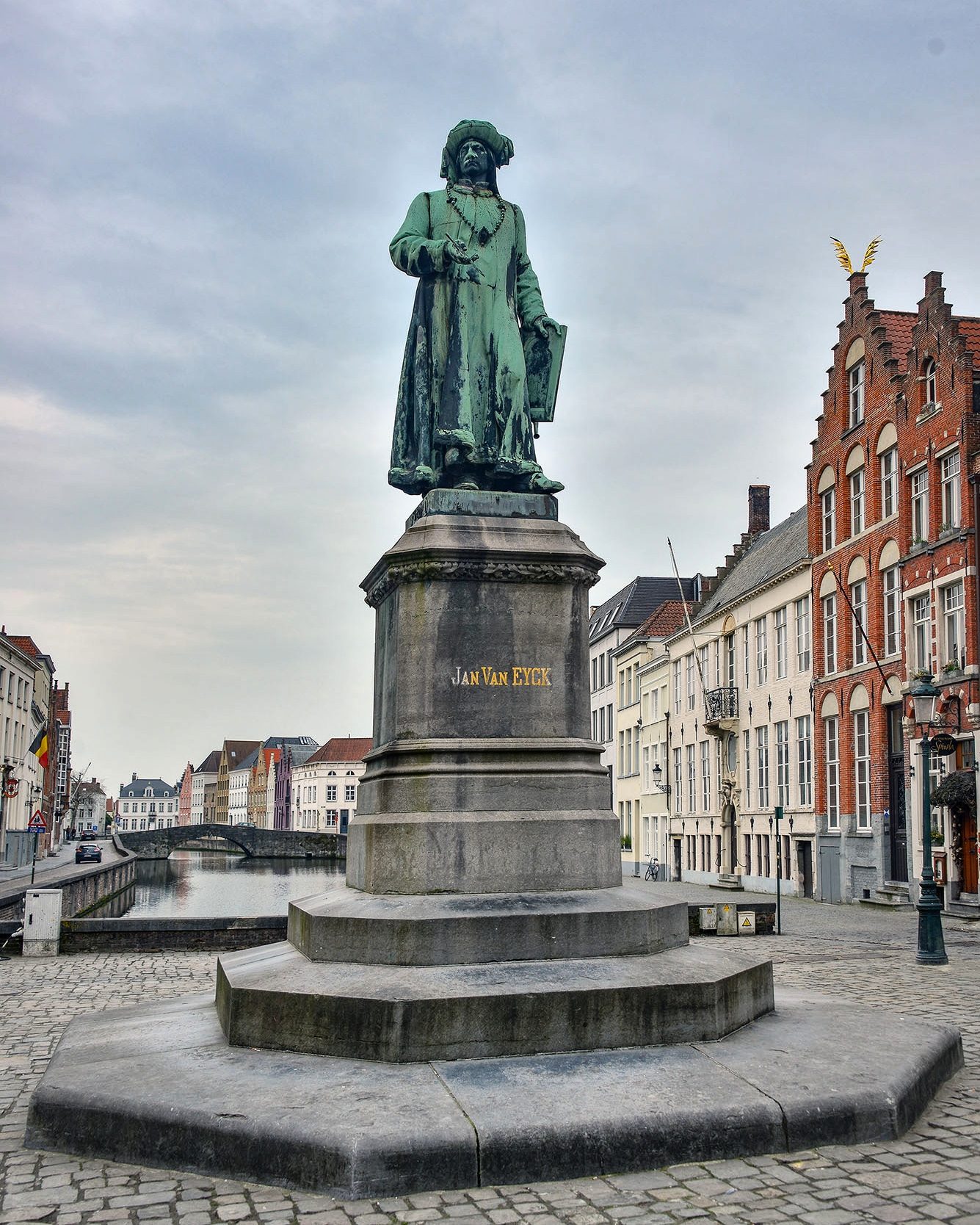
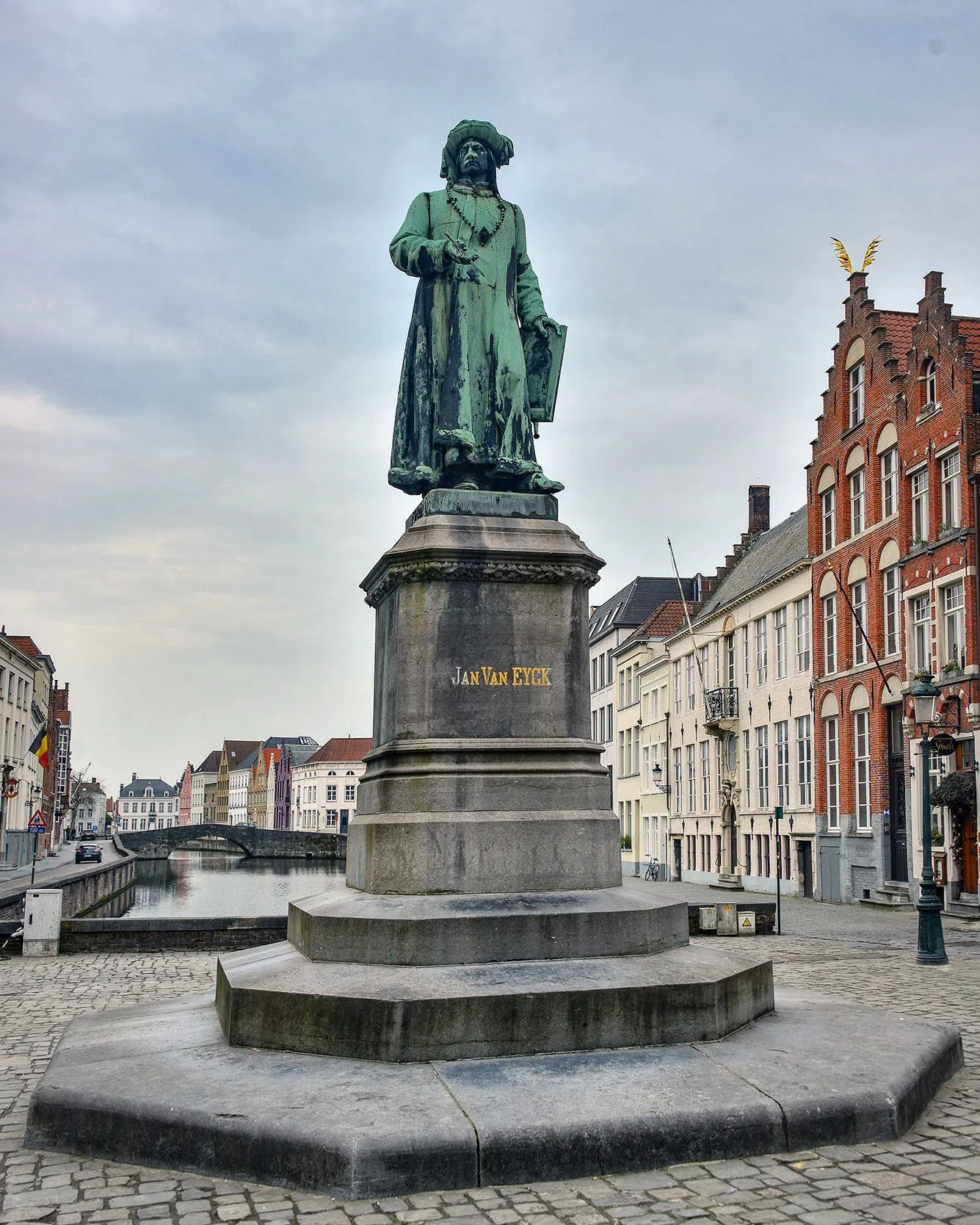
Begin at Jan van Eyckplein (Academiestraat at the Spiegelrei canal), a small cobbled triangular square where the bronze 1878 statue of Jan van Eyck stands on a tall stone plinth facing the water. Stepped-gable brick merchant houses close the square behind the statue, and the squat crenellated brick belfry of the Poortersloge rises over their roofs. Ships unloaded here and tolls were assessed here. The square is public ground, it costs nothing, there is no door policy, and the city bus stop carries its name. Walking-tour groups assemble on the cobbles through the day.
The squares and quays never close. The church and the cellar bars open in the afternoon, so plan the day around that.
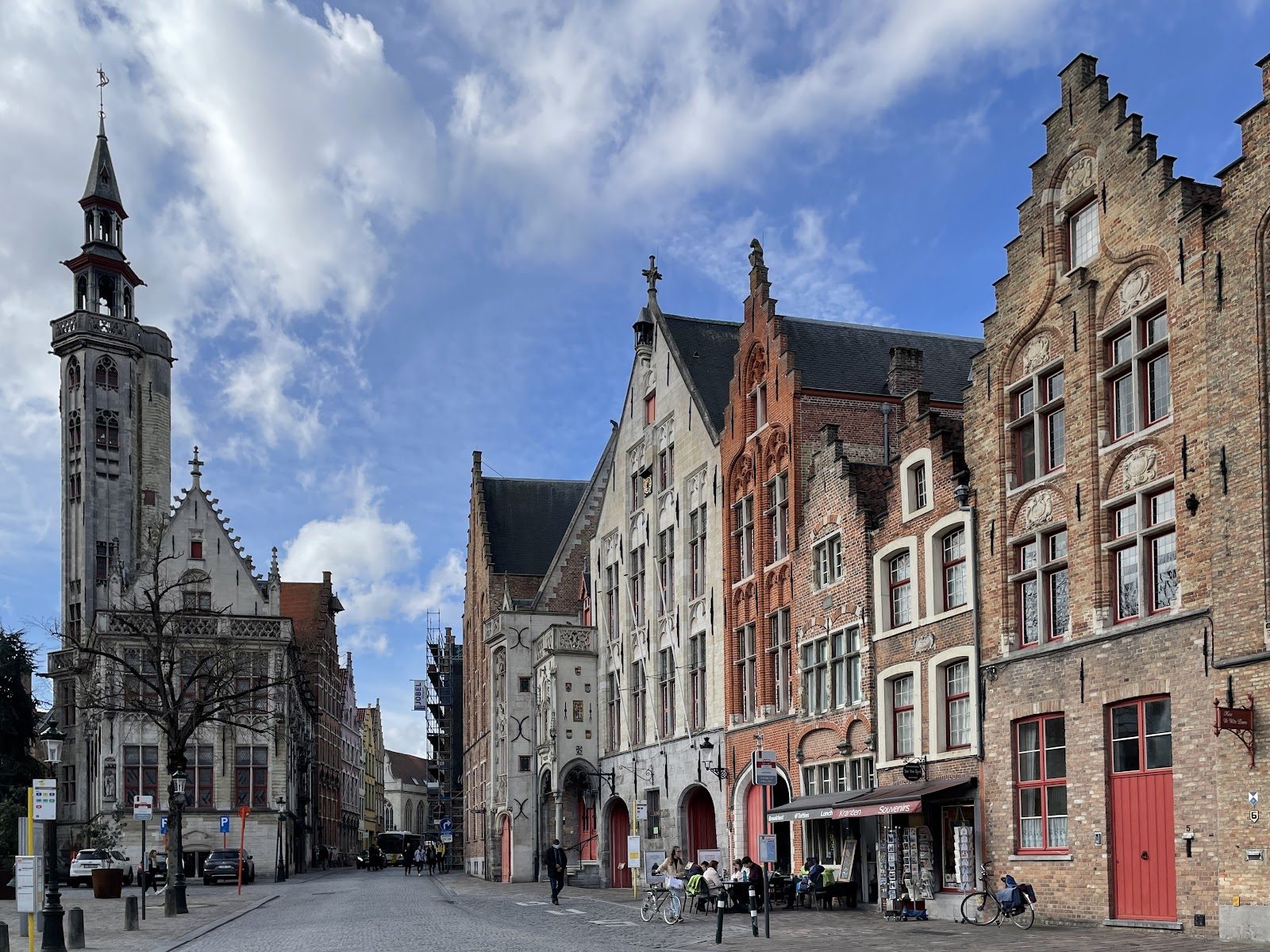
The Oud Tolhuis (Jan van Eyckplein) keeps its late-Gothic stone facade of 1477, a steep outside flight of steps and heavily carved gilded coats of arms above the door. The tiny narrow Pijndershuisje is squeezed against its left flank. Those arms are the best photograph in the quarter, and you can look at the facade free, at any hour, in any number. Behind the door the building works as a provincial library and archive with reading rooms in use, so go in small and quiet or stay on the steps.
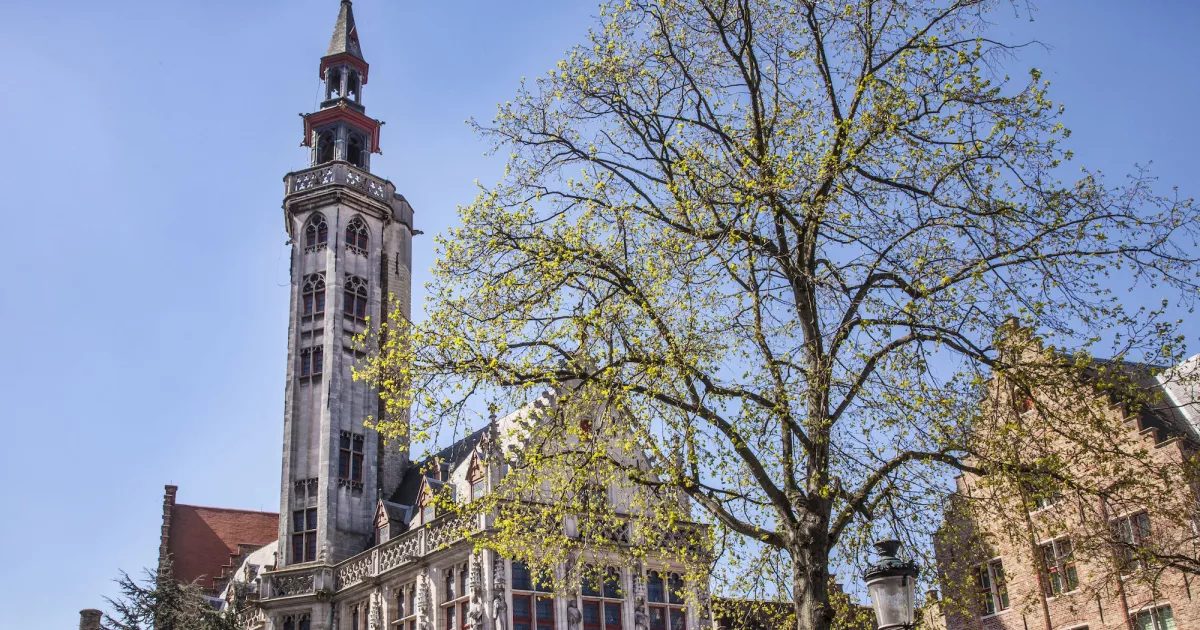
The Poortersloge (Jan van Eyckplein) is the one landmark in the quarter you can walk into. Bruges's merchant elite entertained foreign trade partners in this white-stone lodge, built between 1395 and 1417, under a slender crenellated corner tower and spire, with a small stone bear set in a niche high on the facade. Inside, plain white-walled galleries hold the city's free contemporary art programme. Entry is free, the building is accessible and child-friendly, and it opens only around shows. Check the exhibition calendar before you cross the square.
Plan your Bruges trip
Live prices from our booking partners.
Free cancellation on many rooms. We may earn a commission when you book.
Walking Spiegelrei and Spinolarei
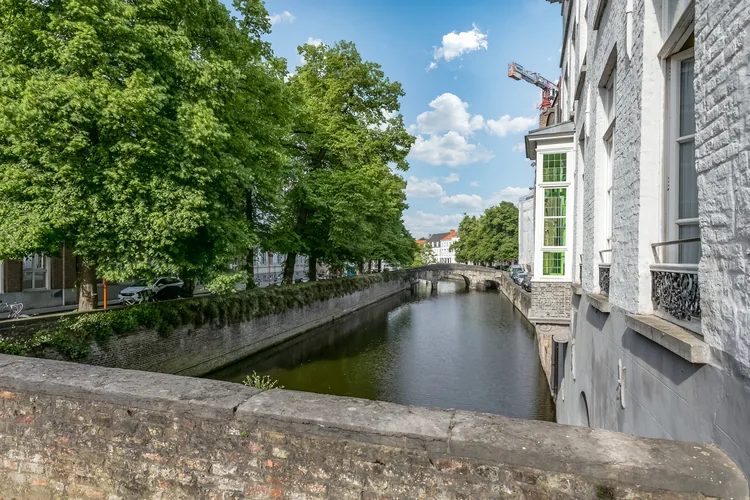
From the statue, turn along the water. The Spiegelrei and Spinolarei quays run as one broad straight canal between tree-lined cobbled quays. Rows of tall narrow stepped and crow-stepped brick gables stand on both banks, and the humpbacked Koningsbrug and its white stone balustrade sit in the middle distance. Warehouses and guildhalls lined this stretch through the boom between the 13th and 15th centuries, and the water was the reason the city grew rich.
Walk it at dusk, when the gables double in the flat water. The quays are open to anyone and wide enough to walk abreast. The Koningsbrug deck narrows to a pinch point.
Oosterlingenplein and the Hanseatic compound
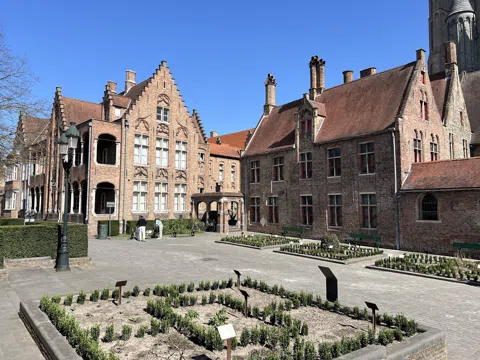
Oosterlingenplein (off the canal) translates as Easterners' Square. The German and Baltic merchants' own compound stood here, and it is why the whole quarter is called Hanseatic. The surviving wing of the Oosterlingenhuis, the Hanseatic consulate built between 1478 and 1481, stands in dark red brick with Gothic arched windows and stepped gables, beside a single tree and a canal-side railing. What you see is a fragment of a far bigger complex.
The square is open at any hour, to a party of any size. The interior is normally closed to visitors, and occasional guided Timeless Trails visits are the only way in.
Vlamingstraat, from the bourse to the theatre
Vlamingstraat runs south from the square and carries four of the quarter's stops.
Huis ter Beurze (corner of Vlamingstraat and Grauwwerkersstraat) faces a small triangular open space on Oude Beursplein, under a tall Gothic brick gable with pointed-arch windows and a carved stone purse emblem. The Van der Beurse family traded from this inn from 1285, and the family name gave Europe the word bourse. Only the exterior is open to look at, free and in any number; the interior opens for private events. Two minutes here explains why this quarter mattered.
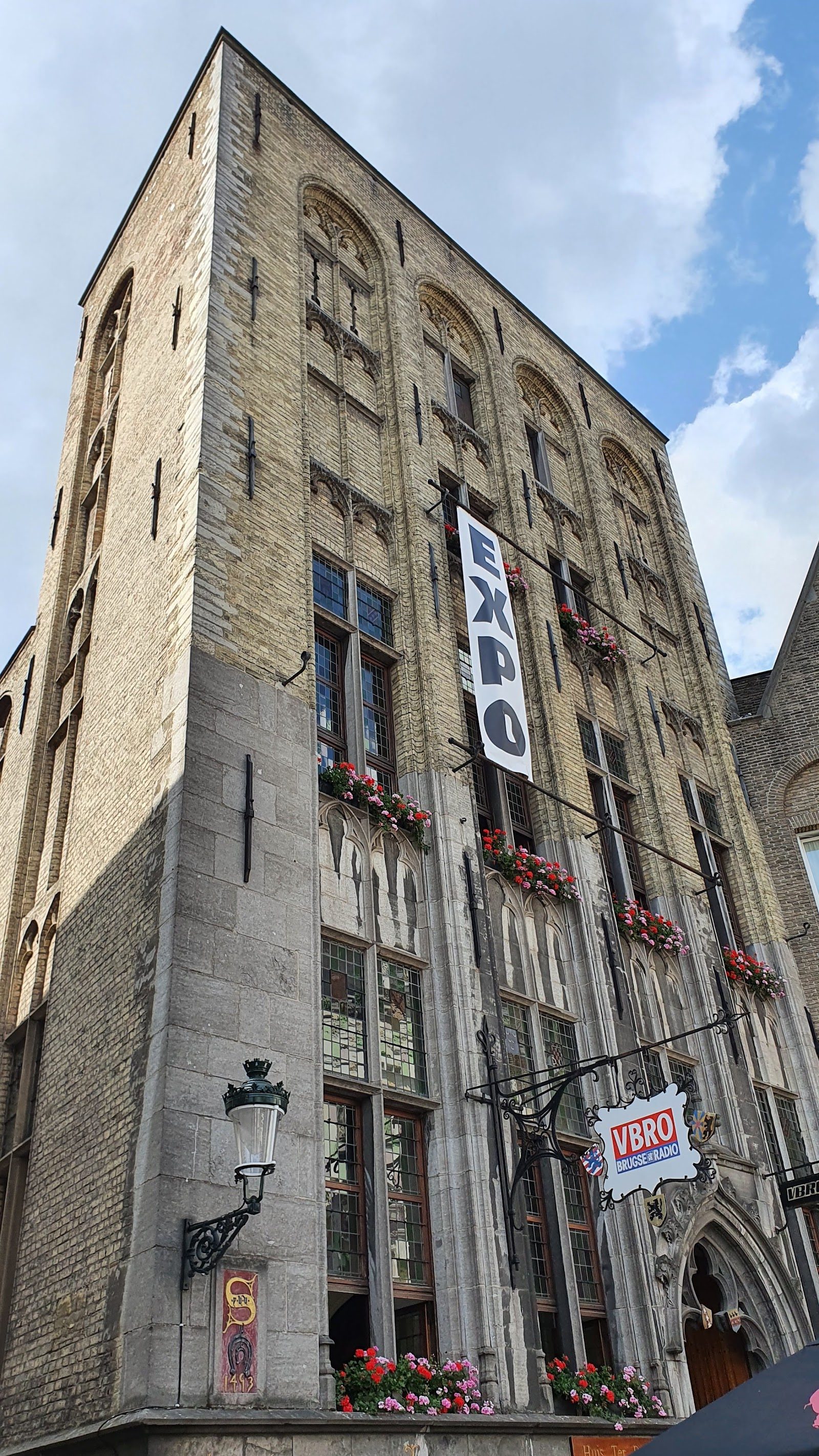
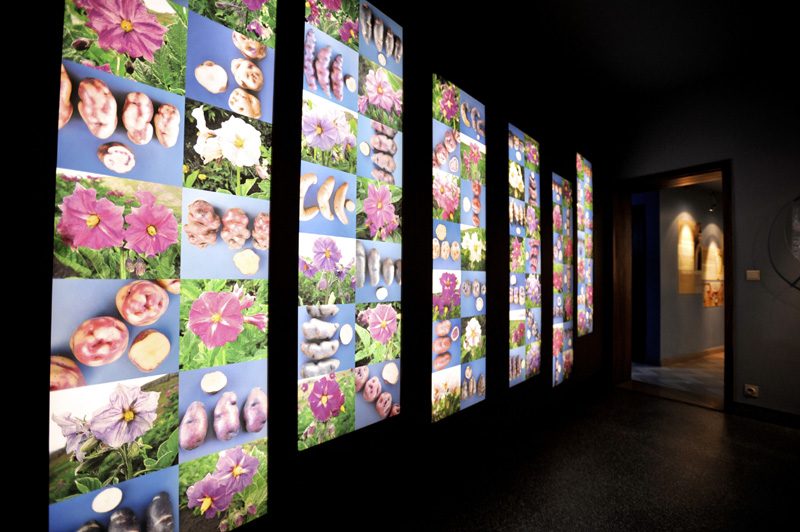
The Frietmuseum (Vlamingstraat) occupies the Saaihalle, the former Genoese Lodge, a mid-15th-century stepped-gable stone building with a Gothic arcaded ground floor. The vaulted cellar below is a frying kitchen now. Upstairs are displays of potato history and vintage chip vans. The premise is silly and the building is what you are paying for: a Hanse-era trading house and a cone of chips in one stop. It opens daily, 10:00 to 17:00, with last tickets at 16:15, at €10 for an adult or €22.50 on a combination ticket with Choco-Story. It shuts on 25 December, 1 January and in early January.
The Koninklijke Stadsschouwburg Brugge (Vlamingstraat) went up in 1869 behind an ornate pale stone neo-Renaissance facade with allegorical statuary. The horseshoe auditorium seats more than 650 in red velvet under gold leaf and a painted ceiling, and the nickname for it is La Bonbonnière. Tickets are in the €€ band, and the room alone earns one. The box office is open Tuesday to Friday, 13:00 to 17:00. Both the hall and the foyer can be hired.
Sint-Gilliskerk and the Augustijnenbrug
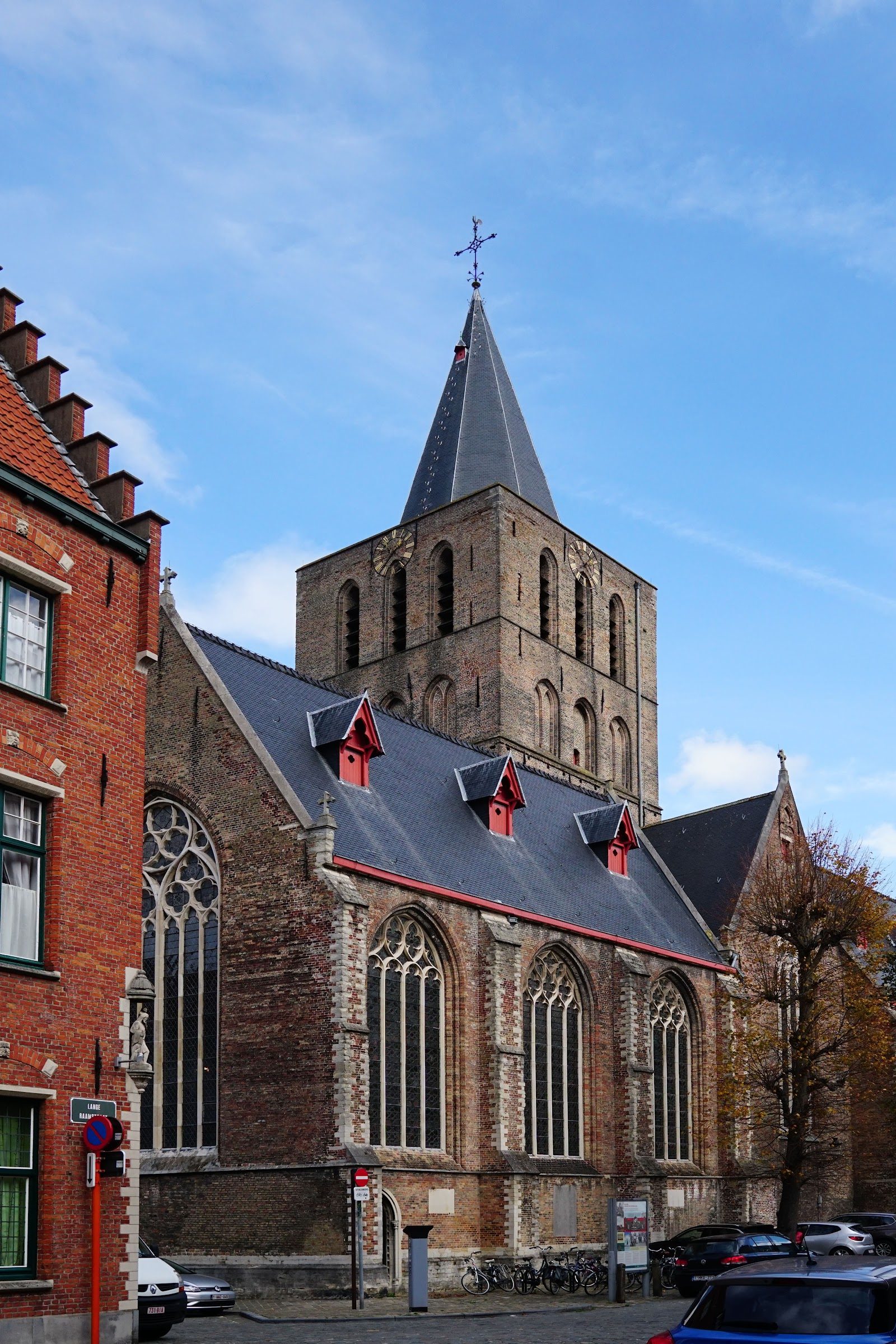
Sint-Gilliskerk (a couple of minutes north of the quays) opens daily from 13:00 to 17:00, free. It is a plain brick hall church with a stocky tower carrying the only tower clock in the historic centre. The triple-nave interior is bare and whitewashed, with a dark wooden organ case and a Pourbus polyptych on a side wall. Hans Memling, Lanceloot Blondeel and Pieter Pourbus were all buried here. The organ gets occasional classical concerts.
The Augustijnenbrug (Augustijnenrei) is a squat three-arched grey stone bridge of 1391, one of the oldest in Bruges, built so Augustinian friars could cross into town. Low stone benches are built into its parapets, and merchants laid goods out on them on fine days. Willows hang over the narrow canal, with whitewashed and brick houses tight to the water on both reis. The deck is narrow. Take a bench rather than the middle of the bridge.
Breakfast and dinner by the statue
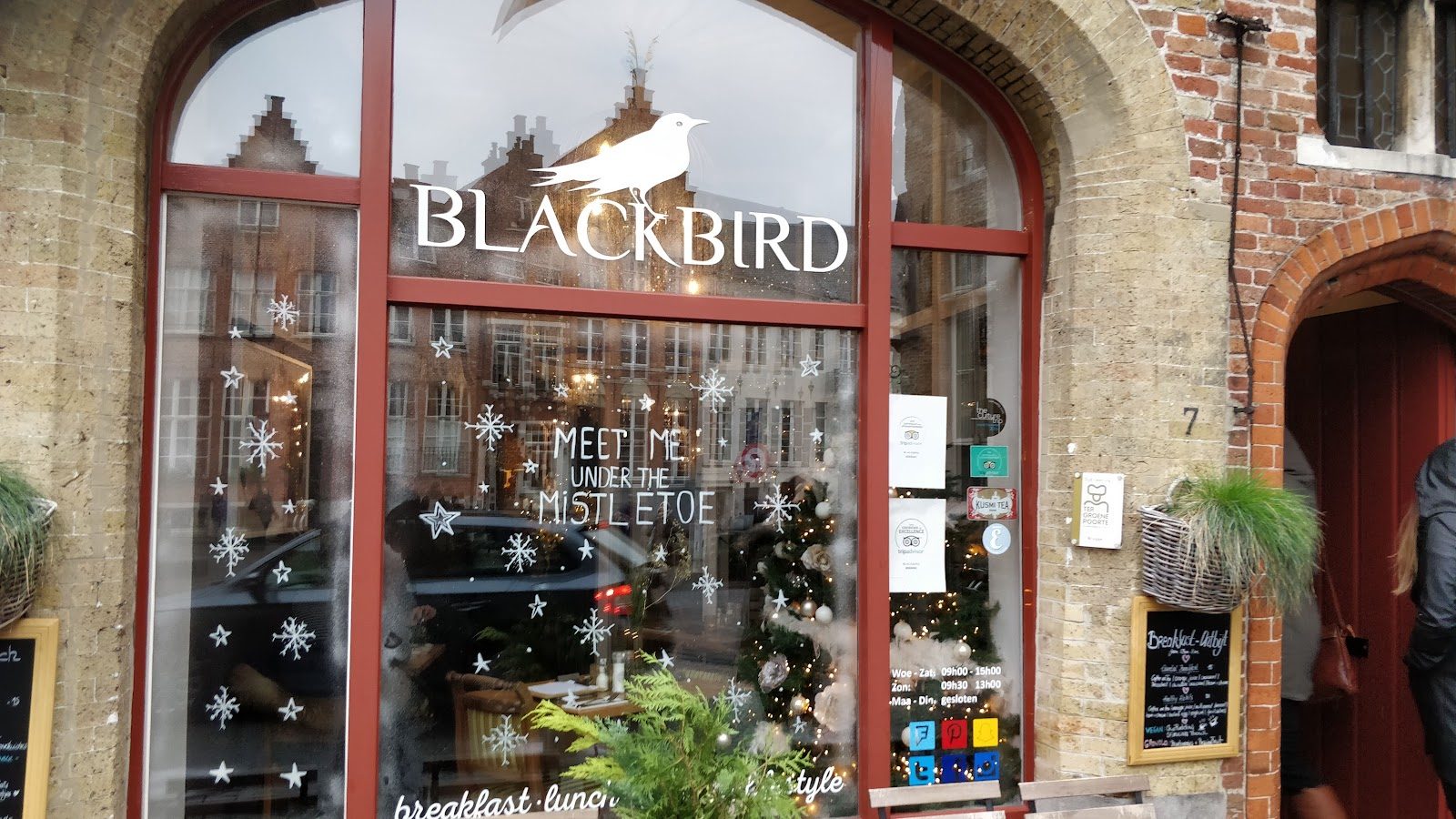
Blackbird (Jan van Eyckplein) opens Wednesday to Saturday, 09:00 to 15:00, and Sunday 09:30 to 13:00 for breakfast only. The counter is stacked with croissants and pastries, all of it plant-based, and the reputation in town is for the best croissants in Bruges. A handful of pavement tables face the Jan van Eyck statue. The room behind them is tiny, pale wood and plants, and takes no reservations. Prices are €€. More than four of you will be turned away or split up.
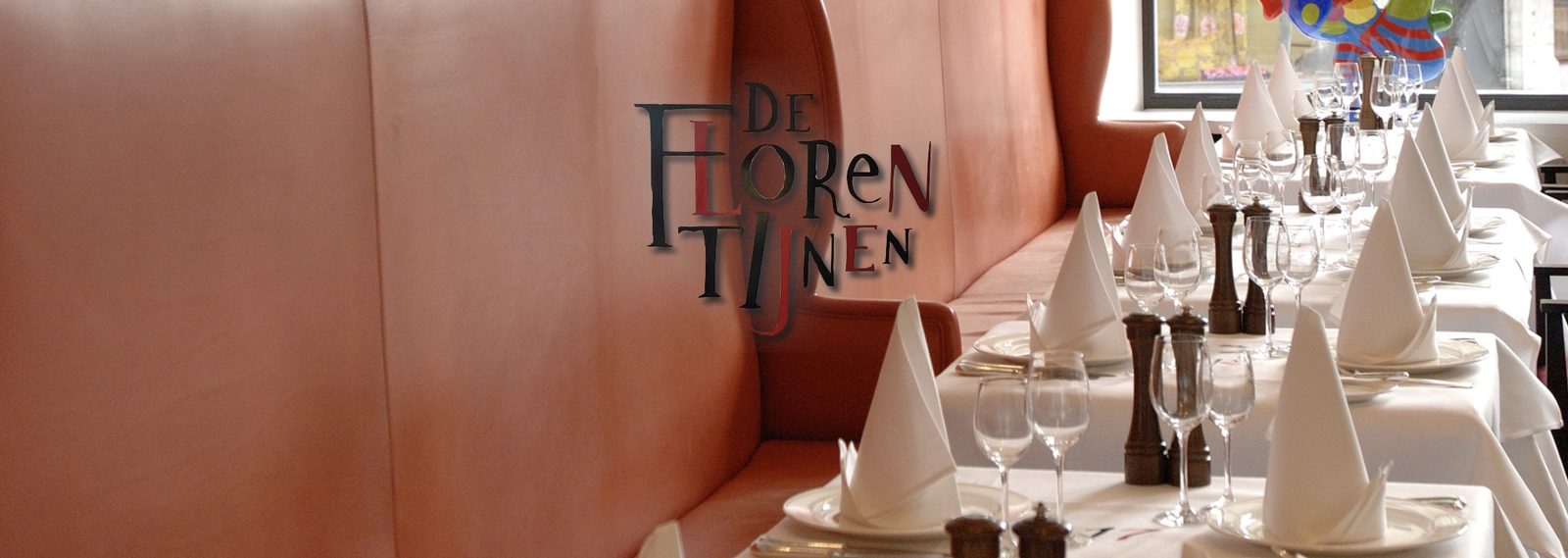
De Florentijnen (Academiestraat) stands on the site of the Florentine traders' lodge, a few steps off the square, and it is the serious kitchen of the quarter. The dining room is high and bright, white walls and white linen, dark bentwood chairs, open kitchen. Dinner is €54 a head. Reservations are essential on 050 67 75 33, and weekend tables need booking well ahead. A private dining room handles a sizeable party.
Drinks after dark
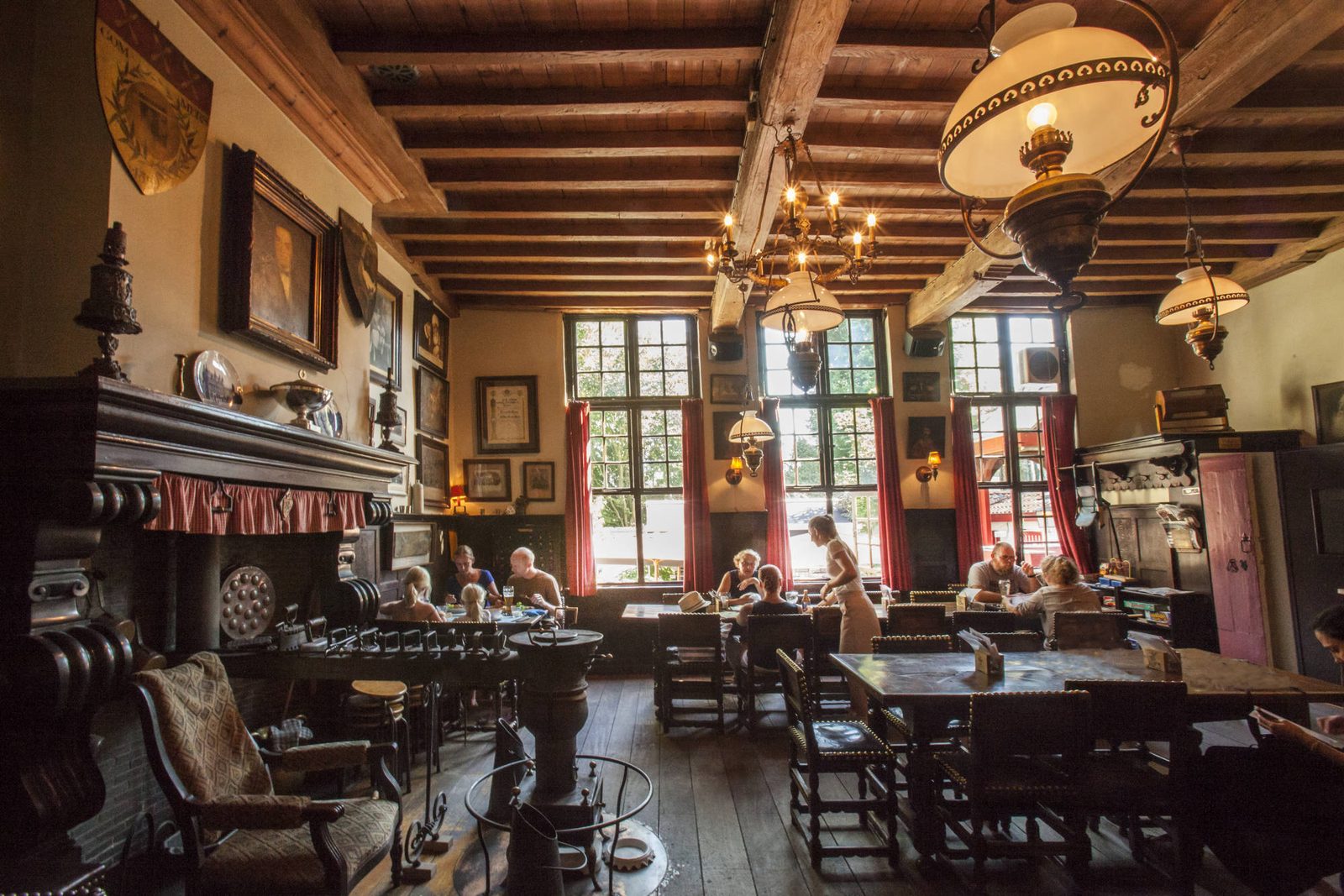
Café Vlissinghe (three minutes east of Spiegelrei) was first recorded in 1515 and is the oldest working café in Bruges. Two late-15th-century houses were joined to make it. The room is dark oak panelling, a vast black cast-iron stove, scrubbed wooden tables and old oil paintings, and the walled back garden holds a jeu-de-boules court. It opens daily, 11:00 to 21:00, in the €€ band. The hours shift with the season, so call ahead out of season. Reservations are taken for parties of 10 or more, and everyone else walks in.
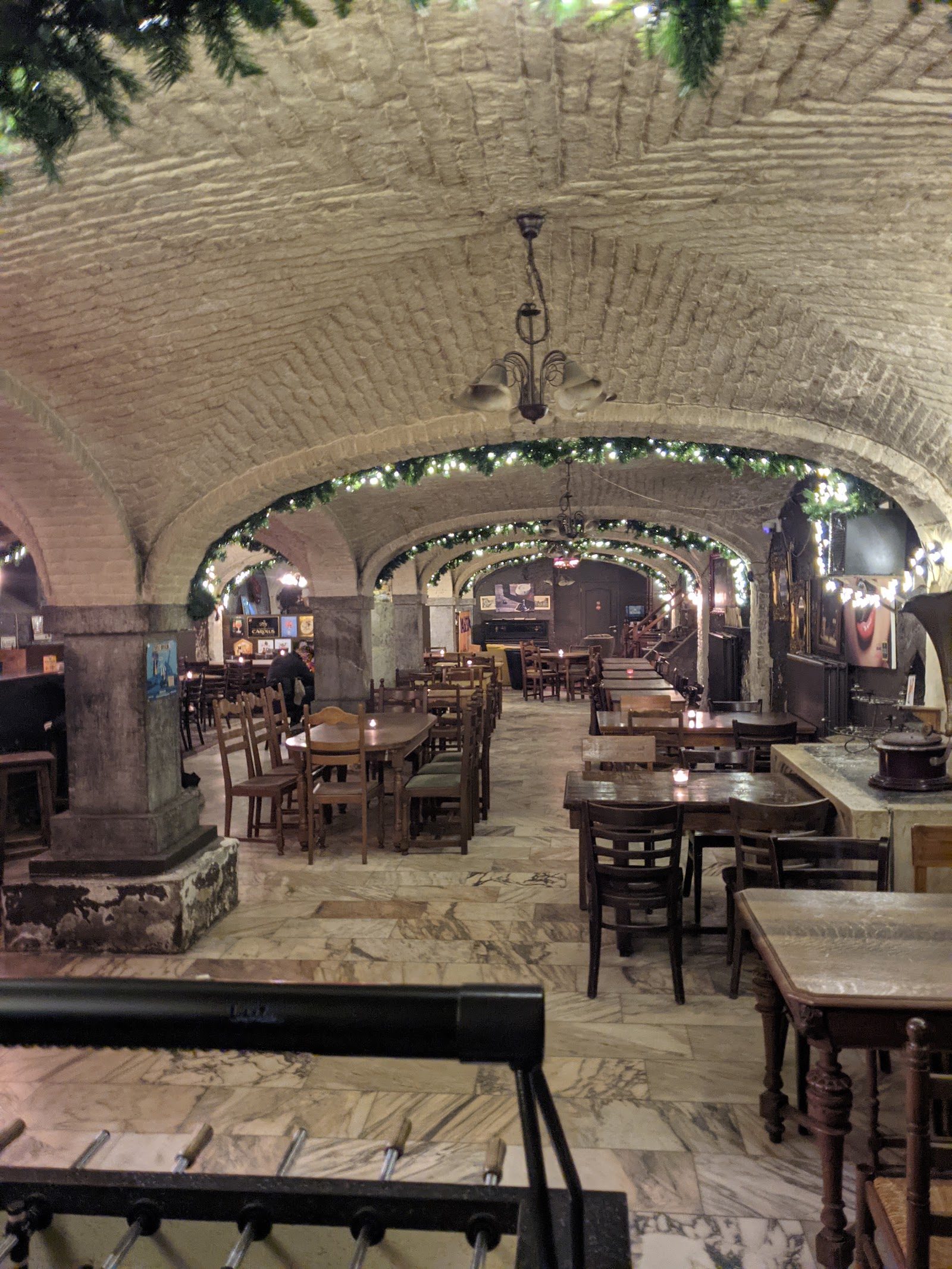
You reach 't Poatersgat (Vlamingstraat) down steps through an unmarked hole in the wall, the hardest doorway to spot in the quarter. The cellar below stored a merchant's goods, a brick barrel vault on squat stone pillars, candlelit tables, beer bottles ranked along the walls. The list runs to 120 Belgian beers with five on tap, at € prices, from 17:00 until late. No reservations are taken. The vault fills fast at weekends, and a party of 10 or more will not get a table together.
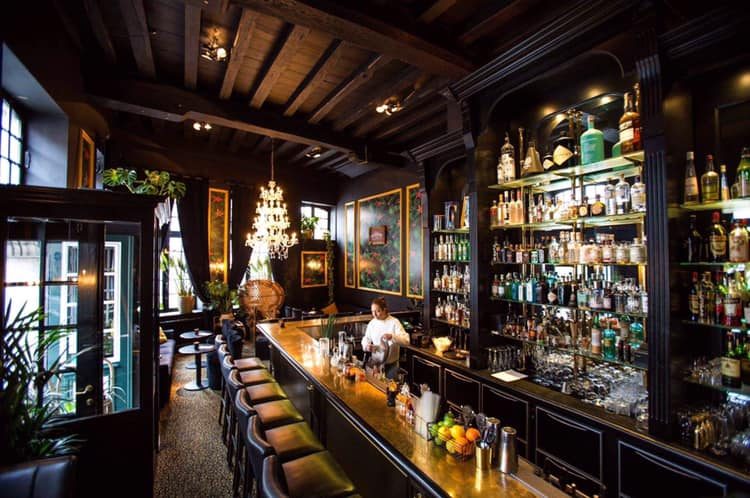
Groot Vlaenderen (Vlamingstraat) has been licensed on this spot since 1879 and pours the best cocktails in Bruges. The house is 300 years old with a baroque scrolled gable outside. Inside is a salon of deep velvet armchairs, a marble-topped bar, tall mirrors and low lamplight, and it is the one room in the quarter that feels dressed-up rather than medieval. Prices are €€€. It closes on Mondays and otherwise runs from 17:00 until 01:00 or 02:00. The salon suits four to six seated; ring ahead with a larger party.
Sleeping on Oosterlingenplein
Hotel Bryghia (Oosterlingenplein) occupies a surviving wing of the 15th-century Oosterlingenhuis. You sleep inside the German Hanseatic League's own Bruges headquarters, eight minutes' walk from the Markt. The facade is red-brick Gothic with arched windows, the canal-facing rooms have exposed beams, and breakfast is served under a vaulted ceiling. It has 21 rooms at three stars, €110 to €180 a night. Block bookings need arranging in advance, direct with reception, and the square has no coach access at the door. Martin's Relais on Spiegelrei is the four-star alternative.
Practical notes
Groot Vlaenderen closes on Mondays and the Frietmuseum shuts on 25 December, 1 January and in early January. Reserve De Florentijnen before you travel for a weekend table.
See the Bruges guide and the Bruges hotel search.
Gallery
Former Hanse Quarter in pictures
Former Hanse Quarter — your questions
Can you go inside the Oosterlingenhuis?
Not normally. Oosterlingenplein is open at any hour and free, and you see the surviving wing of the 1478 to 1481 consulate from the square. Occasional guided Timeless Trails visits are the only way into the interior, or you can book a room at Hotel Bryghia, which occupies that wing.
What time should you walk the quarter?
Sint-Gilliskerk opens daily at 13:00 and closes at 17:00, and the Frietmuseum stops selling tickets at 16:15, so the indoor stops belong to the afternoon. Walk Spiegelrei and Spinolarei at dusk, when the gables double in the flat water. The cellar bars open at 17:00.
Where can a group of 10 eat and drink here?
Café Vlissinghe takes reservations for parties of 10 or more, and it is the only easy booking of that size in the quarter. De Florentijnen has a private dining room for a large table, booked on 050 67 75 33. 't Poatersgat will not seat 10 together, and Blackbird turns away or splits parties of more than four.
Is the Frietmuseum worth the ticket?
It suits anyone curious about the building. The museum is in the Saaihalle, the former Genoese Lodge, which has a Gothic arcaded ground floor and a vaulted cellar now used as a frying kitchen. Entry is €10 for an adult, or €22.50 on a combination ticket with Choco-Story, daily 10:00 to 17:00 with last tickets at 16:15.
Where should you stay in the Hanse quarter?
Hotel Bryghia on Oosterlingenplein, inside the 15th-century Hanseatic Oosterlingenhuis, has 21 rooms at three stars for €110 to €180 a night, eight minutes' walk from the Markt. Martin's Relais on Spiegelrei is the four-star alternative. Neither square takes coaches at the door.